Both crunchy cereal and chocolate muesli can make a great weekend breakfast, as long as the fibre content of the specific variety meets your criteria. Under EU Regulation (EC) No 1924/2006, published on EUR-Lex, the claim ‘high fibre’ requires at least 6 g of fibre per 100 g or 3 g per 100 kcal. Compare the sugar content per 100 g too. If you need to avoid gluten, lactose or other allergens, always check the label on the specific pack.
Who is this choice relevant to?
Shoppers who prioritise fibre
You want a chocolatey taste, but ‘wholegrain’ or ‘muesli’ on the front of the pack isn’t enough to help you choose. Check the fibre content per 100 g for the specific variety before comparing traditional cereal with chocolate muesli.
Shoppers who also keep an eye on sugar
You want a chocolatey weekend breakfast, but sugar content is still an important factor. Check the sugar and fibre figures for the same variety side by side: a high fibre content doesn’t tell you how much sugar it contains.
Shoppers with ingredient or allergen requirements
If gluten, lactose or specific allergens affect your choice, the terms chocolate cereal or chocolate muesli aren’t enough. Check the ingredients, highlighted allergens and any ‘may contain’ warnings on the specific pack.
What should you look for when buying?
First decide whether you’d prefer crunchy chocolate cereal or chocolate muesli with wholegrain flakes. Then check the nutritional information for the specific variety, and treat any special ingredient requirements as a separate criterion.
| Criterion |
What to check when buying |
Who it matters to |
| Fibre content |
Check the fibre content per 100 g for the specific variety. To use the EU claim ‘high fibre’, a product must contain at least 6 g per 100 g or 3 g per 100 kcal. |
If I’m looking for a chocolate breakfast option with a specific fibre claim, I want to be able to check the figure rather than guess from the product name. For around 36% of shoppers, this is the top priority. |
| Sugar |
Compare the sugar content per 100 g with the fibre figure for the same variety; a relative reduction claim doesn’t replace the actual figure. |
I want a chocolatey taste, but I don’t want to overlook a sugar level that doesn’t suit me just because the fibre content is higher. Around 29% of shoppers put sugar comparisons first. |
| Gluten, lactose and allergens |
Check the label, ingredients, highlighted allergens and ‘may contain’ warnings on the specific pack. |
If I need to avoid certain ingredients, the recipe for each variety determines whether I can consider it at all. For around 21% of shoppers, this check is a priority. |
| Organic and cocoa labelling |
Consider organic claims and any stated cocoa certification separately from nutritional information and allergens. |
I also look for specific ingredient certifications in my weekend breakfast, without assuming they tell me anything about sugar or fibre. Around 14% of shoppers put this preference first. |
Common comparison pitfalls
-
Assuming ‘wholegrain’ or ‘muesli’ means high in fibre
The ingredient description alone doesn’t tell you whether a variety meets the threshold for the ‘high fibre’ claim.
Check the nutritional information: the EU rule published on EUR-Lex specifies at least 6 g of fibre per 100 g or 3 g per 100 kcal.
-
Looking only at fibre when comparing nutritional values
The fibre figure doesn’t tell you how much sugar a variety contains. For example, Kellogg’s Germany lists 6.0 g of fibre and 22 g of sugar per 100 g for Choco Krispies Chocos.
Compare both figures per 100 g and consider how much you actually serve yourself.
-
Assuming ‘gluten-free’ means free from all allergens
Even a variety labelled gluten-free and lactose-free may carry warnings about traces of other allergens.
If you have specific requirements, read the full allergen and ‘may contain’ information on the current pack.
-
Treating organic or cocoa labelling as a nutritional claim
An organic claim or cocoa certification doesn’t automatically tell you how much fibre or sugar the finished muesli contains.
Use this information as a separate criterion, and check the nutritional information and ingredients as well.
Brands and product ranges to consider
The details below apply to the specific variety named, not to a brand’s entire range. They show how nutritional values and ingredients can vary between products, as well as between different types of muesli.
Kellogg’s
Choco Krispies Chocos is an option for shoppers who prefer crunchy chocolate cereal to chocolate muesli with visible flakes.
- Kellogg’s Germany lists 6.0 g of fibre per 100 g for Choco Krispies Chocos.
- The same variety contains 22 g of sugar per 100 g, and wheat flour is listed in the ingredients.
Dr. Oetker Vitalis
Vitalis Schoko-Müsli feinherb is an option for shoppers looking for chocolate muesli with wholegrain oat and barley flakes.
- REWE lists 9.5 g of fibre per 100 g for this variety and includes both wholegrain flakes in the ingredients.
- Oat and barley flakes don’t mean a product is gluten-free; check the pack if you have other ingredient requirements.
REWE frei von
Bio Schokomüsli glutenfrei laktosefrei is aimed at shoppers looking for a product with these specific claims.
- REWE lists 8.4 g of fibre and 5.5 g of sugar per 100 g for this variety.
- A gluten-free and lactose-free claim doesn’t replace the need to check for other allergens and ‘may contain’ warnings.
EDEKA GUT&GÜNSTIG
Schoko-Müsli weniger süß is an option for shoppers who focus on the sugar figure first when comparing products.
- EDEKA lists 5.9 g of sugar per 100 g and labels the variety ‘30 % weniger Zucker’.
- If you’re also looking for a high fibre content, check the fibre figure on the pack. Allergen information is important too.
EDEKA Bio
EDEKA Bio Schoko Müsli may appeal to shoppers looking for chocolate muesli that’s specifically labelled organic and made with wholegrain flakes.
- EDEKA describes this variety as containing wholegrain wheat and oat flakes, along with Rainforest Alliance-certified cocoa.
- These features don’t replace checking the fibre content or ingredients if you need to avoid gluten or milk.
Chocolate muesli on Joybuy
These chocolate mueslis are options for a weekend breakfast. The pack size and variety name can help you narrow down your choices; check the information on each pack to compare fibre, sugar and allergens.
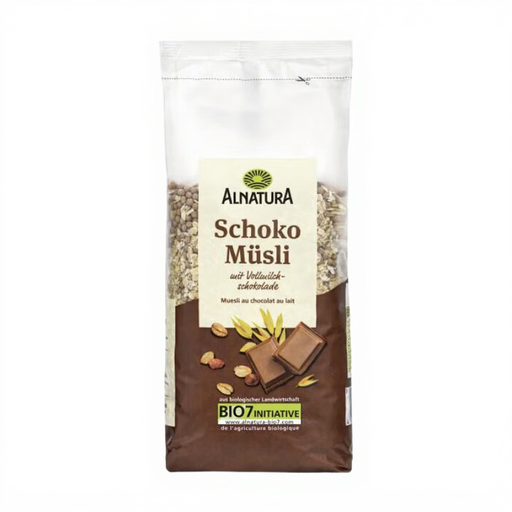 Image unavailable
Alnatura Bio-Schokomüsli, 750 g
A chocolate muesli for a weekend breakfast if you’re looking for an organic option. The pack contains 750 g; compare the fibre, sugar and allergen information for this variety to see if it suits you.
View on Joybuy
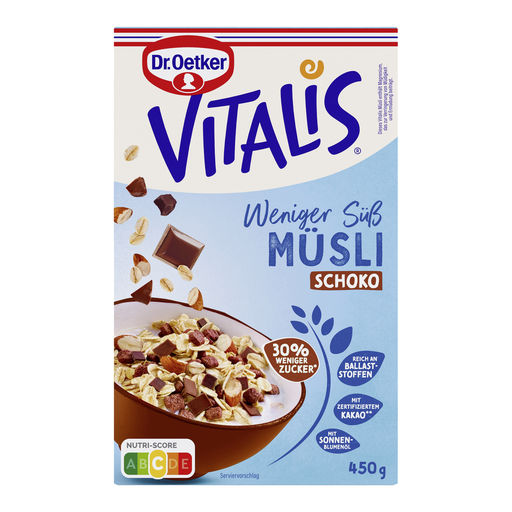 Image unavailable
Dr. Oetker Vitalis Less Sweet Chocolate Crunchy Muesli, 450 g
For shoppers looking for the Less Sweet Chocolate Crunchy variety of chocolate crunchy muesli. The pack contains 450 g; the variety name doesn’t replace comparing the sugar and fibre figures per 100 g.
View on Joybuy
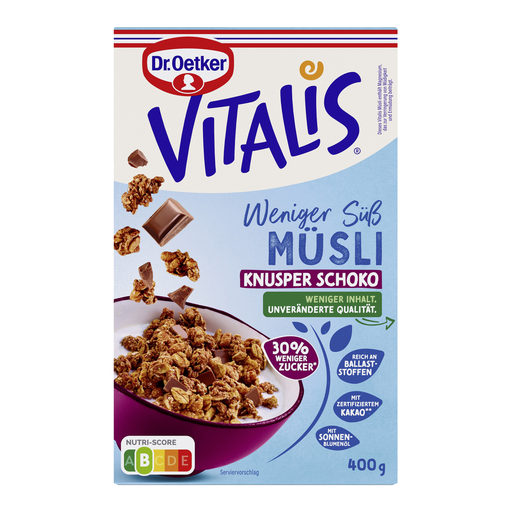 Image unavailable
Dr. Oetker Vitalis Less Sweet Crunchy Chocolate Muesli, 400 g
A crunchy chocolate muesli for a weekend breakfast, in the Less Sweet Crunchy Chocolate variety. This pack contains 400 g; check its own nutritional information and ingredients rather than relying on figures for a similarly named variety.
View on Joybuy
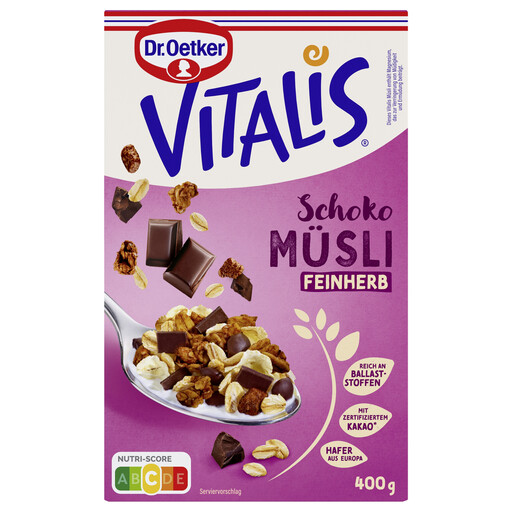 Image unavailable
Dr. Oetker Vitalis Dark Chocolate Fine Muesli, 400 g
For shoppers who prefer the Dark Chocolate Fine variety of chocolate muesli. The pack contains 400 g; compare the fibre, sugar and ingredients for this specific variety before choosing.
View on Joybuy
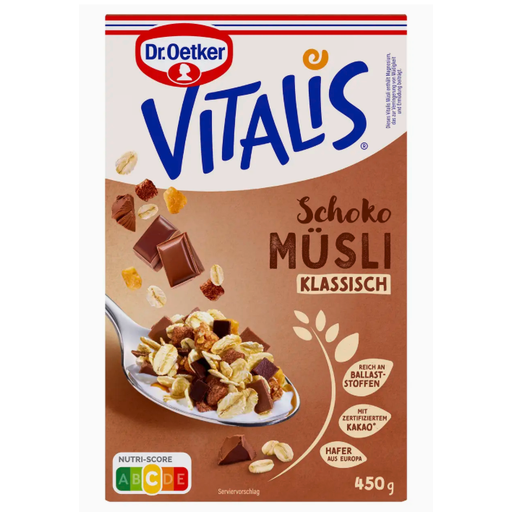 Image unavailable
Dr. Oetker Vitalis Classic Chocolate Muesli, 450 g
A Classic Chocolate variety of chocolate muesli for a weekend breakfast. The pack contains 450 g; if sugar or specific ingredients matter to you, check the information for this variety before choosing.
View on Joybuy
Frequently asked questions
When can chocolate cereal be labelled as high in fibre?
For the ‘high fibre’ claim, EU Regulation (EC) No 1924/2006, published on EUR-Lex, specifies at least 6 g of fibre per 100 g or 3 g per 100 kcal. Check the nutritional information for the specific variety; the name ‘muesli’ or the presence of a wholegrain ingredient alone doesn’t answer the question.
Does ‘high fibre’ mean long-lasting energy?
No. A high fibre content alone doesn’t prove that chocolate cereal has any particular effect on your energy or performance. When choosing breakfast, you can also compare the sugar and energy content, as well as the portion you usually eat.
Is chocolate muesli with oats or wholegrain ingredients automatically gluten-free?
No. Oats or wholegrain ingredients in a product name don’t mean it’s labelled gluten-free. For example, the Vitalis Schoko-Müsli feinherb variety listed by REWE also contains barley flakes. If you need a gluten-free recipe, check the label and ingredients on the current pack.
Which ingredient and allergen information should you rely on?
Before eating the product, check the ingredients, allergen and nutritional information on the current pack. This is particularly important for similarly named varieties and when you have specific ingredient requirements. EDEKA also notes that product information on its website may differ from the packaging.


