Families with a specific fibre target
You want to know whether the nutrition information meets the requirements for a “high fibre” claim. Sugar and ingredients still need to be part of your comparison.


If you’re specifically looking for high-fibre cornflakes for a toddler’s breakfast, compare the fibre per 100 g. Under EU Regulation (EC) No 1924/2006, a “high fibre” claim on solid foods requires at least 6 g per 100 g. This figure alone shouldn’t determine what you choose for your child: check the sugar, ingredients and allergens too, and treat cornflakes as just one part of breakfast.
You want to know whether the nutrition information meets the requirements for a “high fibre” claim. Sugar and ingredients still need to be part of your comparison.
You compare sugar per 100 g and ingredient lists. A low-sugar product won’t necessarily meet the requirements for a “high fibre” claim as well.
It’s important to check whether a recipe contains gluten-containing ingredients, mentions possible traces or is specifically labelled gluten-free. The information on the actual pack is particularly important if a gluten-free diet is medically necessary.
Start with what matters most for your child. A high fibre content, low sugar and suitable allergen labelling are separate things to check.
| What to check | Check this when buying | Who it matters to |
|---|---|---|
| Fibre | Compare fibre per 100 g. Under EU Regulation (EC) No 1924/2006, solid foods must contain at least 6 g per 100 g to carry a “high fibre” claim. | If high fibre is my main priority, I want to see it in the nutrition table rather than infer it from the word “wholegrain”. Around 36% of consumers put this criterion first when choosing. |
| Sugar and ingredients | Check sugar per 100 g and the ingredients list; don’t assume “unsweetened” means “high fibre”. | I’m looking for an unsweetened base and want to decide for myself what else to serve at breakfast. Around 29% of consumers prioritise this. |
| Gluten and allergens | Check separately for gluten-containing ingredients, precautionary statements about traces and any gluten-free labelling. | If my child needs to avoid gluten, I need clear, suitable labelling rather than making assumptions about cornflakes. For around 21% of consumers, checking gluten and allergens is the main priority. |
| Portion and breakfast | Offer a portion that’s right for your child and consider what else makes up their breakfast. | My child only eats a little in the morning, so I want to know what’s suitable to offer in an appropriate amount. Around 14% of consumers put this everyday consideration first. |
These descriptions don’t replace the fibre figure. Under EU Regulation (EC) No 1924/2006, solid foods need to contain at least 6 g of fibre per 100 g to carry a “high fibre” claim.
Check the nutrition information if this is your main buying criterion.
Recipes vary: some contain ingredients such as wheat or barley malt, while others carry a precautionary statement about traces or are specifically labelled gluten-free.
Check the ingredients, highlighted allergens and labelling on the pack you’re buying. If a gluten-free diet is medically necessary, make sure your choice meets your individual needs.
A higher fibre content doesn’t answer the question of sugar or gluten-containing ingredients. Equally, a low sugar figure doesn’t prove that a product is high in fibre.
Compare fibre and sugar per 100 g, and check the ingredients and allergen information too.
A figure on a pack doesn’t tell you about the whole meal or how much is right for a child.
Offer a portion that’s right for your child and consider the rest of their breakfast and daily diet.
The details below apply to the specific products mentioned, not every cereal from each brand. Check the nutrition information and labelling on the pack you’re planning to buy.
Wholegrain cereals to compare by fibre content.
Unsweetened cornflakes for families who want to prioritise comparing sugar and ingredients.
Unsweetened organic cornflakes made from maize, offering another option for comparing ingredients.
Classic Corn Flakes to compare with options where fibre is the main priority.
Organic cornflakes for families looking for an option specifically labelled gluten-free.
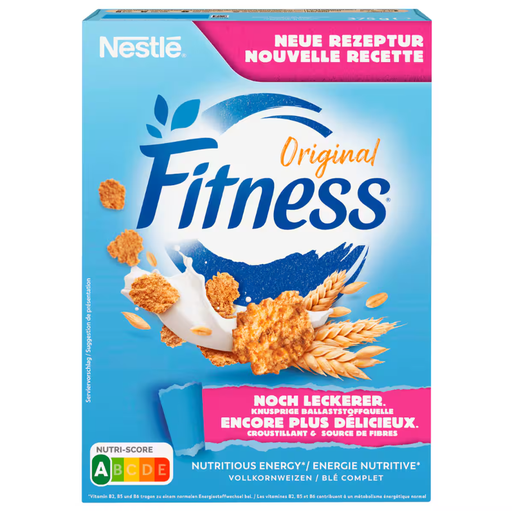
If you’re considering wholegrain cereals for breakfast as well as cornflakes, you could include this product in your comparison. When choosing cereal for a toddler’s breakfast, the information on the specific pack remains the most important guide.
 No image available
This product may suit families who want to compare wholegrain cereals as well as cornflakes.
For the 375-g pack, check fibre and sugar per 100 g, as well as the ingredients and allergens. The fibre figure alone doesn’t show that a product is particularly suitable for toddlers.
Under EU Regulation (EC) No 1924/2006, solid foods must contain at least 6 g of fibre per 100 g to carry a “high fibre” claim. Check the nutrition information on the specific pack; “wholegrain” on its own doesn’t answer the question.
No, it depends on the product. Kellogg's lists barley malt as an ingredient in its Corn Flakes; other cornflakes may carry a precautionary statement about traces or be specifically labelled gluten-free. If relevant, check the ingredients and labelling on the specific pack.
Choose an amount that suits your child and the rest of their breakfast, rather than serving an adult portion. The Verbraucherzentrale suggests using the child’s hand size as a simple guide to children’s portions.
Offer a small meal without putting them under pressure. The Bundesinstitut für Öffentliche Gesundheit recommends giving children time to wake up; they can have another breakfast later.