For a high-fibre weekday breakfast, the fibre content per 100 g is a useful place to start. The portion you actually eat shows how much you’ll get on your plate. If you prefer a crunchy texture, compare the sugar and fat content per 100 g in granola and crunchy muesli too. Check the ingredients and allergens, and make sure the product is labelled gluten-free if you need it to be.
Which option matters for you?
People looking for a high-fibre everyday breakfast
If you’re short on time in the morning, comparing the fibre content per 100 g and the usual serving size can help you choose between mueslis. The German Nutrition Society’s guideline of at least 30 g of fibre a day applies to adults and to the whole day, not just breakfast.
Crunchy muesli fans keeping an eye on sugar
If you like a crunchy recipe, you can compare fibre, sugar and fat together. A crunchy texture and a high-fibre choice aren’t mutually exclusive; check the nutrition information for each product to see the exact amounts.
People with specific ingredient or allergen requirements
If you need to follow a gluten-free diet or avoid certain allergens, check the ingredients list, allergen information and any ‘may contain’ warnings. A multigrain muesli or a product containing oats isn’t automatically gluten-free just because of the type of grain it contains.
What should you look for when buying?
Start by comparing the nutrition information per 100 g, then factor in your portion size. With crunchy muesli and granola, you’ll also want to consider the recipe and any specific requirements you have around ingredients or allergens.
| Criteria |
What to check when buying |
Who it matters most to |
| Fibre and wholegrain base |
Fibre per 100 g and per usual serving; ingredients such as wholegrain flakes and bran. |
If I want to plan a clear amount of fibre for breakfast, a name like ‘wholegrain’ isn’t enough on its own. Around 42% of consumers put this first when choosing. |
| Crunchiness and sugar |
For crunchy products, compare sugar and fat per 100 g, as well as the ingredients list. |
A crunchy breakfast is part of my routine, but I want to weigh up the sugar and fat content of different recipes. For around 33% of consumers, this combination of texture and nutritional comparison is a priority. |
| Ingredients and allergens |
Ingredients, highlighted allergens and ‘may contain’ warnings on the pack; an explicit gluten-free label if needed. |
If I need to avoid certain ingredients, whether a specific mix is suitable matters more than its fibre content. Around 25% of consumers make this their main consideration when choosing. |
Common buying misconceptions
-
Assuming ‘high in fibre’ says everything about the recipe
The fibre content alone tells you nothing about sugar, fat or allergens. Under EU Regulation (EC) No 1924/2006, a ‘high fibre’ claim requires at least 6 g of fibre per 100 g or 3 g per 100 kcal.
Also compare sugar and fat per 100 g, read the ingredients list and factor in your usual portion size.
-
Assuming ‘wholegrain’ means gluten-free
Multigrain mueslis may contain wheat, rye or barley. Depending on the recipe, nuts and other allergens may also be listed as ingredients or as possible traces.
Check the label on the specific pack. If you need to follow a gluten-free diet, look for an explicit gluten-free label on the product.
-
Making a larger serving of fibre part of your routine overnight
The German consumer advice centre notes that a sudden switch to a high-fibre diet may initially cause wind or bloating.
Factor in the serving size when choosing, and if you’re changing your diet, follow the consumer advice centre’s guidance to increase the amount gradually and drink plenty of fluids.
-
Assuming online information applies to every pack
EDEKA notes that information about one of its basic mueslis may differ from the packaging, and availability may vary by store.
Before buying, check the information for your specific store or delivery area, and read the nutrition information and ingredients on the actual pack.
Brands and retailers to consider
Seitenbacher
Seitenbacher offers muesli varieties made with different mixes of grains and seeds.
- The Müsli Ballaststoffe & Chia listed by REWE contains wholegrains as well as oat and wheat bran.
- The product name is no substitute for checking the ingredients and allergens in the variety you choose.
Alnatura
Alnatura Basis-Müsli is a useful point of comparison for an organic muesli base.
- Alnatura lists 11 g of fibre and 1.1 g of sugar per 100 g for this basic muesli.
- These figures apply to this product, not to other mueslis or crunchy mixes from the brand.
Kölln
Kölln offers a range of oat mueslis, including crunchy varieties and products explicitly labelled gluten-free.
- For Kölln Knusper Klassik 50 % weniger Zucker, the manufacturer lists 70% wholegrain, 17 g of fibre and 8 g of sugar per 100 g.
- These figures, and the gluten-free label on other Kölln products, don’t necessarily apply to the full range.
Brüggen
Brüggen describes itself as a manufacturer of custom mueslis for retailers’ own brands.
- The manufacturer says its crunchy muesli varieties are made by mixing cereal ingredients with syrup.
- This description of the manufacturing process doesn’t mean products from different own brands share the same ingredients or nutritional values.
REWE
REWE has an online category for high-fibre muesli, with products from both well-known and own brands.
- The category lets you compare different muesli recipes using the information provided for each product.
- Your choice should be based on the information and availability of the specific product at your selected location.
EDEKA
EDEKA offers own-brand mueslis, including multigrain mixes.
- The ingredients list for EDEKA Bio 5-Korn Basis-Müsli includes several wholegrains.
- This product is labelled as containing gluten-containing grains and may contain traces of other allergens. EDEKA recommends checking the pack, as online information may differ.
Crunchy breakfast products at Joybuy
This selection includes crunchy mueslis and oat cereals for weekday breakfasts. Oat cereal pillows are a different type of product from granola or muesli, so check the individual pack if fibre, sugar or allergens are key to your decision.
 No image available
Dr. Oetker Vitalis Less Sweet Pure Crunchy Müsli, 600 g
A crunchy muesli for weekday mornings. Compare fibre, sugar and fat using the information on the pack; ‘Less Sweet’ alone doesn’t tell you the exact nutritional values.
View at Joybuy
 No image available
Jeden Tag Less Sweet Crunchy Oat Muesli, 750 g
A crunchy oat muesli for a quick breakfast. Check the nutrition information per 100 g and the ingredients on the specific pack, rather than assuming what the sugar content is from ‘Less Sweet’.
View at Joybuy
 No image available
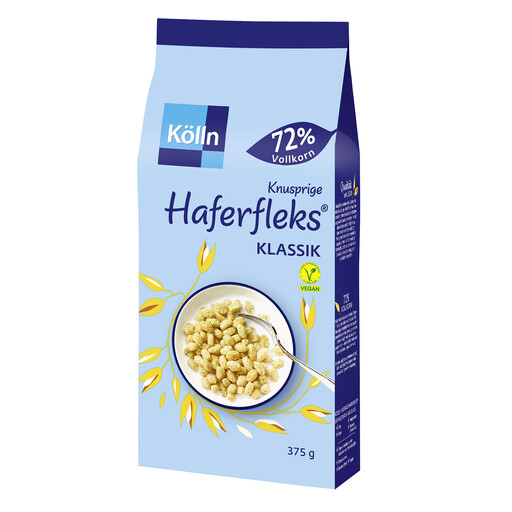
Kölln Crunchy Classic Oat Cereal Pillows, 375 g
For anyone looking for crunchy oat cereal rather than muesli. To compare it with granola or muesli, check the nutrition information per 100 g and the ingredients list.
View at Joybuy
 No image available
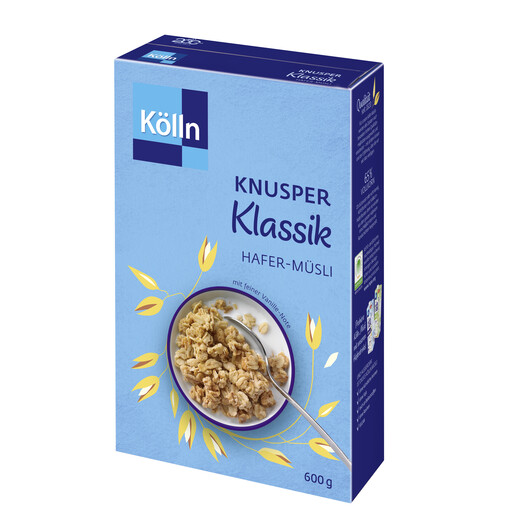
Kölln Crunchy Classic Oat Muesli, 600 g
An option if you’re specifically looking for crunchy oat muesli. Compare fibre, sugar and fat per 100 g; figures for other Kölln varieties don’t automatically apply to this mix.
View at Joybuy
 No image available
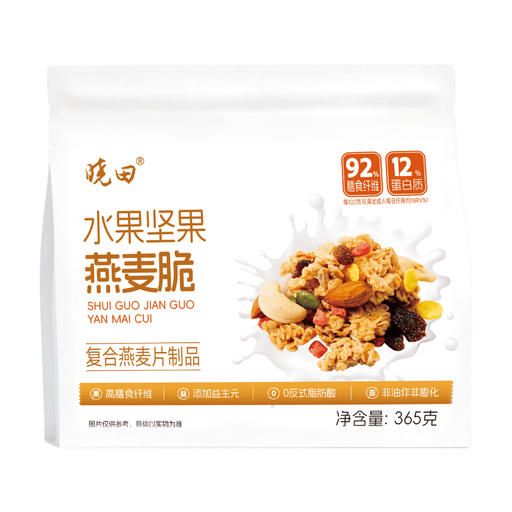
Xiao Tian Fruit & Nut Oat Crunch Multi-Grain Oat Cereal, 365 g
For a crunchy breakfast with a fruit and nut oat mix. Check the sugar and fat content on the pack, along with the full ingredients and allergen information, before comparing this variety with other crunchy products.
View at Joybuy
Frequently asked questions
When can granola or muesli be labelled ‘high in fibre’?
Under EU Regulation (EC) No 1924/2006, a ‘high fibre’ claim requires at least 6 g of fibre per 100 g or 3 g per 100 kcal. The claim describes the fibre content; it doesn’t tell you about sugar, fat or whether the product is suitable for people with allergies.
Is there a set amount of fibre you should have at breakfast?
The German Nutrition Society’s guideline of at least 30 g of fibre applies to adults for the whole day, not specifically to breakfast. Check the amount per 100 g and work out how much you’ll get from the portion you actually eat.
Is muesli containing oats automatically gluten-free?
No. The fact that a product contains oats doesn’t automatically make it suitable for a gluten-free diet. The German consumer advice centre warns that oats may come into contact with gluten-containing grains during processing. If needed, look for an explicit gluten-free label on the specific product.
What should I bear in mind when eating more fibre?
According to the German consumer advice centre, a sudden change may initially cause wind or bloating. It recommends increasing the amount gradually and drinking plenty of fluids; any individual medical advice should take priority.


