For a quick breakfast on the go, choose a mix with fibre and sugar levels that suit your preferred portion, and that’s easy to carry. Regulation (EC) No 1924/2006 specifies that solid foods must contain at least 6 g of fibre per 100 g to carry the claim ‘high fibre’. However, this tells you nothing about the sugar content or whether the product is suitable for people with allergies. A simple flake or multigrain mix and a fruity crunchy muesli therefore suit different tastes and preparation preferences.
Which mix is right for you?
For people focusing on fibre with little time to prepare breakfast
If you add milk, yoghurt or a plant-based drink in the morning, a simple muesli base makes it easy to compare fibre and sugar per 100 g. The German Nutrition Society recommends at least 30 g of fibre a day for adults; when choosing a portion, though, the figures on the pack are what count.
For people who enjoy fruit or a crunchy texture
Fruit and crunchy ingredients can make all the difference if you want a muesli you can eat dry or quickly combine with yoghurt. For these mixes, it’s also worth checking the sugar per 100 g and the ingredients list, even if the front of the pack says ‘no added sugar’.
For people who need to check gluten and allergens
If you need a gluten-free mix or have to avoid certain ingredients, check the labelling, ingredients and precautionary allergen information on the pack you’re buying. ‘Wholegrain’ on its own doesn’t tell you this.
What to look for when buying
Start by checking the fibre per 100 g and any ingredients that matter to you. Then decide whether the mix suits your morning routine: eaten on its own, portioned up for on the go, or served with yoghurt, milk or a plant-based drink.
| Criteria |
What to check |
Who it matters most to |
| Fibre and sugar |
Compare fibre and sugar per 100 g, as well as your planned portion size. |
If I’m looking for a breakfast base that isn’t too sweet, I don’t want to mistake a high fibre content for a low sugar content. For around 42% of consumers, this combination is a key consideration when buying. |
| Taste and portability |
Consider whether you’ll eat the mix dry or with yoghurt, milk or a plant-based drink, and how easy it is to portion. |
On my way to work, I want a quick breakfast without any lengthy preparation, and a texture I enjoy. Around 33% of consumers say this is their main priority. |
| Gluten and allergens |
Check the gluten-free labelling, ingredients and precautionary allergen information on the specific pack against your requirements. |
If I need to avoid gluten or certain allergens, the labelling on the product I buy determines whether it’s right for me. Around 25% of consumers put this check first. |
Common buying misconceptions
-
Assuming ‘high fibre’ means low sugar
The fibre figure doesn’t tell you about the overall nutritional profile. REWE lists 9.5 g of fibre and 20.3 g of sugar per 100 g for Brüggen Früchte Müsli.
After checking the fibre, compare the sugar per 100 g and the ingredients in the mix you’re considering.
-
Taking ‘no added sugar’ to mean ‘sugar-free’
Dried fruit contains sugar too. Kölln says its Früchte Hafer-Müsli ohne Zuckerzusatz contains 40% dried fruit.
Check the sugar figure in the nutritional information and consider how much you’re actually planning to eat.
-
Assuming a similar product has the same allergens
Multigrain mixes can contain gluten-containing cereals; a mix labelled gluten-free may still contain other allergens or carry precautionary allergen information.
Always check the labelling and ingredients list on the pack of the specific product you’ve chosen.
-
Making a much higher-fibre portion part of your routine straight away
Some people are sensitive to cereal fibre, so a larger portion may feel different from your usual breakfast.
If you’re changing your usual portion, you could start with a smaller amount and drink plenty alongside it. If symptoms persist, seek professional advice.
Brands and product ranges to consider
Seitenbacher
The brand provides muesli varieties with nutritional information in its product details.
- Seitenbacher lists 11 g of fibre per 100 g for ‘Die geröstete Ballaststoffquelle #477’.
- For the same mix, Seitenbacher lists 20 g of sugar per 100 g. According to the product information, the recipe includes wholegrain wheat and oat flakes, almonds and honey.
Alnatura
The nutritional information for these organic mueslis makes it easy to compare a simple base with a nut mix.
- Alnatura lists 11 g of fibre and 1.1 g of sugar per 100 g for its Basis-Müsli.
- According to the brand, Alnatura Nussmüsli contains 10 g of fibre and 12 g of fat per 100 g. Check the pack itself to make sure the ingredients suit you.
Kölln
These oat mueslis are aimed at people who want to consider fruit content and texture when choosing a mix.
- Kölln says its Früchte Hafer-Müsli ohne Zuckerzusatz contains 54% wholegrain and 40% dried fruit.
- ‘No added sugar’ doesn’t mean ‘sugar-free’ for this product; check the sugar figure in the nutritional information to see what that means in practice.
Brüggen
The Brüggen Früchte Müsli mentioned here is a fruity mix sold in a 1 kg pack.
- REWE lists 9.5 g of fibre per 100 g for Brüggen Früchte Müsli.
- According to REWE, it contains 20.3 g of sugar per 100 g; the product also lists gluten-containing cereals and possible traces of other allergens.
REWE Bio und REWE frei von
The varieties mentioned here differ in whether you’re looking for a multigrain base, berries or a gluten-free label.
- REWE lists 13 g of fibre and 1 g of sugar per 100 g for Bio Naturland 5 Korn Müsli; Bio Beerenmüsli contains 10.6 g of fibre per 100 g.
- REWE frei von Bio Früchtemüsli is labelled gluten-free, but according to REWE it contains 21.8 g of sugar per 100 g. Other ingredients and precautionary allergen information are still important when choosing.
EDEKA Bio
The Basis Müsli Cerealien-Mix mentioned here is an option if you’re looking for a mix with wholegrain flakes and seeds.
- EDEKA says the Basis Müsli Cerealien-Mix contains 75% wholegrain flakes made from oats, wheat and barley.
- EDEKA notes that product information may differ from what’s on the packaging. When it comes to ingredients and labelling, always go by the pack you’re buying.
Muesli and oat products at Joybuy
This selection includes crunchy muesli, a fruit and nut oat mix, and oats for a simple breakfast base. Oats aren’t a ready-made granola or crunchy mix, so first decide whether you want something ready to eat or a base to combine with other ingredients.
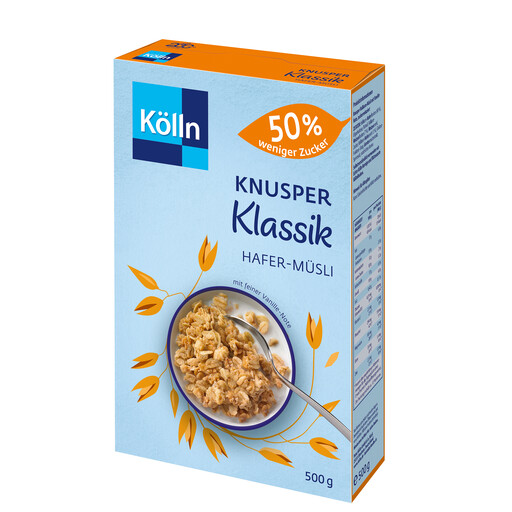 Image unavailable
Kölln Crunchy Oat Muesli 50% Less Sugar, 375 g
A crunchy oat mix for anyone who likes to eat breakfast on its own or with milk or yoghurt. Compare the nutritional information and ingredients on the pack with your requirements; the variety name alone doesn’t tell you everything about its sugar content.
View at Joybuy
 Image unavailable
Dr. Oetker Vitalis Less Sweet Pure Crunchy Muesli, 600 g
This crunchy muesli is worth considering if you like breakfast with milk or yoghurt. Check the sugar and fibre per 100 g, as well as the allergen labelling on the specific pack.
View at Joybuy
 Image unavailable
Jeden Tag Coarse Rolled Oat Flakes, 500 g
These oats are a good fit if you’d rather put breakfast together yourself than buy a ready-made fruit or crunchy mix. If you’re taking them with you, remember to pack a suitable container and any other ingredients you’d like; check the pack for further information if needed.
View at Joybuy
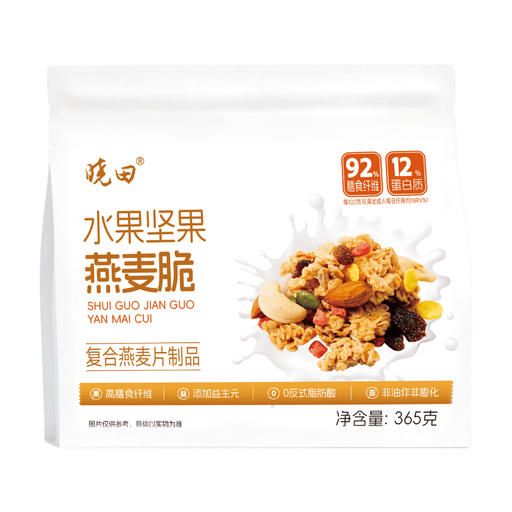 Image unavailable
Xiao Tian Fruit & Nut Oat Crunch, Multi-Grain Oat Cereal, 365 g
This fruit and nut oat mix is an option for a breakfast you can eat dry or combine with yoghurt. If you need to compare sugar or avoid nuts, check the nutritional information and ingredients on the specific pack.
View at Joybuy
 Image unavailable
Jeden Tag Less Sweet Crunchy Oat Muesli, 750 g
This crunchy muesli is an option if you want a ready-made mix to have with milk or yoghurt. Check the sugar per 100 g to see what ‘Less Sweet’ means, and look at the ingredients and precautionary allergen information on the pack.
View at Joybuy
Frequently asked questions
What does ‘high fibre’ mean for muesli or granola?
For the claim ‘high fibre’, Regulation (EC) No 1924/2006 requires solid foods to contain at least 6 g of fibre per 100 g. Also check the sugar, other nutritional values and ingredients: the fibre claim doesn’t assess these.
Is muesli with no added sugar automatically sugar-free?
No. Ingredients such as dried fruit can contain sugar. Kölln says its Früchte Hafer-Müsli ohne Zuckerzusatz contains 40% dried fruit; check the nutritional information for the sugar per 100 g to help you choose.
What daily fibre intake does the German Nutrition Society recommend for adults?
The German Nutrition Society recommends at least 30 g of fibre a day, or at least 14.6 g per 1,000 kcal, as a guideline for adults. The fibre in 100 g of muesli isn’t the same as the amount in the portion you actually eat.
What should I bear in mind if I’m not used to a high-fibre portion?
An unusually large amount of cereal fibre can cause discomfort for people who are sensitive to it. EDEKA notes that tolerance varies and recommends drinking plenty with meals; seek professional advice if symptoms persist.


