When choosing breakfast for a toddler, a high fibre content isn’t the only thing that matters: choose a wholegrain base with ingredients and a texture that suit your child. Compare fibre and sugar per 100 g, check the types of grains and any other allergens, and avoid serving mixes containing whole nuts or large, hard pieces. The German Nutrition Society does not set a fixed daily fibre target in grams for children aged one to under four.
Who should take care when choosing?
Parents looking for a suitable wholegrain base
You want to serve wholegrain flakes without overlooking hard pieces of nuts or large seeds. The Gesund ins Leben network warns that whole or chopped nuts and other hard pieces of food pose an aspiration risk for toddlers.
Families comparing sugar content
You’re keeping an eye on added sugar, but also want to understand the total sugar content of a muesli. With mixes containing dried fruit in particular, it’s worth checking the nutritional information per 100 g as well as the claims on the front of the pack.
Parents who need to consider specific allergens
The specific type of grain and ingredients such as nuts, milk or soya can be decisive when choosing a product. Check the ingredients list and any ‘may contain’ warnings for each product individually. If your child has a diagnosed allergy, follow their individual medical advice.
What should you look for when buying?
When choosing muesli for one- to three-year-olds, first check the size of the pieces and how it should be prepared, then look at the ingredients and nutritional information. A higher fibre content doesn’t make up for an unsuitable texture.
| Criterion | What to check | Who should consider it? |
|---|
| Age-appropriate texture |
Check the ingredients and piece size for whole nuts, large seeds and other hard pieces; choose a preparation that suits your child. |
If my child can’t chew the mix safely, a suitable texture matters more than its fibre content. Around 29% of consumers would put this question first. |
| Wholegrain and fibre |
Compare wholegrain ingredients and fibre per 100 g; introduce the flakes gradually if needed. |
I want a clear wholegrain base, not just a prominent claim on the pack. Around 29% of consumers would prioritise this comparison. |
| Sugar and ingredients |
Check the sugar per 100 g and ingredients that contain sugar; don’t assume ‘no added sugar’ means ‘sugar-free’. |
With fruit muesli, I want to know the total sugar content, even if no sugar has been added. Around 24% of consumers would put this check first. |
| Allergens and acceptance |
Check the specific types of grain, other allergens and ‘may contain’ warnings on the pack; serve the mix in a form that suits your child. |
If certain ingredients are off limits for my child, I need to assess the individual recipe and find a breakfast option they’ll accept. Around 18% of consumers would give this priority. |
Common mistakes when choosing
-
Assuming ‘high in fibre’ means ‘suitable for toddlers’
The fibre content tells you nothing about the size of any hard pieces. The Gesund ins Leben network warns specifically against whole or chopped nuts and other hard pieces of food for toddlers.
Check the mix for these ingredients before serving and, if necessary, choose flakes that can be prepared to a texture that suits your child.
-
Taking ‘no added sugar’ to mean ‘sugar-free’
Even without added sugar, a fruit muesli can contain sugar from its ingredients. For example, the Kölln Fruit Oat Muesli described by REWE contains 22 g of sugar per 100 g.
As well as checking the claim on the pack, read the sugar content per 100 g and the ingredients list. Always compare the specific product variant.
-
Assessing allergens based only on a general warning
When choosing a product, it makes a difference whether a type of grain, nuts or milk is listed as an ingredient or appears in a ‘may contain’ warning. Mueslis from the same brand can also contain different ingredients.
Check the current pack again for each variant. If your child has a diagnosed allergy or coeliac disease, follow their individual medical advice.
-
Increasing wholegrain intake too quickly
The German Nutrition Society notes that a sudden switch to more wholegrains can cause digestive discomfort if your child isn’t used to them.
Introduce new wholegrain flakes gradually and make sure your child drinks enough throughout the day.
Brands to help you compare
Kölln
The Kölln Fruit Oat Muesli described by REWE is an example of how to compare wholegrains, fibre and sugar in a fruit muesli.
- For this product, REWE lists 53% wholegrain, 7.8 g of fibre per 100 g and no added sugar.
- REWE also lists 22 g of sugar per 100 g. It contains gluten-containing grains and has a ‘may contain nuts and milk’ warning, so it’s important to check the specific pack.
Seitenbacher
Seitenbacher Muesli Fibre & Fruit shows why a high fibre content and the size of the pieces should be assessed separately.
- Seitenbacher lists 12 g of fibre per 100 g for this product.
- According to Seitenbacher, the mix contains whole almonds, pumpkin seeds and sunflower seeds. The way it’s served is therefore particularly important for a toddler.
Alnatura
Alnatura Protein Muesli is another example of a product whose stated fibre content and ingredients list can be compared. It should not be confused with the Alnatura flakes shown below.
- Alnatura lists 12 g of fibre per 100 g for its Protein Muesli.
- The product contains seeds and soya. Alnatura also warns that it may contain traces of milk, almonds, nuts and sesame. Its fibre content alone doesn’t make it suitable for every toddler.
Brüggen
Brüggen describes itself as a manufacturer of various mueslis, including products for retailer own-label ranges. This doesn’t mean there’s one standard recipe suitable for a toddler’s breakfast.
- The range described includes different types of muesli, including fruit varieties.
- Check the ingredients, nutritional information and piece size for each own-label product.
Flakes and muesli at Joybuy
This selection includes plain flakes as a breakfast base, as well as fruit and crunchy mueslis for comparison. Check the current pack for each product and only serve it in a texture that’s suitable for your child.
 Image unavailable
Kölln Coarse Rolled Oats, 500 g
These could work as a plain oat base if you want to put together your own breakfast mix. The flakes are coarse, so check that the prepared texture suits your child, and read the labelling on the oats.
View at Joybuy
 Image unavailable
Kölln Fruit Muesli with 50% Fruit, No Added Sugar, 500 g
If you’re looking for a ready-made fruit mix, compare the total sugar per 100 g even if it says ‘no added sugar’. Before serving, check the size and texture of the fruit pieces, as well as the grains and allergen information on the pack.
View at Joybuy
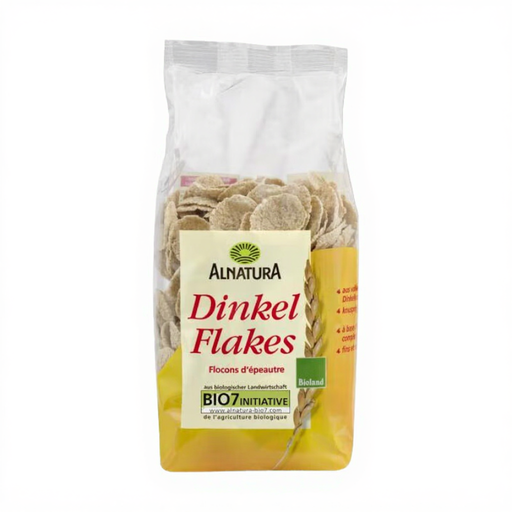 Image unavailable
Alnatura Organic Spelt Flakes, 200 g
These flakes are an option if you’d rather prepare a single-ingredient breakfast base than use a ready-made muesli mix. The product name specifies spelt, while the product information also lists wheat flour. Check the current ingredients list on the pack to confirm the actual grains, particularly if you need to avoid specific allergens. Also check the texture once prepared.
View at Joybuy
 Image unavailable
Jeden Tag Less Sweet Crunchy Oat Muesli, 750 g
If you’re comparing crunchy muesli with plain flakes, pay particular attention to hard pieces and the texture after preparation. ‘Less Sweet’ doesn’t replace checking the sugar per 100 g and the ingredients list. Also check the types of grains and allergen information.
View at Joybuy
Frequently asked questions
What does ‘high in fibre’ mean on muesli?
This claim describes the food’s fibre content, not whether it’s suitable for a toddler. EU Regulation (EC) No 1924/2006, published on EUR-Lex, sets the threshold at least 6 g of fibre per 100 g or 3 g per 100 kcal. You’ll still need to check the piece size, ingredients and preparation separately.
Is there a set fibre target for one- to three-year-olds?
No. The German Nutrition Society does not set a daily target in grams for children aged one to under four. So you shouldn’t choose muesli based on a supposed daily target. Instead, focus on the ingredients and age-appropriate preparation.
What should I look out for with nuts and seeds in muesli?
The Gesund ins Leben network says that whole or chopped nuts and other hard pieces of food should be kept away from toddlers because of the risk of aspiration. Check the size of the pieces in the specific mix before serving; a high fibre content doesn’t change this.
How can I identify gluten-containing grains and other allergens?
Check the muesli pack’s ingredients list for the specific type of grain and any other highlighted allergens. Read any ‘may contain’ warning separately from the ingredients list. If your child has a diagnosed allergy or coeliac disease, follow their individual medical advice when choosing a product.


