When choosing a high-fibre muesli for Sunday breakfast, the fibre content per 100 g is a good place to start, but it’s not the only thing to consider. A simple base gives you more freedom to add fruit and sweetness, while a ready-made Bircher, fruit or crunchy muesli saves you having to put it together yourself. For the specific variety you’re considering, also compare the sugar content, ingredients and allergen information.
Which mix is right for you?
If you want to compare fibre content
If a clearly stated fibre content matters to you, compare dry mueslis using the grams per 100 g. Seitenbacher and Alnatura publish these figures for some of their mixes; the values apply to the specific product in each case.
If you like to make up your own muesli
A simple cereal base lets you add your own fruit and other ingredients. REWE describes its Bio 5-Korn-Müsli as a base mix without dried fruit and lists 0.9 g of sugar per 100 g. Even with a base mix, check the pack’s nutritional information when choosing a high-fibre option.
If you prefer a ready-made Bircher or fruit muesli
A pre-mixed variety saves you putting the ingredients together, but the fruit, sweeteners and other ingredients are already chosen for you. Kölln describes its Zartes Bircher Fruchtiges Hafer-Müsli as sweetened with honey; familia lists 8.3 g of fibre per 100 g for its Bio Birchermüesli Original.
What to look for when buying
First decide whether a stated fibre content, a base you can customise or a ready-made mix matters most to you. Then check the nutritional information and ingredients for the specific variety you’re planning to buy.
| What to consider | What to check when buying | Who it matters to |
|---|
| Fibre |
Compare the fibre content per 100 g of similar dry mueslis; for your own bowl, also consider the portion size. |
If muesli is the main part of my breakfast, I want to know exactly how much fibre it contains. Around 36% of consumers say this is their main priority when choosing. |
| Sweetness and your own additions |
Compare the sugar content per 100 g and the ingredients list; also take into account anything you add to the base mix. |
I want to choose my own fruit and sweetness on a Sunday, rather than have a ready-made fruit mix. This is the top priority for around 27% of consumers. |
| Ready-made mix |
Choose the texture you want, then check the fruit, sweeteners and fibre content of the specific variety. |
I want a ready-made Bircher or fruit mix to save me putting breakfast together. This is the main concern for around 27% of consumers. |
| Ingredients and dietary requirements |
If needed, check the ingredients, allergen and ‘may contain’ information, as well as any dietary claims stated on the pack. |
If there are ingredients I need to avoid or I’m looking for a vegan mix, the specific recipe will determine my choice. This check takes priority for around 10% of consumers. |
Common pitfalls
-
Assuming high in fibre means low in sugar
A high fibre content tells you nothing about the amount of sugar in the same mix. The Verbraucherzentrale recommends comparing the actual sugar values rather than relying solely on a claim such as ‘less sugar’.
Check the fibre and sugar content per 100 g, as well as the ingredients list. With ready-made mixes, look out for dried fruit, honey and syrup too.
-
Confusing portion values with figures per 100 g
The figure per 100 g makes it easier to compare products, but it doesn’t automatically tell you how much fibre is in your breakfast bowl. Seitenbacher lists 12 g of fibre per 100 g for its Müsli Ballaststoff & Frucht, and 5 g for a stated 40 g portion.
Compare the figures per 100 g first, then check the portion size you actually use.
-
Overlooking allergens in multigrain and protein muesli
A mix containing several types of grain isn’t necessarily gluten-free. Depending on the recipe, it may also contain ingredients such as soya or almonds, as well as ‘may contain’ warnings.
If you need to avoid certain ingredients, follow the ingredients and allergen information on the specific pack rather than relying on the general variety name.
Brands to consider
Seitenbacher
Muesli and flake mixes, including Müsli Ballaststoff & Frucht.
- Seitenbacher lists 12 g of fibre per 100 g and 5 g per 40 g portion for this variety.
- The mix contains several types of grain, soya and almonds, among other ingredients. Check the labelling if you have relevant allergies or need to avoid gluten.
Alnatura
Organic mueslis ranging from simple base mixes to a variety with soya flakes and seeds.
- Alnatura lists 11 g of fibre per 100 g for its Basis-Müsli. Its protein muesli, described as vegan, contains 12 g of fibre and 25 g of protein per 100 g.
- The protein muesli contains soya and carries ‘may contain’ warnings for milk, almonds, nuts and sesame, among other ingredients.
Kölln
Oat mueslis made with a variety of recipes, including Bircher, fruit, crunchy and base mixes.
- Kölln states that its Zartes Bircher Fruchtiges Hafer-Müsli contains 75% wholegrain and is sweetened with honey.
- Dietary claims vary between varieties. Check the chosen product for claims such as ‘vegan’ or ‘gluten-free’.
REWE Bio
The Bio 5-Korn-Müsli is one option for making up your own muesli bowl.
- REWE describes it as a base mix without dried fruit and lists 0.9 g of sugar per 100 g.
- Check the nutritional information on the specific pack to decide whether its fibre content suits you too.
familia
Bio Birchermüesli Original is a ready-made Bircher-style mix.
- bio-familia lists 8.3 g of fibre per 100 g, says that 90% of the cereal ingredients are wholegrain and describes the recipe as vegan.
- If you want to buy this specific variety, check where it’s available and the labelling on the pack being offered.
Brüggen
The manufacturer describes traditional and crunchy mueslis, as well as organic and Fairtrade varieties.
- Brüggen says its crunchy varieties are mixed with syrup and baked – a key difference from a simple flake mix.
- When choosing a high-fibre option, the nutritional information on the specific consumer pack matters, not the general description of the range.
Muesli at Joybuy
This selection includes crunchy, nut and fruit mueslis for a ready-made breakfast bowl. If you’d rather add your own ingredients to a simple base, compare its nutritional information separately with these ready-made mixes.
 No image available
Dr. Oetker Vitalis Less Sweet Pure Crunchy Muesli, 600 g
A ready-made crunchy mix for when you don’t want to put together a flake base yourself for Sunday breakfast.
Compare the sugar content separately from the fibre figure; the ‘Less Sweet’ name doesn’t replace checking the nutritional information. If you have allergies, check the pack labelling.
View at Joybuy
 No image available
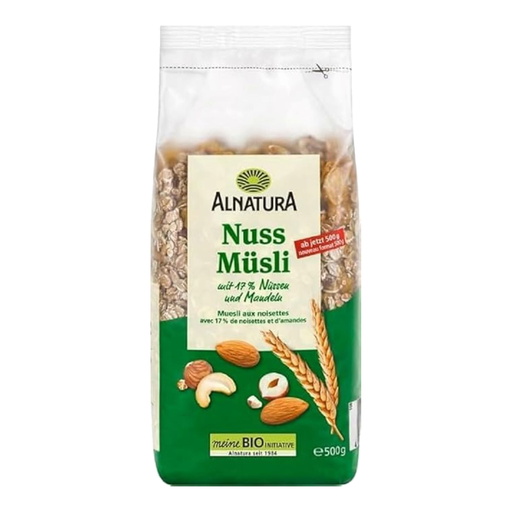
Alnatura Organic Nut Muesli, 500 g
A ready-made nut muesli for when nuts suit your breakfast and you’d rather not put together your own cereal mix.
The ingredients listed include honey and sugar. If you have allergies, pay particular attention to the nuts and any ‘may contain’ warnings on the pack.
View at Joybuy
 No image available
Jeden Tag Less Sweet Crunchy Oat Muesli, 750 g
For anyone who prefers a ready-made crunchy oat muesli to a simple flake base.
‘Less Sweet’ is no substitute for comparing the sugar content. The recipe described also contains sugar and glucose-fructose syrup; check the labelling if you have allergies.
View at Joybuy
 No image available
Kölln 50% Fruit Muesli No Added Sugar, 500 g
A ready-made fruit muesli for when you want dried fruit already included in the mix.
The wording in the product name doesn’t mean the mix is low in sugar. Compare the stated sugar content and check the allergen information on the pack.
View at Joybuy
 No image available
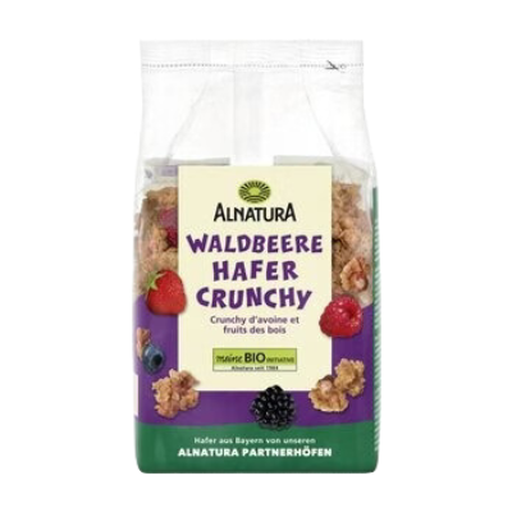
Alnatura Organic Wild Berry Crunchy Oat Muesli, 375 g
A crunchy berry mix for anyone who’d rather not add fruit to their muesli themselves.
To compare it with other ready-made mixes, check the fibre and sugar content per 100 g. If you have allergies, also check the ‘may contain’ information on the specific pack.
View at Joybuy
Frequently asked questions
What does ‘high fibre’ mean on a muesli pack?
For this nutrition claim, EU rules published in the Official Journal of the European Union specify at least 6 g of fibre per 100 g or at least 3 g per 100 kcal. This requirement relates to fibre; it says nothing about sugar, allergens or whether the product is suitable for a particular diet.
How should I account for portion size when comparing fibre content?
First compare mueslis by their fibre content per 100 g, then check how much you’re serving in your bowl. Seitenbacher lists 12 g per 100 g for its Müsli Ballaststoff & Frucht, and 5 g for the stated 40 g portion.
Is high-fibre muesli automatically low in sugar?
No. Fibre and sugar are listed separately. The Verbraucherzentrale recommends comparing the sugar figures in grams; check the ingredients list too if dried fruit, honey or syrup are important to your choice.
What should I look out for if I have allergies or follow a vegan diet?
The ingredients and information on the specific pack are what matter, not the general muesli name. Alnatura describes its protein muesli as vegan, but lists soya as an ingredient and gives ‘may contain’ warnings for milk, almonds, nuts and sesame, among other ingredients. Seitenbacher lists several types of grain, soya and almonds in its Müsli Ballaststoff & Frucht.


