Parents looking for protein-rich weaning foods
You want to offer your baby foods containing protein, while also choosing suitable ingredients and a texture they can manage safely as they learn to feed themselves.


Don’t choose a standard high-protein bar as everyday weaning food for a baby following a baby-led weaning approach. The bars considered here are snacks for adults. For your baby, the priority is age-appropriate ingredients and a texture they can manage safely at their own stage. When choosing packaged weaning food, check the ingredients and allergens too, rather than treating the protein claim as proof that it’s suitable.
You want to offer your baby foods containing protein, while also choosing suitable ingredients and a texture they can manage safely as they learn to feed themselves.
You might buy protein bars for yourself, but you don’t want to assume they’re suitable for weaning just because of their protein content.
As their baby starts eating more independently, they look for easy-to-hold foods that are cooked until soft or soften quickly with saliva. kindergesundheit-info.de highlights texture as an important consideration for finger foods.
With baby-led weaning, the first question isn’t which bar contains more protein, but whether the food is suitable for your child as a weaning food. Netzwerk Gesund ins Leben recommends avoiding added salt and an intensely sweet taste in weaning foods.
A good choice when: Your baby is ready for solids, wants to feed themselves and the food is prepared to suit their individual abilities.
Consider: Soft finger foods need to be prepared appropriately, and your baby should be supervised while eating.
A good choice when: An adult is looking for a packaged snack to enjoy as part of their daily routine.
Consider: The protein content doesn’t tell you whether the ingredients or texture are suitable as baby food.
| What matters | What to check when buying | Who it matters most to |
|---|---|---|
| A texture that’s safe to eat | Can your child handle and break down the food? Does it soften quickly, or is it cooked until soft? | When my baby feeds themselves, the texture should suit their abilities and shouldn’t contain unsuitable hard pieces. For around 42% of consumers, safe-to-eat textures are the top priority. |
| Ingredients suitable for weaning | Check the ingredients list for salt, sweeteners and intensely sweet-tasting ingredients; look out for allergens. | When buying packaged weaning food, I want to know whether the recipe is in line with recommendations for baby food. Ingredients are the main concern for around 33% of consumers. |
| Keeping uses separate | Don’t assume that protein claims or serving size mean a product is suitable for babies. | A bar might be for me, while my baby needs a different meal. Around 25% of consumers particularly value keeping the two separate. |
A bar marketed this way may still contain sweeteners or sugar substitutes. The Verbraucherzentrale generally doesn’t consider these substances a suitable alternative in snacks for children.
Read the full ingredients list, rather than judging a bar on the claim on the front of the pack alone.
Even a bar that feels soft may contain layers or firmer ingredients with different textures. With finger foods, what matters is whether your child can safely manage every part of the food.
Check the texture all the way through. Don’t offer whole nuts or hard pieces that your baby can’t eat safely.
Marketing a product as a protein snack for adults doesn’t tell you whether its ingredients are suitable for weaning or whether it’s safe to eat.
Plan your baby’s meals separately from your own snacks, and choose foods prepared and textured to suit your child.
These specific bars show why protein claims alone aren’t a useful way to choose baby food. The brand examples are not recommendations for babies.
The More Soft Protein Bar Milky Candy Cream is a protein bar from the sports nutrition range for adults.
Corny Protein Soft Peanut Caramel is marketed as a protein bar for adults.
The Premier Protein Bar Deluxe White Chocolate Vanille +Caramel is a protein snack for adults.
These two packaged meals are labelled for children aged 12 months and over. They’re not protein bars; whether their pieces are suitable as finger foods for your child to pick up depends on their actual texture and your child’s abilities.
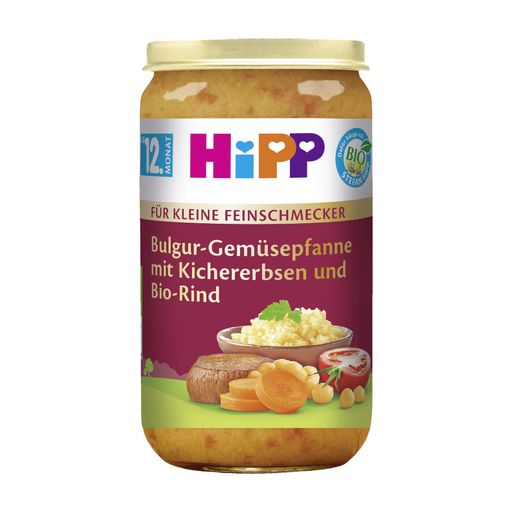 Image unavailable
A packaged meal for children aged 12 months and over, if you’re looking for baby food rather than a protein bar for adults.
Made with bulgur, beef and chickpeas; pack of 6 × 250 g. Before serving, check whether the pieces are suitable for your child to eat independently.
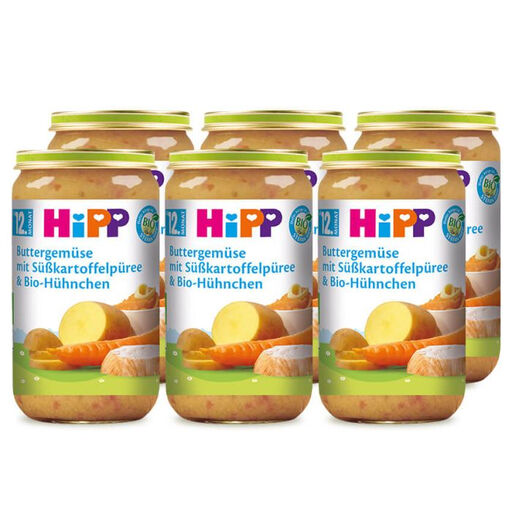 Image unavailable
A packaged meal for children aged one and over, not a protein bar for adults.
Made with buttered vegetables, sweet potato purée and organic chicken; pack of 6 × 250 g. Check the ingredients list and whether the food’s actual texture is suitable for your child to eat.
No. Don’t choose a standard high-protein bar as everyday baby food. Netzwerk Gesund ins Leben recommends avoiding salt and an intensely sweet taste in weaning foods; the bars considered here, on the other hand, are made as snacks for adults. This doesn’t mean that individual products are legally prohibited.
Your child needs to be able to handle and eat the food at their own stage. kindergesundheit-info.de lists foods that soften quickly with saliva as a possible finger food option. Always check the pieces and texture of the specific food you’re offering.
No. This claim alone doesn’t tell you whether it’s suitable as a weaning food. Check the ingredients list for sweeteners and other ingredients, and consider the texture of the whole bar too.
For packaged foods, read the ingredients list, any labelled allergens and the nutrition information. For baby food, the ingredients, recommended age and actual texture are important too. The Verbraucherzentrale explains why ingredient and allergen information on food packaging matters.