For a mid-morning break, a high-protein cereal bar or protein bar can be a good choice, particularly if its portion size fits your routine and the rest of your meals. Compare the protein per bar with the nutrition information and ingredients list. A prominent protein claim alone tells you nothing about allergens, sweeteners or whether it’s suitable as a regular snack.
Who might find these bars useful?
People with a short mid-morning break
If there’s little time between breakfast and lunch, an individually wrapped bar is easy to take with you and needs no preparation. Whether a cereal bar or a protein bar is a better fit for your break also depends on the ingredients and portion size.
People who train and keep an eye on their protein intake
If you plan to have a bar around your training session, you can compare the protein per serving with what you get from the rest of your meals that day. A protein claim on the front of the pack doesn’t, by itself, mean you need more protein.
People with specific ingredient requirements
If you’re allergic to milk, soya, peanuts or tree nuts, check the label for the specific variety. Sweeteners and polyols may also be important when choosing what’s right for you.
What should you look for when buying?
First, think about why you want to eat the bar, then compare the information for the portion you’ll actually have. The buying priorities below reflect what matters most to each group of consumers.
| Criteria |
What to check |
Who it matters most to |
| Protein per serving |
Compare the amount of protein per bar rather than per 100 g, and consider the portion alongside your other meals. |
If I plan to have a bar around my training session, I want to know how much protein is in the portion I eat. This is the main priority for around 42% of consumers. |
| Ingredients and suitability |
Read the ingredients list and allergen information for the specific variety; check for polyols if needed. |
If certain ingredients aren’t suitable for me, I need to be able to choose a variety based on its label. Around 33% of consumers put suitability first. |
| A portion to take with you |
Check the pack and portion size, as well as the nutrition information per bar. |
For a short break, I want to be able to take a bar with me without preparing anything. For around 25% of consumers, a convenient portion comes first. |
Which mistakes can you avoid?
-
Taking the protein claim as an overall verdict
A protein figure doesn’t tell you anything about the sugar, fat, salt or energy content. The Verbraucherzentrale recommends checking the nutrition information, particularly for high-protein products.
Compare the nutrition information per serving and read the ingredients list before choosing a bar for your regular mid-morning break.
-
Assuming ‘no added sugar’ means it will suit you
A bar labelled this way may still contain polyols. REWE lists 14.4 g of polyols per 45-g serving for its CORNY Protein Cookie Crunch; EDEKA24 notes that eating too much of a More Soft Protein Bar may have a laxative effect.
If you’re sensitive to these ingredients, check the label for the variety you’re considering and, if necessary, choose a snack with a different recipe.
-
Overlooking allergen information because of the protein content
Depending on the variety, the bars considered here contain ingredients such as milk, soya, peanuts or almonds. A familiar brand doesn’t mean all its bars contain the same ingredients.
Before buying, read the ingredients list and allergen information on the specific pack.
Relevant brands to consider
The differences relate to the specific bars and recipes mentioned, not to every product from each brand.
CORNY
CORNY offers, among other products, crunchy and nut-based protein bars. For a mid-morning snack, the portion size and ingredients of the variety you choose are key.
- REWE lists 30% protein for the Protein Cookie Crunch and 25% protein for Nuts & Protein Chocolate.
- Depending on the recipe, the varieties considered contain milk, soya, peanuts or almonds; the Cookie Crunch also contains polyols.
ALDI SPORTS
The Filled Protein Bar from ALDI SÜD’s own-brand range is an individually portioned protein bar. Its label can be used to compare nutritional information per serving.
- ALDI SÜD gives a pack size of 45 g for the variety considered.
- The protein content alone doesn’t answer questions about ingredient suitability or your personal requirements.
More
The Soft Protein Bar considered here is a soft-textured variety with peanuts and sweeteners.
- The ingredients information makes it easy to compare with other types of bar.
- The bar described by EDEKA24 contains milk, soya and peanuts; the retailer also notes that eating too much may have a laxative effect.
Protein bars at Joybuy
This selection includes portioned protein bars for a mid-morning break or as a snack around your training session. The varieties differ in flavour, portion size and ingredients, among other things; not every protein bar is also a cereal bar.
 No image available
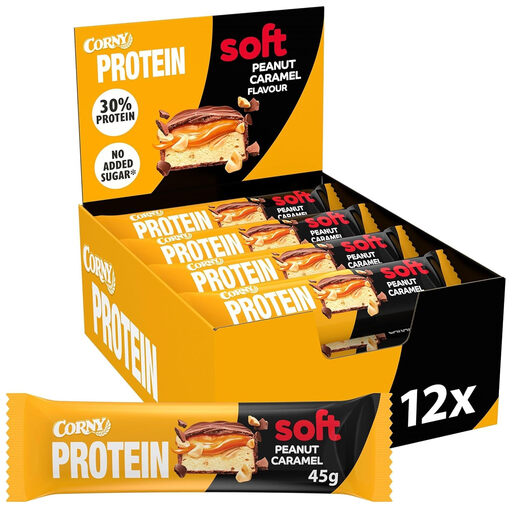
Corny No Added Sugar Soft Peanut-Caramel Protein Bar, 12 × 45 g
The individually wrapped 45-g bars make a handy snack between meals.
This pack of 12 is the Soft Peanut-Caramel variety and is labelled as containing 30% protein. The bar contains milk, soya and peanuts, as well as sweeteners; check the sugar information on the specific pack.
View at Joybuy
 No image available
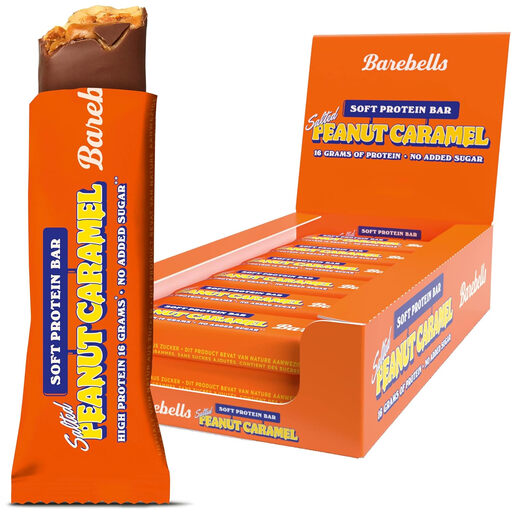
Barebells Soft Protein Bar Salted Peanut Caramel, 12 × 55 g
These individually portioned bars are handy for a break on the go if you’re after a soft peanut caramel variety.
Each serving weighs 55 g, and the pack contains twelve bars. Milk, peanuts and soya are relevant allergens to check. The product description also lists maltitol, xylitol and sucralose.
View at Joybuy
 No image available
ESN Protein Designer Bar Hazelnut Nougat, 12 × 45 g
This 45-g bar is a portioned hazelnut nougat variety for a break between meals.
The pack contains twelve bars. The product description lists milk, soya and hazelnuts, as well as polyols; also check the information provided about possible traces of other nuts and peanuts.
View at Joybuy
 No image available
Corny Crunchy Cookie Flavour Protein Bar, 12 × 45 g
The individually wrapped 45-g bars are a crunchy option for a short mid-morning break.
The pack contains twelve bars and is labelled as containing 30% protein. The product description lists milk, soya, maltitol and sucralose; check the specific pack for further allergen information and nutrition information per bar.
View at Joybuy
 No image available
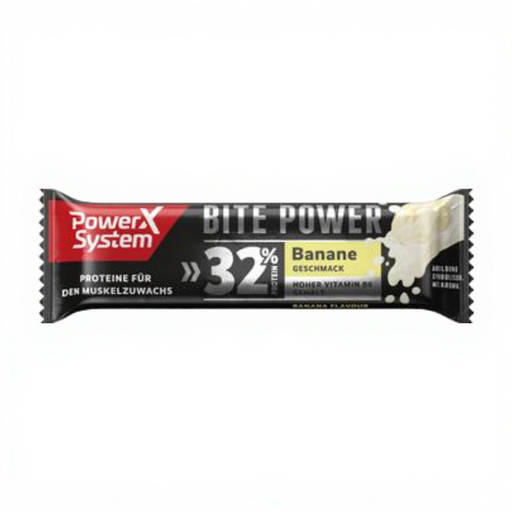
Power System 32% Protein Bite Power Banana, 35 g
This single 35-g protein bite is worth considering if you’re looking for a smaller portion to take with you.
The product name states that it contains 32% protein. According to the product description, the bar contains milk, soya and egg; check the information about possible traces of gluten, peanuts and other tree nuts. Compare the nutrition information per 35-g serving on the pack.
View at Joybuy
Frequently asked questions
Do I have to have a protein bar after exercising?
No, a protein bar isn’t essential. The Verbraucherzentrale explains that you can meet your protein needs through ordinary protein-rich foods, even when you exercise. Whether a bar is convenient depends on your other meals and the situation.
Does ‘no added sugar’ mean sugar-free?
No, the terms don’t mean the same thing. Despite its ‘no added sugar’ claim, the CORNY Protein Cookie Crunch listed by REWE contains 14.4 g of polyols per 45-g serving. Check the sugar, polyol and ingredients information on the specific pack.
Which allergens should I check in these bars?
In particular, check the pack for allergens that are relevant to you. Depending on the recipe, the CORNY and More varieties considered here contain milk, soya, peanuts or almonds; you can’t assume that the ingredients in one variety apply to another.


