What should you look for when buying?
Start by comparing the nutritional information per 100 g, then think about the portion you’ll actually take with you. After that, you can see whether the ingredients and pack size suit your journeys.
| Criterion |
What to check |
Who it matters to |
| Protein and portion |
Compare the protein per 100 g with the portion size you’re planning. Include pumpkin seeds only if you’re also looking for seeds. |
After exercise, I want to know how much protein is in the portion I’ve packed, rather than just reading the value for the whole pack. For around 33% of consumers, this protein comparison comes first. |
| Salt and ingredients |
Check the salt per 100 g and the ingredients list for the specific variety; roasted doesn’t automatically mean unsalted. |
If nuts are often part of my train coffee break, I want to tell salted and unsalted varieties apart. Around 27% of consumers prioritise salt and ingredients. |
| Taking them with you |
Check whether you can take out the portion you want before your journey and pack it securely. |
On the train, I want a portion to hand without taking a large, open pack with me. For around 20% of consumers, ease of taking it along is the main priority. |
| Stocking up and storage |
Choose a pack size to suit how much you use and plan how to store the product once opened. |
I prefer to stock up for several journeys, but I also want to be able to store the opened pack properly. This kind of stock planning is a priority for around 20% of consumers. |
Useful brands to consider
These brands offer individual nut or seed products, or relevant product ranges. What matters is the information on each specific pack, not the brand name alone.
Seeberger
A range of nuts and seeds, including peanuts and pumpkin seeds, in a choice of pack sizes.
- Seeberger lists around 27 g of protein per 100 g for peanuts and around 36 g per 100 g for pumpkin seeds in its product information.
- Seeberger Jumbo peanuts are available in 500-g, 1,000-g and 2,500-g packs, among other sizes; with packs this large, it’s worth portioning them out for your journey.
EDEKA Herzstücke
Roasted peanut kernels in salted and unsalted varieties.
- EDEKA lists 26 g of protein per 100 g for both varieties mentioned; the salt content is 0.01 g and 0.75 g per 100 g respectively.
- According to EDEKA, the unsalted variety contains sunflower oil as well as peanuts, so it isn’t the same as peanuts with no other ingredients.
REWE Beste Wahl
Roasted peanut kernels with ingredients and nutritional information listed for the specific product.
- For “Roasted large-kernel peanuts 200g”, REWE lists 25 g of protein and 0 g of salt per 100 g; the ingredients are peanut kernels and sunflower oil.
- According to REWE, the product carries a warning that it may contain traces of tree nuts.
Alesto
Lidl’s brand, with natural nuts as well as processed nut and snack varieties.
- Lidl’s Alesto range includes natural nuts and mixes, among other products.
- You can’t tell the ingredients, salt or protein content from the brand alone; check the specific variety.
FARMER NATURALS / FARMER
ALDI SÜD own-label brands offering nuts, seeds and mixes in a range of pack sizes.
- Examples from ALDI SÜD’s range include 500-g packs of natural almonds and walnuts.
- The range also includes products prepared in different ways; check the nutritional information and ingredients on each pack individually.
Products to enjoy with your coffee on the train
This Joybuy selection includes pumpkin seeds, a seed and kernel mix, peanuts and a roasted nut mix. Choose according to the type of product you want and, especially with larger packs, think about how you’ll prepare a portion for your journey.
 No image available
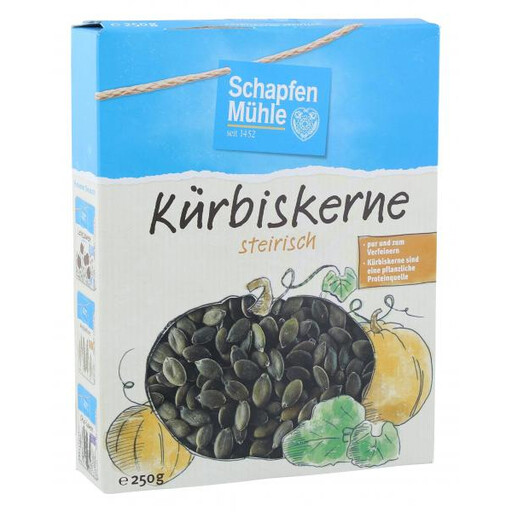
SchapfenMühle Styrian pumpkin seeds, 250 g
An option to enjoy with your coffee on the train if you’re specifically including seeds in your selection. The 250-g pack can be portioned out for individual journeys; check the ingredients and allergen information on the packaging before eating.
View at Joybuy
 No image available
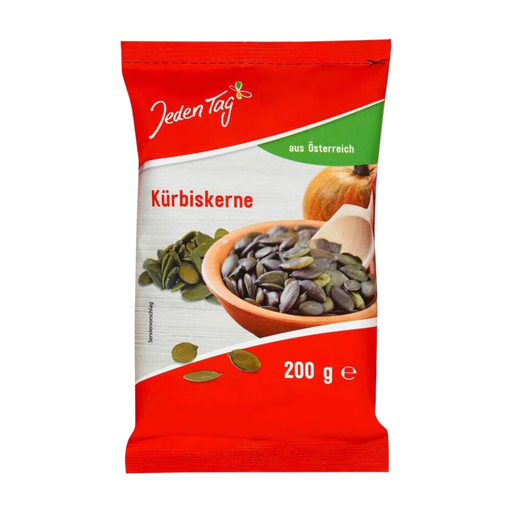
Jeden Tag shelled pumpkin seeds, 200 g
For journeys when you’d rather take shelled seeds than a nut mix. The pack contains 200 g; look out for any shell fragments when taking out a portion, and follow the information on the packaging.
View at Joybuy
 No image available
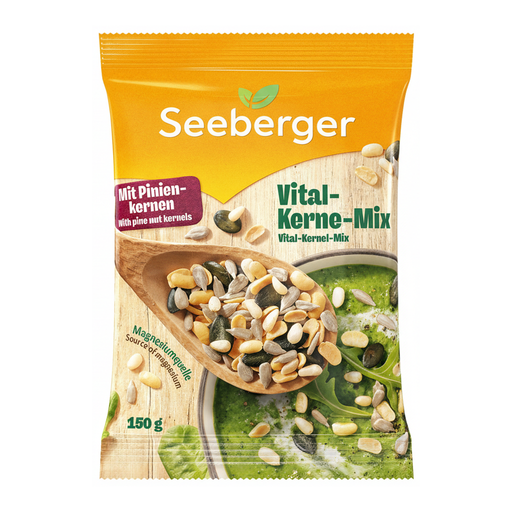
Seeberger Vital Salad Seed & Kernel Mix, 150 g
If you’d prefer a mix rather than a single variety to enjoy with your coffee on the train, this 150-g pack is one option. The product information lists soya and possible traces of peanuts and nuts; if you have allergies, check the labelling on the specific pack.
View at Joybuy
 No image available
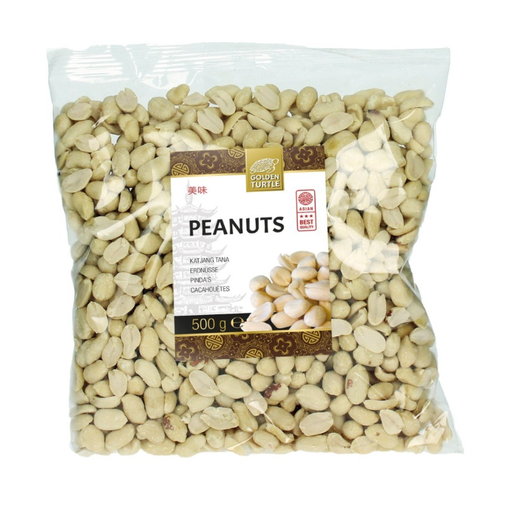
Golden Turtle Peanuts Snack, 500 g
For a journey, this 500-g pack is better suited to portioning out at home. The peanuts are described as raw: before buying, check that raw peanuts suit the way you plan to use them, and follow the preparation and storage instructions on the pack.
View at Joybuy
 No image available
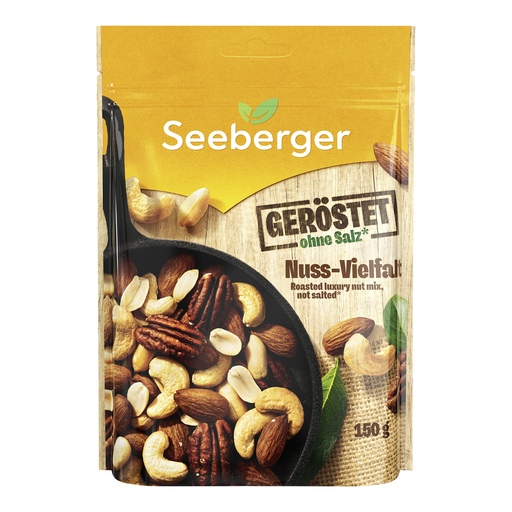
Seeberger Roasted Nut Selection, 150 g
A roasted nut mix for anyone who’d like several varieties rather than individual seeds with their coffee. The pack contains 150 g and includes peanuts and tree nuts, so it’s important to check the allergen information before buying.
View at Joybuy
Frequently asked questions
How do I compare peanuts as a protein-focused snack?
Compare the protein per 100 g, then work out how much that means for the portion you’re planning to take. EDEKA and REWE list 25 to 26 g of protein per 100 g for the peanut products described; the German Nutrition Society also lists 48 g of fat per 100 g for peanuts. Both figures help put the snack in context.
Are unsalted peanuts a better choice for regular commutes?
If your main aim is to limit salt, the unsalted variety in the EDEKA comparison has the lower listed amount. It contains 0.01 g of salt per 100 g, compared with 0.75 g for the salted variety; both list 26 g of protein per 100 g. Check the figures on the pack you’re actually buying.
Are pumpkin seeds the same as nuts?
No. Pumpkin seeds are seeds, not nuts. They fit into this snack selection if you’re considering seeds as well as nuts; compare the nutritional information and ingredients on each pack.
How should I store an opened pack for several journeys?
According to the Federal Centre for Nutrition, shelled and chopped nuts should be kept in an airtight container and, where possible, stored in the fridge. Take out only the portion you need for your journey and follow the storage instructions on the specific pack as well.
What should I check if I have a peanut or tree nut allergy?
Before choosing a product, check the ingredients, highlighted allergens and any ‘may contain’ information on the specific pack. The EDEKA and REWE peanut products mentioned carry warnings that they may contain traces of tree nuts; the product name alone doesn’t give you enough information.


