Popcorn fans interested in protein
You’d like to enjoy popcorn at the office and check what the nutrition information tells you about the portion you’ll actually eat. The high-protein claim shouldn’t be your only buying criterion.


If you specifically want popcorn, check the nutrition information and protein content of your usual portion when choosing a product labelled high protein; the claim alone tells you little about its salt or sugar content. If popcorn is what matters most, regular popcorn is also an option, though that doesn’t make it a protein snack. If you’re flexible about the type of snack, you can compare other savoury snacks by their nutritional values – but protein crisps are still something different from popcorn.
You’d like to enjoy popcorn at the office and check what the nutrition information tells you about the portion you’ll actually eat. The high-protein claim shouldn’t be your only buying criterion.
You pay attention to the protein content of your office snack, but you’re also open to another crunchy option. Whether it fits your diet depends on the specific product.
You compare ingredients, allergen information, salt and portion size rather than basing your decision solely on a protein claim.
First decide whether it has to be popcorn. Then you can sensibly check the protein content, other nutritional values and portion size of the specific product.
A good fit if: you want popcorn and the specific product is labelled high protein.
Bear in mind: Lebensmittelklarheit explains that for a product to be labelled “high protein”, at least 20% of its energy content must come from protein. This doesn’t tell you how much protein is in a portion, or anything about its salt or sugar content.
A good fit if: the popcorn format matters more to you than a particularly high protein content.
Bear in mind: regular popcorn isn’t a high-protein product just because of its snack format.
A good fit if: you’d be happy to have another savoury snack instead of popcorn.
Bear in mind: these products have a different snack format, and their protein, salt and portion size depend on the particular variety.
| Criterion | What to check when buying | Who it matters most to |
|---|---|---|
| Protein per portion | Compare protein and energy using the same measure, as well as the amount you’ll actually eat. Check any high-protein claim against the nutrition information. | If I’m planning a protein-containing snack for the office, I want to know what my portion provides rather than relying only on the front of the pack. For around 42% of consumers, protein content would be the main buying criterion. |
| Ingredients and salt | Read the ingredients and allergen information on the specific pack, and compare the salt content for your portion size. | When I take a snack break, the ingredients and possible allergen traces matter more to me than the protein claim. Around 33% of consumers would focus mainly on how well the product suits their needs and its salt content. |
| Snack format and portion | Decide whether it has to be popcorn, and compare the pack size and stated portion with the amount you usually snack on. | I really want popcorn at the office and want to choose a pack that suits my usual snack portion. The popcorn format and portion size would come first for around 25% of consumers. |
The claim refers to the proportion of energy that comes from protein. It doesn’t also assess sugar, salt, fat or the size of the portion you eat.
Read the full nutrition information and compare products per 100 g as well as for your usual portion.
According to funny-frisch, Protein Chips Paprika Style contain 21 g of protein per 100 g, but 6.3 g in the stated 30 g portion.
For every product, check what quantity the figures refer to and how much you actually intend to eat.
Protein crisps or puffs may be worth comparing nutritionally, but they won’t satisfy a craving for popcorn.
If the popcorn format is essential, compare products labelled accordingly; otherwise, you can consider other snack formats too.
funny-frisch describes Protein Chips Paprika Style as vegan and gluten-free, but also states that this variety “may contain milk”.
If you have an allergy, check the labelling on the specific pack. Manufacturers’ ingredient and allergen information can change when a recipe is updated.
Protein Chips Paprika Style are an option to compare with savoury snacks when popcorn isn’t essential.
Saltletts Vollkorn offers a useful point of comparison for savoury office snacks, but it isn’t high-protein popcorn.
This product is an option as a portioned savoury snack if popcorn isn’t a must for your office break. Check the nutrition information on the specific pack before choosing it for its protein content.
 No image available
A different snack format for your office break if it doesn’t have to be popcorn.
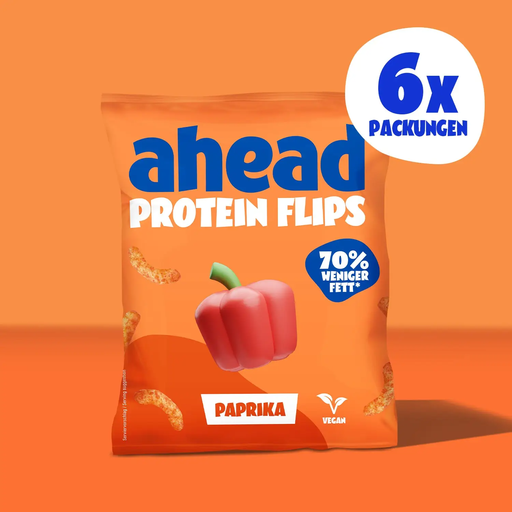
The pack contains six 50 g bags. Compare the nutrition information and ingredients on the specific pack with your buying criteria.
The claim describes the proportion of the energy content that comes from protein: according to Lebensmittelklarheit, at least 20% of the energy must come from protein. Check the nutrition information separately to find out how much protein is in your snack portion.
A snack labelled this way isn’t automatically necessary. The Bundeszentrum für Ernährung explains that high-protein products are usually unnecessary; when choosing an office snack, the first things to consider are how much protein is in the portion you’ll actually eat and the product’s other nutritional values.
No. The term “vegan” doesn’t replace checking the allergen information. funny-frisch describes Protein Chips Paprika Style as vegan, but also states that the product may contain milk; check the labelling on the specific pack.