If protein is your priority when choosing popcorn, check the proportion of the total energy that comes from protein rather than looking at the number of grams alone. Under the Annex to EU Regulation (EC) No 1924/2006, at least 20% of a food’s energy must come from protein for it to be described as “high protein”. For weight management, the portion you actually eat, along with its energy, sugar, fat and salt content, also matters. According to the German Nutrition Society, taking part in recreational sport alone does not mean you need more protein.
Who is this guide for?
Consumers who prioritise protein in their snacks
If you want to include a snack in a protein-focused daily plan, you need to look at its energy content as well as its protein content. Only together do these figures show what proportion of the energy comes from protein.
Popcorn fans who keep an eye on portions
If you want to enjoy popcorn while managing your weight, compare the nutrition information per 100 g with the portion you actually plan to eat. It’s also worth checking the sugar, fat and salt content of sweet and salted varieties.
Consumers who make their own popcorn
Using popcorn kernels lets you choose the seasoning, extras and portion size yourself. Remember to include any oil, butter or sweetener when assessing the finished portion.
What should you look for when buying?
First check whether the popcorn suits your protein priorities, then assess your planned portion using the full nutrition information. Homemade popcorn and other protein snacks meet different needs: controlling the ingredients doesn’t automatically make popcorn high in protein, and an alternative snack isn’t popcorn.
| What matters |
What to check |
Who it matters to |
| Protein content |
Compare the protein and energy figures on the same basis. For a product to be described as “high protein”, the proportion of total energy that comes from protein is what matters. |
If protein is the main reason I’m choosing a snack, I want to know whether it really provides a significant share of its energy. Around 36% of consumers put this first. |
| Energy and portion size |
Compare the energy per 100 g with the amount you plan to eat, and check the pack size too. |
For my daily plan, it makes a difference whether I eat a small portion or the whole bag. That’s why portion control comes first for around 29% of consumers. |
| Sugar, fat and salt |
For sweet and savoury varieties, compare the sugar, fat and salt per 100 g, as well as the ingredients. |
A protein claim isn’t much help if the rest of the nutrition information doesn’t suit the snack I have planned. This is the main consideration for around 21% of consumers. |
| Ingredients and preparation |
Allow for any extras when making popcorn at home, and read the preparation instructions on microwave popcorn packs. |
I want to choose what goes on my popcorn and prepare the right portion myself. Around 14% of consumers put this kind of control first. |
Common misconceptions
-
Assuming “protein” in the name means high protein
The number of grams alone doesn’t determine whether a product can be described as “high protein”. Under the Annex to EU Regulation (EC) No 1924/2006, at least 20% of its energy must come from protein. This applies whatever the snack is called.
Compare the protein and energy figures on the same basis. Then check whether the rest of the nutrition information suits the portion you plan to eat.
-
Choosing caramel popcorn as a protein snack
EDEKA states that its Herzstücke Cream Caramel Popcorn contains 2.6 g of protein and 51.7 g of sugar per 100 g. This particular variety is not evidence that caramel-coated popcorn is a protein-focused choice.
If protein is your main priority, check the full nutrition information for sweet varieties rather than relying on the product name or snack category.
-
Focusing only on protein in microwave popcorn
For GUT&GÜNSTIG Salted Microwave Popcorn, EDEKA lists 8.1 g of protein per 100 g, as well as 430 kcal, 21 g of fat and 2.5 g of salt.
Compare the figures on the pack you’re buying with the portion you plan to eat. Follow the preparation instructions and open the hot bag away from your body to avoid the steam.
-
Assuming homemade popcorn is automatically high in protein
Making popcorn from kernels gives you control over the ingredients, but it doesn’t automatically change the proportion of energy that comes from protein. Lidl’s recipe includes oil, as well as popcorn kernels and optional sweeteners.
Take any oil and other extras into account when assessing the finished portion. Choose this method mainly if you want to decide on the recipe and quantity yourself.
Brands and product ranges to help you choose
EDEKA / GUT&GÜNSTIG
EDEKA’s published information for salted microwave popcorn and cream caramel popcorn shows why each variety should be assessed separately.
- GUT&GÜNSTIG Salted Microwave Popcorn: EDEKA lists 8.1 g of protein, 430 kcal, 21 g of fat and 2.5 g of salt per 100 g.
- EDEKA Herzstücke Cream Caramel Popcorn: EDEKA lists 2.6 g of protein and 51.7 g of sugar per 100 g; milk is listed as an allergen. Always check the information on the pack you’re buying.
funny-frisch
The product ranges covered here are alternatives in the savoury snack category, but they aren’t popcorn.
- For Protein Chips Barbecue, funny-frisch lists 21 g of protein per 100 g.
- The same product information lists 443 kcal and 1.9 g of salt per 100 g. The popchips BBQ Style considered here are a potato and rice snack with 5.1 g of protein per 100 g; neither product should be confused with popcorn.
Lidl
Lidl’s preparation guide is a useful reference for making popcorn from kernels, not for choosing a ready-made high-protein popcorn.
- The guide suggests adding spices or sweetener and a little oil to popcorn kernels, so you can choose the recipe and portion yourself.
- Any extras are part of the finished portion. Making popcorn yourself does not in itself prove that it’s high in protein.
A snack alternative at Joybuy
If you’re also considering a savoury flip snack instead of popcorn, the product below is from a different snack category. Check the nutrition information on the pack and the amount you plan to eat before choosing.
 No image available
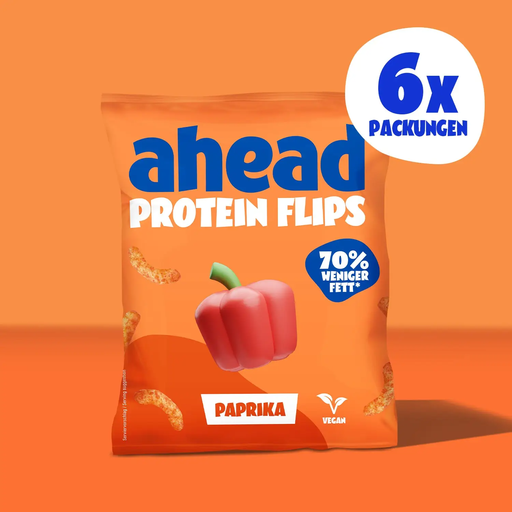
ahead Protein Flips paprika, tray of 6 × 50 g
An option if you’re looking for a paprika-flavoured flip snack instead of popcorn. According to the product name, the tray contains 6 × 50 g; compare the nutrition information on the pack with your planned portion.
View at Joybuy
Frequently asked questions
When can popcorn be described as “high protein”?
At least 20% of its energy must come from protein, as set out in the Annex to EU Regulation (EC) No 1924/2006. If the figures use the same basis, you can calculate the proportion: multiply the protein in grams by 4 kcal, divide by the total calories, then multiply the result by 100. The amount of protein per 100 g alone doesn’t answer the question.
Do I need high-protein popcorn because I do recreational sport?
No. Taking part in recreational sport alone doesn’t mean you need high-protein popcorn. The German Nutrition Society says that adults who do 30 minutes of moderate-intensity activity four to five times a week don’t need to increase their protein intake.
What should I bear in mind with microwave popcorn?
Follow the preparation and safety instructions on the pack. REWE specifically warns that its microwave popcorn releases hot steam after cooking: open the bag away from your body.


