If you want the cake itself to contribute protein to your snack, the lentil and legume-based products compared here are a better choice than classic rice cakes. The lentil cakes, protein cakes and crackers listed by REWE contain 18.4 to 26 g of protein per 100 g; the Kallo and Alnatura rice cakes compared here contain 8.5 and 7.9 g per 100 g, according to Kallo and EDEKA24 respectively. For days out, also check the actual portion size, ingredients, salt, allergens and storage instructions on the pack.
Which cakes might suit you
Active days out, with protein in mind
Whether you’re travelling, spending a day at the beach or going for a walk, you want a snack that contains protein even without a topping. So, as well as the amount per 100 g, consider how much is in the pack and how much you’ll actually eat.
On the go, with a preference for a short ingredient list
You’d rather have a simple cake than one with the highest possible protein content. If you want to add a topping, compare the cake and your chosen topping as separate parts of the snack.
Families and travellers checking for allergens
Before packing, check the ingredients and information on the specific pack. For children, variety across different types of snacks is also worth considering: the German Federal Institute for Risk Assessment notes that rice products such as rice cakes can contain relatively high levels of inorganic arsenic.
What to look for when buying
First decide whether you want the cake itself to provide protein or mainly to serve as a base for a topping. Then compare the ingredients and the pack information for your day out.
Lentil and legume cakes
A good fit if: You’re looking for a cake you can eat as it is, and its own protein content matters to you.
Worth weighing up: Recipes vary. REWE says its organic lentil cakes contain 99.5% red lentils and 0.5% sea salt, while the Verival cakes listed by REWE contain maize, legumes and pea protein.
Savoury lentil crackers
A good fit if: You’d prefer a ready-seasoned individual portion for on the go rather than a plain cake.
Worth weighing up: The Reis-fit Risbellis Tomato & Pepper listed by REWE contain 26 g of protein and 1.45 g of salt per 100 g; the recipe also includes sunflower oil.
Classic rice cakes
A good fit if: You’re looking for a cake to use as a base for your choice of topping, rather than expecting it to be a major source of protein.
Worth weighing up: Kallo gives 8.5 g of protein per 100 g for its Organic Unsalted Wholegrain Rice Cakes; EDEKA24 lists 7.9 g per 100 g for Alnatura Organic Rice Cakes with Sea Salt. Adding a topping changes the nutritional profile of the whole snack.
| What to consider |
What to check when buying |
Who it matters to |
| Protein in your snack |
Protein per 100 g and per pack or portion you’ll actually eat; whether the main ingredient is rice, maize or legumes. |
If you want a snack without a topping after exercise, check how much protein the cake itself contains. This is likely to be the main buying consideration for around 50% of consumers. |
| Ingredients and salt |
Compare the ingredients list and salt per 100 g on the same basis. |
For regular snacks, I want to be able to choose between a simple cake and a seasoned cracker. Ingredients and salt are likely to be the main consideration for around 30% of consumers. |
| Days out and family |
Read the allergen and may-contain information, as well as storage instructions on the pack. |
When packing snacks for a trip or for the family, I need clear, suitable labelling and storage information. This may be the priority for around 20% of consumers. |
Common selection mistakes
-
Assuming all rice cakes are high in protein
The classic rice cakes compared here contain 8.5 and 7.9 g of protein per 100 g, according to Kallo and EDEKA24 respectively. The lentil and protein products listed by REWE contain 18.4 to 26 g per 100 g, although they are not all rice cakes.
Start by comparing protein per 100 g, then consider how much you actually want to eat. If you prefer a classic rice cake, choose a topping to suit your needs rather than judging the protein content by the product name alone.
-
Looking only at the protein figure
A seasoned cracker and a plain lentil cake suit different tastes and ingredient preferences. REWE lists 1.45 g of salt per 100 g as well as 26 g of protein per 100 g for Reis-fit Risbellis Tomato & Pepper.
Check the protein, salt and ingredients for the same quantity before comparing a seasoned portion with a plain cake.
-
Overlooking allergen information because of another label
A claim such as ‘vegan’ or ‘gluten-free’ doesn’t answer every question about ingredients or possible traces. Kallo says that its rice cakes may contain traces of milk, sesame and soya; the Alnatura Organic Rice Cakes with Sea Salt listed by EDEKA24 contain sesame.
Check the ingredients and allergen and may-contain information on the specific pack, especially if someone travelling with you has an allergy.
-
Planning rice cakes as a child’s only daily snack
The German Federal Institute for Risk Assessment notes that rice and rice products, including rice cakes, can contain relatively high levels of inorganic arsenic.
Make sure children have a varied selection of different grains and snacks rather than relying on rice cakes every day.
Brands and product ranges to consider
The details below apply to the specific products mentioned, not to each brand’s entire range.
REWE Bio
REWE Bio Lentil Cakes with Sea Salt are a legume-based alternative to classic rice cakes.
- REWE says they contain 25 g of protein per 100 g and are made with 99.5% red lentils and 0.5% sea salt.
- Lentil cakes aren’t rice cakes, so check which type and flavour best suit your snack before choosing.
Verival
The vegan organic protein cakes listed by REWE combine maize with legumes and pea protein.
- REWE gives the protein content for this variety as 18.4 g per 100 g.
- If you’re looking for a particularly short ingredient list, compare this blend with a lentil cake made from simpler ingredients.
Reis-Fit Risbellis
The High Protein Tomato & Pepper variety is a savoury lentil cracker in a 40-g pack.
- REWE lists 26 g of protein per 100 g and 10 g of protein per 40-g pack.
- The 1.45 g of salt per 100 g listed by REWE and the sunflower oil in the recipe are worth considering when comparing these with plain cakes.
Kallo
Organic Unsalted Wholegrain Rice Cakes are classic, unsalted wholegrain rice cakes.
- Kallo gives the protein content for this variety as 8.5 g per 100 g. They work well as a base for your choice of topping.
- Kallo says that this variety may contain traces of milk, sesame and soya.
Alnatura
The Organic Rice Cakes with Sea Salt listed by EDEKA24 are a classic rice option to compare with legume cakes.
- EDEKA24 lists 99% wholegrain rice and 7.9 g of protein per 100 g for this product.
- The recipe contains sesame, so check the allergen information on the pack.
Lentil cakes at Joybuy
This selection features a lentil cake for anyone looking for an alternative to classic rice cakes or a base for their own topping as a summer snack. For protein comparisons, refer to the nutritional information on the specific pack.
 No image available
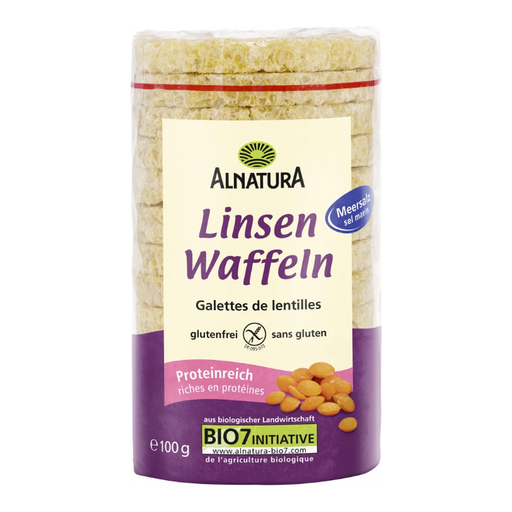
Alnatura Organic Lentil Cakes, 100 g
A lentil cake for anyone who wants to enjoy a snack without a topping while out and about, or add their own topping.
Pack size: 100 g. Check the nutritional information on the pack to compare protein content; if you have a soya allergy, also check the allergen and may-contain information there.
View at Joybuy
Frequently asked questions
How do I compare the protein content of cakes and crackers?
First compare the figures per 100 g, then work out the amount for the portion you’ll actually eat. For example, REWE lists 10 g of protein in the 40-g pack of Reis-fit Risbellis High Protein Tomato & Pepper, compared with 26 g per 100 g. Under EU rules on nutrition labelling, you can check protein and salt together.
What should I bear in mind when packing cakes for a hot day out?
Follow the storage instructions on the specific pack and protect it from moisture and heat. The Verival cakes listed by REWE should be protected from heat and moisture; the Reis-fit crackers should be stored in a dry place and protected from heat.
Do I need to check for allergens in vegan or gluten-free cakes?
Yes. Check the ingredients and may-contain information on the specific pack. The German Federal Office of Consumer Protection and Food Safety explains how the main allergens are labelled in ingredient lists. For the products compared here, Kallo says its Organic Unsalted Wholegrain Rice Cakes may contain traces of milk, sesame and soya; the Alnatura Organic Rice Cakes with Sea Salt listed by EDEKA24 contain sesame.
Should rice cakes be the same snack for children every day?
A varied diet is a better choice than making rice cakes a child’s only go-to snack every day. The German Federal Institute for Risk Assessment notes that rice products such as rice cakes can contain relatively high levels of inorganic arsenic; this doesn’t tell us how much is present in any individual pack.


