
Lieferung heute & morgen

Qualitätsgarantie

Willkommens-Angebote freischalten: KOSTENLOSE Lieferung | Bis zu 80 % RABATT | Kostenlose 30-Tage-JoyPlus-Testphase
App herunterladen
High-quality cookware should perform reliably every day, fit your hob and be easy to clean without unnecessary effort. For keen home cooks, families and quality-conscious households, it is not just the brand or finish that matters. The material construction, heat distribution, capacity and actual suitability for induction, the oven or dishwasher are all crucial.
The labelling should explicitly mention induction, gas, electric and ceramic hobs. With older or very thin pots, heat transfer on an induction hob may be uneven. A fully encapsulated or multi-layer base is therefore an important technical specification.
Coated frying pans can reduce food sticking. However, their lifespan depends on temperature, cleaning products and the kitchen utensils used. Metal turners, prolonged heating when empty and sudden changes in temperature can damage the surface. If you are looking for a particularly durable solution, you should also compare stainless steel frying pans and enamelled cast iron.
A large roasting dish may not fit in every oven or dishwasher. A heavy cast-iron pot also requires enough storage space and a sturdy surface to rest on. Before buying, check the diameter, height, capacity, weight and lid dimensions. For family meals, a capacity of around five to eight litres may be practical, while smaller households can manage with two to four litres.
18/10 stainless steel, also known as Cromargan stainless steel, is neutral in taste, resistant to acids and easy to care for. In stainless steel frying pans, an aluminium core or sandwich base improves heat conduction. Multi-layer constructions, such as Tri-Ply, often consist of stainless steel and an aluminium core. The exact base thickness and construction should be clearly stated in the product specifications.
Cast-iron pots retain heat for longer and are ideal for braising, slow cooking and baking bread. An enamel coating makes cleaning easier and prevents food from coming into direct contact with the cast iron. At the same time, these pots remain heavy and should not be cooled suddenly with cold water.
With coated frying pans, the permitted temperature, oven suitability and care instructions are particularly important. The ZEROPAN model’s product specifications mention a ceramic coating and the absence of PFAS, PTFE and PFOA. Nevertheless, only use the temperatures and kitchen utensils recommended by the manufacturer.
For induction pots, the base must be magnetically compatible and sit flat on the hob. When using cookware in the oven, it is important to distinguish between the cookware and its lid: a pot may, for example, be oven-safe up to 260 °C, while the glass lid may only be approved for temperatures up to 148 °C. These are among the most important specifications for oven-safe cookware.
“Dishwasher-safe cookware” does not automatically mean that every surface will remain unchanged in the long term. Polished stainless steel can be cleaned in the dishwasher, but it may lose its shine more quickly as a result. Enamelled cast iron is also often dishwasher-safe; however, hand washing is frequently recommended to protect the surface. Coated frying pans may be listed as dishwasher-safe, but gentle hand washing can put less strain on the coating.
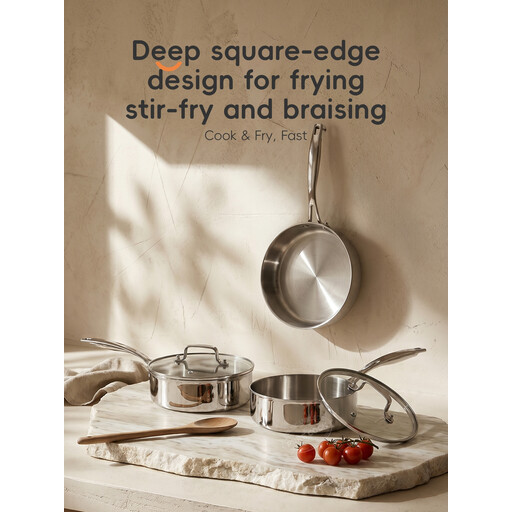
Why this product suits this profile: The compact 20 cm frying pan is ideal for smaller households, breakfast, pasta dishes, sautéing and individual portions of braised dishes. According to the product specifications, it is designed for induction, gas and electric ceramic hobs.
The stated Tri-Ply construction with an aluminium core is more informative than a blanket marketing claim about heat distribution. The lid also allows you to braise with less splashing.
304 stainless steel, 20 cm diameter, glass lid and, according to the product specifications, a dishwasher-safe design.
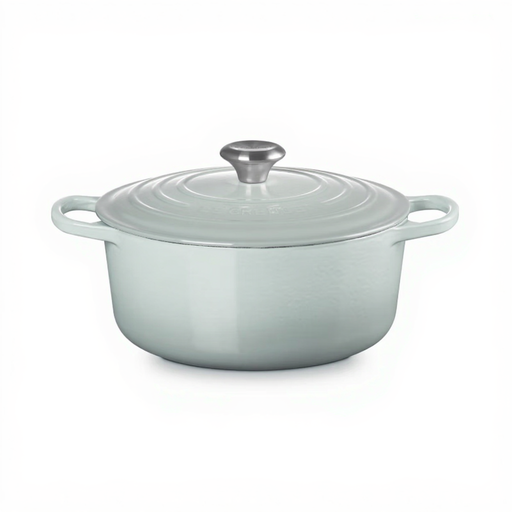
Why this product suits this profile: The enamelled cast-iron pot is designed for braising, roasting, slow cooking and baking. With a capacity of 5.5 l, it provides plenty of room for family portions and one-pot dishes.
The product specifications clearly state the material, lid, compatible hob types and care instructions. The enamelled interior does not require the additional seasoning needed for classic, uncoated cast iron.
5.5 l capacity, enamelled cast iron, matching lid and suitability for various heat sources according to the product description.
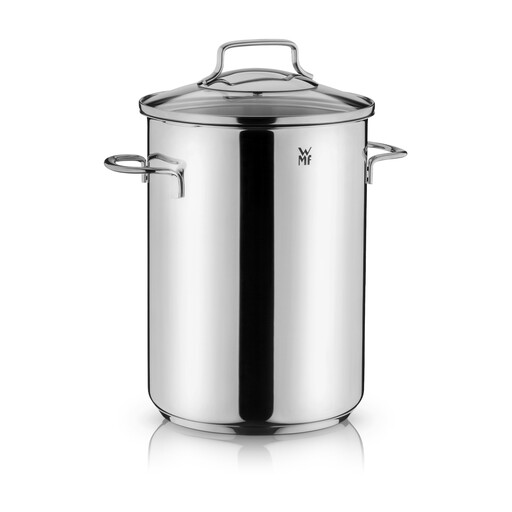
Why this product suits this profile: The tall, narrow asparagus pot is designed for asparagus, spaghetti, pasta and long vegetables. According to the product description, the wire insert allows you to remove the cooked food in one step.
The height of 28.5 cm with the lid and the intended uses are clearly stated. This allows you to check in advance whether the pot will fit in your kitchen cupboard and on your existing hob.
Cromargan 18/10 stainless steel, 4.5 l capacity, glass insert and, according to the specifications, suitability for all hob types and the dishwasher.
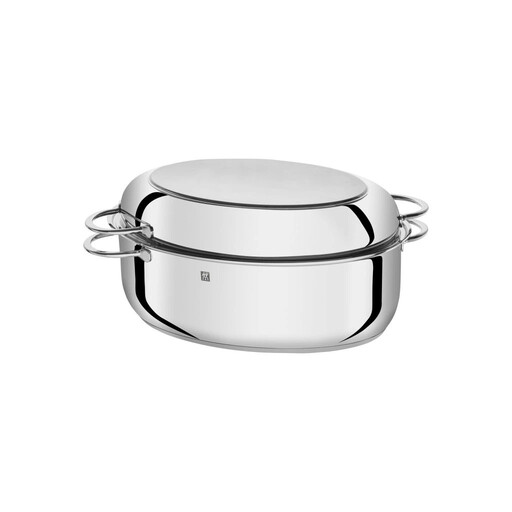
Why this product suits this profile: The large roasting dish with lid is ideal for large cuts of meat, bakes and one-pot dishes. According to the product specifications, the lid can also be used as a shallow roasting tray or serving dish.
With dimensions of 40 × 25 cm, a capacity of 8.5 l and an oven temperature limit of up to 260 °C, the key usage limits are clearly documented. This reduces the risk of buying a roasting dish that is too small or not suitable for oven use.
18/10 stainless steel, SIGMA-Classic sandwich base, 8.5 l capacity and suitability for induction according to the product description.
We have put together a complete, regularly updated list of products that fully meet these strict selection criteria and the safety regulations applicable in the EU.
Pots and pans with a magnetic, flat base are suitable. Look for the explicit statement “suitable for induction”. A multi-layer base can improve heat distribution, but it does not replace the manufacturer’s information about hob compatibility.
Its service life depends on the material, construction and care. Stainless steel and enamelled cast iron are designed for long-term use when handled correctly. With coated frying pans, temperature, kitchen utensils and cleaning have a particularly strong impact on the condition of the surface.
Not necessarily. A dishwasher makes cleaning easier, but it can dull polished surfaces and put more strain on coatings. Always check the care instructions and, with delicate surfaces, avoid harsh cleaners, scouring pads and sudden changes in temperature.