
Lieferung heute & morgen

Qualitätsgarantie

Willkommens-Angebote freischalten: KOSTENLOSE Lieferung | Bis zu 80 % RABATT | Kostenlose 30-Tage-JoyPlus-Testphase
App herunterladen
Creating prototypes and small-batch productions demands efficiency and precision. However, long printing times can slow down the development process and extend iteration cycles. A high-speed 3D printer addresses this exact problem by significantly reducing manufacturing time without compromising print quality. For users who also work with demanding materials like carbon fiber-reinforced filaments, special technical features are essential.
This guide provides an overview of the crucial criteria for selecting a fast FDM printer. It presents a selection of current models designed for advanced users, prosumers, and small businesses, helping you make an informed decision based on objective technical data.
The choice of the right model depends on your specific use cases. The following points are key technical aspects to consider in your decision.
A CoreXY 3D printer is characterized by a special belt system where the printhead is moved on the XY plane through the coordinated motion of two stepper motors. Since the motors are mounted on the fixed frame, the moving mass of the printhead is lower. This allows for higher accelerations and speeds of up to 600 mm/s and more, while minimizing vibrations and the resulting printing artifacts (ghosting). This design is a key feature for a fast 3D printer for prototyping.
The ability to process engineering filaments significantly expands the range of applications. For abrasive materials, as with a carbon fiber 3D printer, a hardened steel nozzle is required, as standard brass nozzles would wear out quickly. A high nozzle temperature (approx. 300°C) and a heated print bed (approx. 100°C) are prerequisites for processing filaments like ABS, ASA, or PA-CF. A 3D printer with an enclosure also ensures a stable ambient temperature, which prevents warping in temperature-sensitive materials and increases process reliability.
Modern printers significantly reduce manual effort. A 3D printer with auto-leveling is now a standard feature for an efficient workflow. The system measures the print bed at multiple points and digitally compensates for any unevenness, ensuring an optimal first layer and a high success rate. Additional smart features like vibration compensation, filament sensors, and AI-powered failure detection further contribute to reliability and a seamless workflow.
Here is a selection of models that stand out for their speed, material versatility, and smart features.
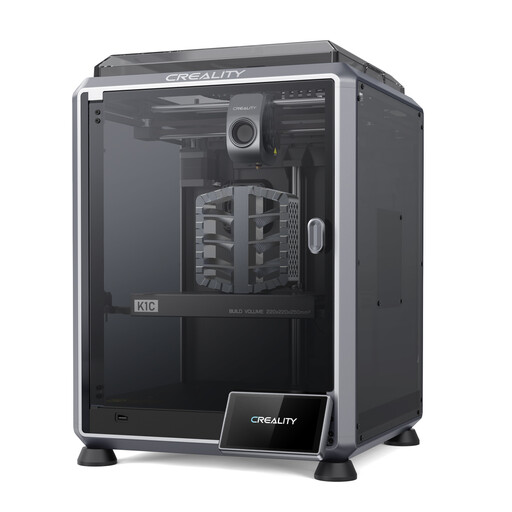
Why It Stands Out The Creality K1C is purpose-built for processing engineering filaments. With its enclosed design, tri-metal nozzle, and integrated AI camera, it offers a professional setup for manufacturing functional parts from materials like PLA-CF, PA-CF, and PET-CF.
Pros
Who Is This Model For? For prosumers and small businesses who need a reliable printer for creating robust, functional prototypes and short-run parts from engineering filaments.
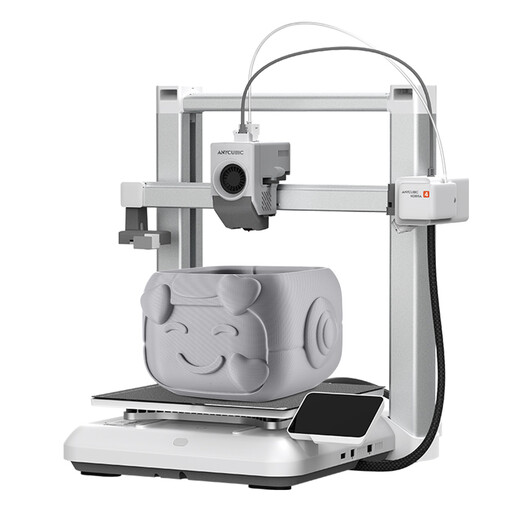
Why It Stands Out The ANYCUBIC Kobra 4 combines a large build volume with high speed and a comprehensive smart ecosystem. It is designed for users who want to efficiently produce both large models and serial productions.
Pros
Who Is This Model For? For advanced users and creators looking for a fast, smart printer with a large build volume for versatile projects, from prototypes to creative models.
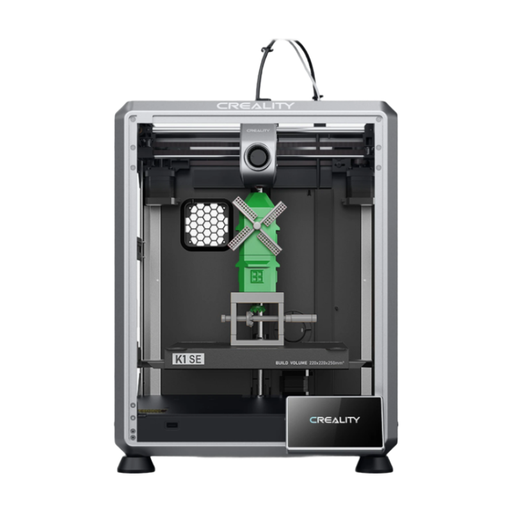
Why It Stands Out The Creality K1 SE offers the high speed of the K1 series in an accessible package. It comes pre-assembled and calibrated, enabling a quick setup. Its focus is on high speed and ease of use for standard filaments.
Pros
Who Is This Model For? For 3D printing enthusiasts who want to enter the world of high-speed printing and are looking for a reliable, fast printer for materials like PLA, PETG, and TPU.
The models featured here cover specific applications. If you are looking for other printing technologies, build volumes, or specific features, you can find a broader selection of devices for different needs in our comprehensive 3D Printers category.
1. What is a CoreXY 3D printer and why is it faster? A CoreXY 3D printer uses a belt system where two stationary motors move the lightweight printhead on the XY plane. Since less mass needs to be accelerated, higher speeds and accelerations are possible with fewer vibrations. This results in shorter print times while maintaining print quality.
2. Do I need a 3D printer with an enclosure? An enclosure is especially important for printing with filaments prone to thermal warping, such as ABS, ASA, or Nylon. It keeps the temperature inside the build chamber constant and protects the print from drafts. For materials like PLA or PETG, an enclosure is not strictly necessary but can improve print consistency.
3. How important is auto-leveling on a high-speed 3D printer? Very important. At high print speeds, a perfectly adhered first layer is crucial for the success of the entire print. An automatic leveling system precisely measures the print bed and compensates for any unevenness, which eliminates manual calibration effort and significantly increases reliability. This saves time and reduces the number of failed prints.