
Lieferung heute & morgen

Qualitätsgarantie

Willkommens-Angebote freischalten: KOSTENLOSE Lieferung | Bis zu 80 % RABATT | Kostenlose 30-Tage-JoyPlus-Testphase
App herunterladen
A highlighter should make important sections stand out without smudging the text, bleeding through the paper or drying out after a short time. That is why brightness is not the only factor to consider when buying one. The nib shape, line width, ink type, handling and intended use are all important.
A fluorescent highlighter with very strong ink can make headings stand out clearly, but may be distracting on thin paper or affect readability. For schoolbooks, legal texts and newspapers, a dry highlighter with a wax core may be more suitable, as it highlights without liquid ink.
The colour should also suit the purpose:
A chisel-tip highlighter creates different line widths depending on the angle. This is useful when you need both underlining and full-line highlighting. The specification 1–5 mm highlighter therefore does not necessarily mean that every line will be exactly the same width.
A round nib or soft fibre tip, on the other hand, allows you to adjust the pressure with greater control. According to the product information, the STAEDTLER triplus Textsurfer offers a variable line width of approximately 1–4 mm. If you regularly highlight individual words and complete sections, this flexibility is worth considering.
Water-based ink can work well on standard paper, but may behave differently on very thin pages. For faxes, carbonless paper or delicate book pages, it is advisable to test the highlighter on the edge first. After highlighting, allow the page to dry briefly before closing it or placing it on top of another page.
Also check that the cap closes tightly. A long service life depends not only on the ink reservoir, but also on whether the highlighter is capped immediately after every use.
The right nib depends on how you intend to use the highlighter:
Check whether the manufacturer specifies water-based ink, lightfastness or suitability for inkjet printouts. Such information relates to the product description and should not automatically be assumed to apply to every type of paper.
For office printouts, an inkjet-compatible highlighter may be a practical choice. For study materials that are turned frequently, quick-drying properties are important. If you work with photocopies or carbonless forms, look for explicit information about media compatibility.
During long study sessions or extensive marking work, the grip and shape affect how easy the highlighter is to use. A triangular barrel can prevent it from rolling off the desk and help maintain a defined grip position. A grip zone, as specified for certain Pelikan models, can make it easier to guide the highlighter.
For a more sustainable highlighter, specific material information is more useful than general marketing claims. For example, the Pelikan Textmarker 490 Eco is stated to have a casing made from 80% recycled material. This is a product-specific specification and should not be equated with a complete environmental assessment.
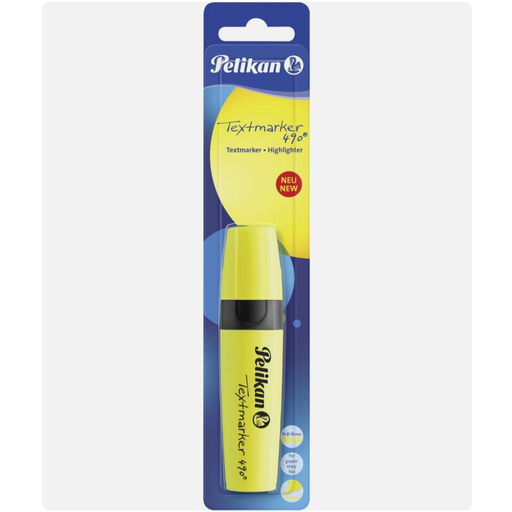
Why this product suits this profile: The standard yellow colour is suitable for schoolwork, office documents and straightforward highlighting tasks. According to the product information, the chisel tip provides line widths of 1, 2 and 5 mm.
The three specified line widths make the nib more versatile than a model with just one fixed line width. The water-based ink is designed for use on different paper surfaces.
Neon yellow colour, chisel tip and 1, 2 and 5 mm markings.
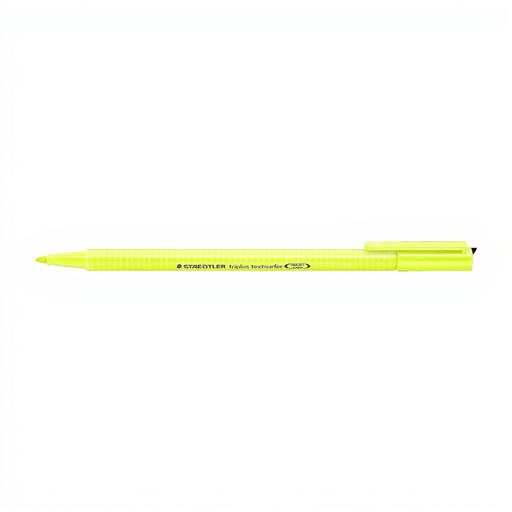
Why this product suits this profile: The triangular shape and soft round tip are designed for users who highlight frequently and for extended periods. According to the product description, the variable line width is approximately 1–4 mm.
The flexible tip reduces the need for several different nib shapes. The triangular barrel is less likely to roll off the desk.
1–4 mm round tip, triangular polypropylene barrel and water-based, bright ink.
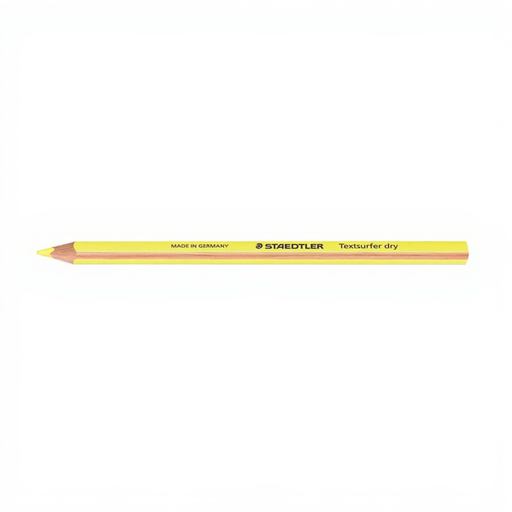
Why this product suits this profile: The dry wax core is designed for thin pages, newspapers, legal texts and similar materials where liquid ink could be problematic.
The wax core works without liquid ink flow and can be sharpened with a suitable twin sharpener. This removes the risk of ink soaking into thin paper.
Neon yellow, lightfast wax core with an approximately 4 mm highlighting width and triangular shape.
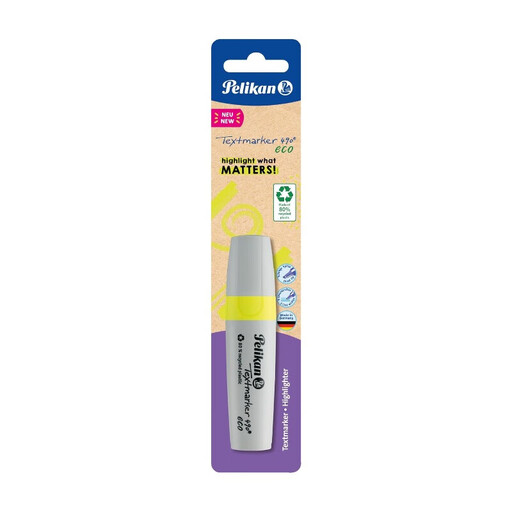
Why this product suits this profile: This model combines neon yellow, water-based ink with a casing made from 80% recycled material, according to the product information. The 1, 2 and 5 mm tip sections are suitable for different highlighting tasks.
The proportion of recycled material is stated specifically, rather than relying on a vague sustainability claim. The cap should still be closed after every use.
80% recycled casing material, three specified line widths and drying protection for up to eight hours according to the product information.
We have put together a complete, regularly updated list of products that fully meet these strict selection criteria and the safety regulations applicable in the EU.
A dry highlighter with a wax core contains no liquid ink and is therefore a possible alternative for thin paper pages. With liquid-ink models, the result depends on the thickness of the paper, the amount of ink and the pressure applied. Test the highlighter on an inconspicuous area first.
Its lifespan depends on the size of the ink reservoir, how often it is used and how it is stored. A larger reservoir can extend its usable life, but does not prevent the highlighter from drying out. Replace the cap immediately after use and store it according to the manufacturer’s instructions, often horizontally.
A highlighter set can be useful if you need several colours for a study or organisation system. If you mainly use one colour, however, a single pen may be sufficient and can help you avoid unnecessary duplicate purchases. As well as the price per item, compare the nib shape, ink volume and the colours you actually need.