
Lieferung heute & morgen

Qualitätsgarantie

Willkommens-Angebote freischalten: KOSTENLOSE Lieferung | Bis zu 80 % RABATT | Kostenlose 30-Tage-JoyPlus-Testphase
App herunterladen
A highlighter is meant to make important passages stand out without smudging the text or bleeding through the paper. In practice, though, a poor purchase often comes down not to the colour, but to an unsuitable tip, ink that doesn't work well with your paper, or a misjudgement of how you'll actually use it. School pupils, university students, teachers and office workers usually need very different features from creatives or anyone marking up foil, glass or plastic.
A heavy layer of colour can look striking on white paper, but it can also overwhelm the text, especially across longer passages. For study notes, transparent, water-based inks are often a better choice. If you're working with coloured paper or photocopies, test the highlighter first to make sure the text remains clearly legible before you start marking large sections.
A marker for underlining needs a different shape from a pen used for broad highlighting. A narrow round tip is handy for individual words and margin notes. A chisel tip, on the other hand, covers larger areas and – depending on how you angle it – can produce both narrow and wide lines. Specifications like 1–5 mm or 1–4 mm shouldn't be dismissed as mere marketing; they're a genuine guide to what the pen can do.
Drying time depends on the paper quality, the amount of ink applied and the printing method. With inkjet printouts, it's crucial to check whether the highlighter is specifically labelled as suitable for that type of print. Even a water-based highlighter can show through thin school or copier paper. Before marking important documents, it's wise to do a quick test on the edge of the paper.
For classic study and office tasks, adjustable tips are especially versatile:
A highlighter with a 1–5 mm tip isn't automatically more comfortable for every task. For very small writing, a broad tip can release too much ink.
A water-based highlighter is suitable for many types of paper used in schools, universities and offices. Look for specific claims such as "Inkjet Safe", suitability for fax or carbon paper, and notes about quick drying. The term "water-soluble" can also mean that marks on certain smooth surfaces can be removed with a damp cloth. That's not the same as a permanent marker.
A highlighter with an ergonomic grip can feel much more comfortable during long study sessions or extensive corrections. Triangular barrel shapes also stop the pen from rolling off your desk. For longevity, a tight-fitting cap and a generous ink reservoir are important. A refillable highlighter can reduce the need to replace individual pens with regular use, but you'll need the right refill ink or a compatible refill station.
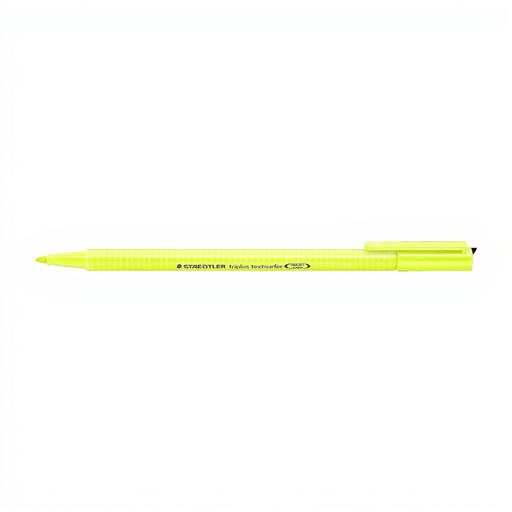
Why this product fits the profile: According to STAEDTLER's product information, this yellow highlighter offers a variable line width of approximately 1–4 mm and a triangular barrel. That makes it suitable for school, university and everyday underlining.
The variable tip reduces the need to use different pens for fine and broad markings. The product description also mentions water-based ink and suitability for inkjet printouts.
Triangular barrel, line width of approximately 1–4 mm and water-based, vibrant ink according to the manufacturer's specifications.
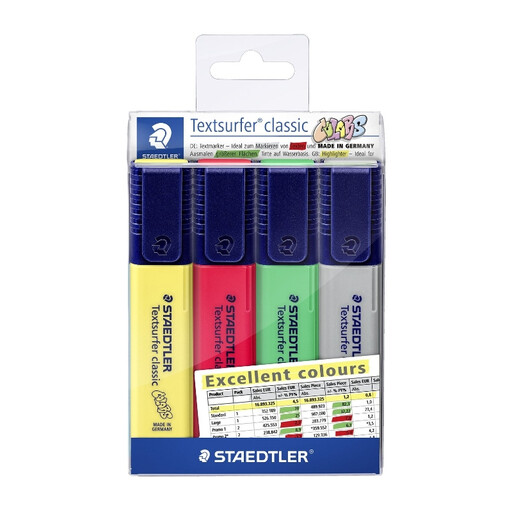
Why this product fits the profile: This set is aimed at users who need several colours for study systems, corrections or documents. According to the product information, the soft chisel tip covers approximately 1–5 mm.
The four colours make clear colour-coding easy, while the broad tip range covers both fine underlining and area highlighting. The manufacturer mentions a large ink reservoir and quick-drying, water-based ink.
Four colours, chisel tip with approximately 1–5 mm and a large ink reservoir according to the product description.
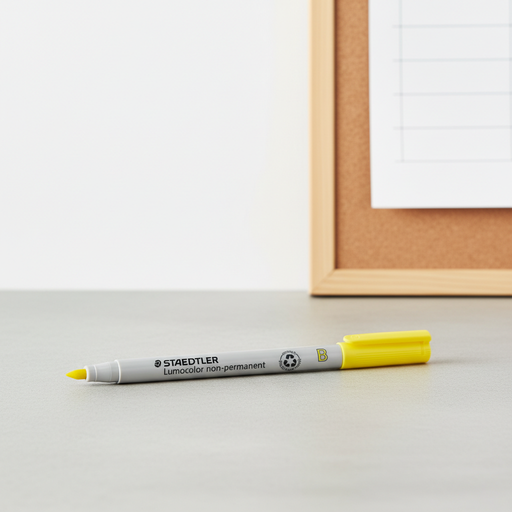
Why this product fits the profile: This marker is of interest to users who don't work exclusively with paper. According to the product information, it's suitable for paper, plastic, whiteboards and glass, and has a chisel tip of 1.0/2.5 mm.
The "Non-Permanent" label clearly distinguishes it from permanent markers. According to the product information, the marker is refillable and the water-soluble ink can be removed from foils with a damp cloth.
Use on several smooth surfaces, 1.0/2.5 mm chisel tip and compatibility with a STAEDTLER refill station according to the product description.
We've put together a complete, regularly updated list of products that fully meet these strict selection criteria and the safety regulations in force in the EU.
To keep the ink usable for as long as possible, always close the cap fully straight after highlighting. Many pens can be stored horizontally; always follow the manufacturer's instructions. Test new colours first on a scrap of the paper you'll be using. For permanent marking on wood, metal or plastic, you don't need a classic highlighter – you need a dedicated permanent marker.
That depends more on the paper thickness and the amount of ink applied than on the brand name alone. Water-based ink can be visibly see-through on thin paper. A quick test on the reverse side will show whether a particular marker is suitable for your documents.
The lifespan is determined by the ink reservoir, line width, frequency of use and storage conditions. A large reservoir can be an advantage with regular use. Refillable models are especially good for heavy users, provided the right refill station is available.
A highlighter is primarily designed for marking text on paper. A permanent marker is intended for permanent markings on selected surfaces. Before you buy, check whether the ink is water-soluble, wipeable or explicitly permanent.