
Lieferung heute & morgen

Qualitätsgarantie

Willkommens-Angebote freischalten: KOSTENLOSE Lieferung | Bis zu 80 % RABATT | Kostenlose 30-Tage-JoyPlus-Testphase
App herunterladen
A highlighter should make important passages stand out without smudging the text, bleeding through the paper or drying out after a short time. At first glance, many products seem similar when you’re buying a highlighter. The differences often only become clear with everyday use.
Three common buying mistakes:
A chisel-tip highlighter is suitable for broad highlighting and fine underlining. Depending on the angle, it can often produce several line widths. For example, Pelikan models are available in 1, 2 and 5 mm widths.
A highlighter with a soft tip can offer more flexibility when switching between fine and broad marks. According to the product information, STAEDTLER triplus textsurfer models have a soft, rounded tip and a variable line width of around 1 to 4 mm. This is handy for textbooks, lecture notes and documents with different font sizes.
Classic chisel tips are a good choice for creating even, broad highlights. For precise notes and colour-coded study materials, a soft, variable tip may be more suitable.
A water-based highlighter can be used on many types of paper. Even so, check whether it’s suitable for thin paper, carbon copy paper, fax paper or inkjet printouts.
Important features to look for include:
It’s a good idea to test the highlighter on an inconspicuous area before using it across a large section. This is especially useful with printouts, thin recycled paper and important documents.
An ergonomic highlighter should feel secure in your hand and not roll off the desk accidentally. A triangular barrel can make it easier to hold the highlighter at the right angle. A cap that closes securely is more important than an eye-catching design, as exposed tips dry out much faster.
Also look for:
A refillable highlighter could be a worthwhile option in the long term if you use one regularly. Unless the manufacturer clearly states that a product can be refilled, don’t assume it’s refillable just because it has a large ink reservoir.
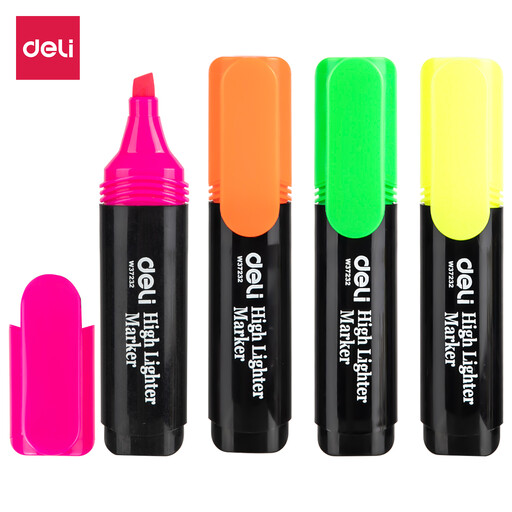
Why this product suits this profile: The set includes four colours for simple highlighting in school exercise books, notes and office documents, so you don’t have to choose several individual highlighters straight away.
According to the product description, the chisel tip allows for different line widths. This means the set isn’t limited to broad highlighting.
Four colours, water-based fluorescent ink and a barrel clip.
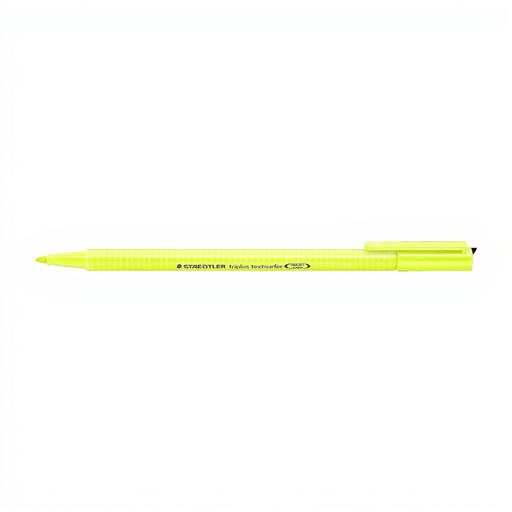
Why this product suits this profile: The triangular barrel and soft, rounded tip make this a good option if you regularly switch between fine underlining and broad highlighting.
The stated line width of around 1 to 4 mm means you’re not restricted to a single width. According to the product information, the ink is suitable for inkjet printouts.
Water-based, lightfast fluorescent ink, a variable 1–4 mm tip and automatic pressure equalisation, according to the manufacturer.
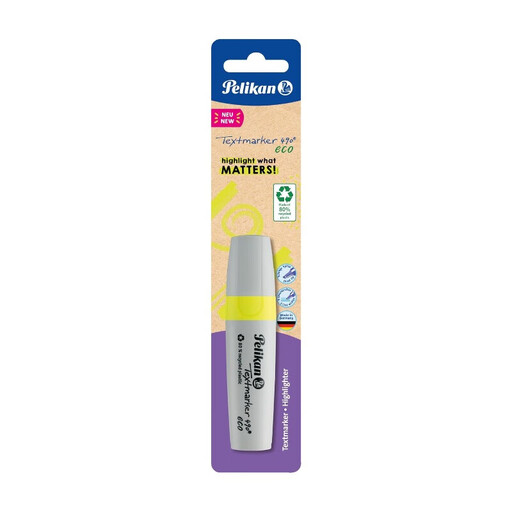
Why this product suits this profile: If you highlight frequently at school, university or in the office, the stated drying-out protection time and ergonomic grip are useful features to consider.
The product information states that the highlighter is protected against drying out for up to 8 hours with the cap off. Even so, you should replace the cap after every use.
According to the product description, the barrel is made from 80% recycled plastic; the chisel tip offers line widths of 1, 2 and 5 mm.
A highlighter set is useful if you want to follow a consistent colour system: yellow for definitions, green for examples and orange for deadlines. One highlighter is enough if you only mark up documents occasionally or prefer a more understated colour.
For creative projects, Faber-Castell Textliners are also available in neon, pastel and metallic colours. If you’re highlighting delicate paper, consider a dry highlighter or gel highlighter. These options don’t use liquid ink and, according to the relevant product information, can reduce bleed-through. It’s still worth testing the line quality and suitability for printouts first.
When choosing a highlighter for school or the office, specific details matter more than marketing claims: the tip, line width, ink base, drying time, lightfastness and cap.
We’ve put together a complete, regularly updated list of products that meet these strict selection criteria and fully comply with the safety regulations in force in the EU.
How long it lasts depends on the amount of ink, pressure when marking, paper and cap. A larger ink supply can extend its lifespan, but it’s no substitute for a cap that closes securely. Replace the cap as soon as you’ve finished using the highlighter, and store it as directed by the manufacturer.
Dry highlighters and gel highlighters can be an alternative to liquid ink on thin paper. For traditional highlighters, check which types of paper they’re suitable for and test them first. No highlighter is guaranteed to work on every type of paper.
Not all highlighters are designed for this. Look for an explicit statement from the manufacturer, such as “Inkjet Safe”. If you’re marking up an important printout, test the ink on an inconspicuous area before highlighting larger sections of text.