
Lieferung heute & morgen

Qualitätsgarantie

Willkommens-Angebote freischalten: KOSTENLOSE Lieferung | Bis zu 80 % RABATT | Kostenlose 30-Tage-JoyPlus-Testphase
App herunterladen
A highlighter should make important information easy to spot without making the text difficult to read or bleeding through to the reverse side. In practice, however, differences often only become apparent during longer study sessions, proofreading or working with documents. Pupils, students, teachers, office workers and creatives should therefore look beyond colour and consider the tip, ink, paper compatibility and ease of use.
Fluorescent ink looks particularly vivid in shops or product images. On thin school paper, however, it can show through heavily or visually obscure the printed text. For important documents, it is worth carrying out a quick test on the paper you actually use.
Pastel and muted shades are often more comfortable during longer study sessions, while neon colours stand out when quickly scanning headings and key terms. A highlighter set with several colour families can be useful if you want to organise colours by topic or priority.
A broad chisel tip is suitable for highlighting entire lines of text, but is less precise for individual words or narrow margin notes. A round, soft tip, on the other hand, can allow different line widths. Look for specific details such as highlighter 1–5 mm or 1–4 mm, rather than relying solely on terms such as “precise” or “versatile”.
A quick-drying highlighter can reduce smudging, particularly for left-handed users or when turning pages quickly. The result still depends on the paper, printer ink and amount of ink applied. With inkjet printouts, pay attention to details such as “inkjet safe” in the product information. A black marker is not suitable for legal redactions or confidential documents without prior testing: copiers and scanners may interpret colours differently.
A highlighter with a chisel tip and widths of 1, 2 and 5 mm covers several tasks. For very fine notes, however, a narrower pen tip is more practical.
A water-based highlighter contains no solvent-based permanent-marker ink and is designed for typical paper highlighting. However, this does not automatically mean that every type of paper will remain free from smudges. In particular, check the following:
Product information about lightfastness, drying time and suitability for fax or copier paper should be treated as a guide. It does not replace an individual paper test.
An ergonomic highlighter can feel more comfortable in your hand during long study or proofreading sessions. Triangular barrels are also less likely to roll off the desk. A secure cap is essential, as uncapped tips can dry out even with effective drying protection. For frequent users, a large ink reservoir, a pressure-resistant tip and clearly recognisable colour coding are practical features to look for.
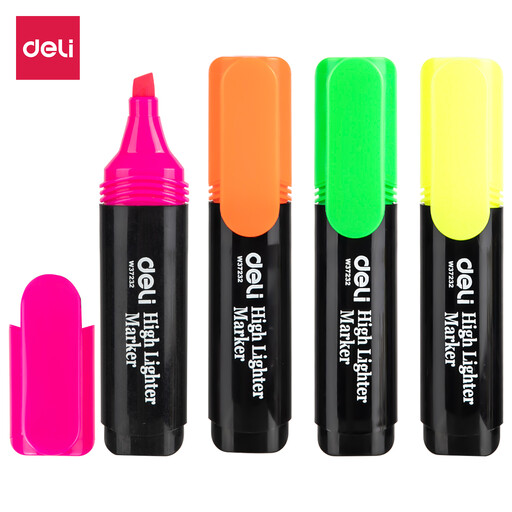
Why this product suits this profile: The four-colour set covers essential highlighting tasks at school, university and in the office, without requiring you to buy individual colours.
The chisel tip allows different types of highlighting depending on how you hold it, so you do not need a separate pen for every task.
Four colours, water-based fluorescent ink and a clip for attaching the pen to books or notebooks.
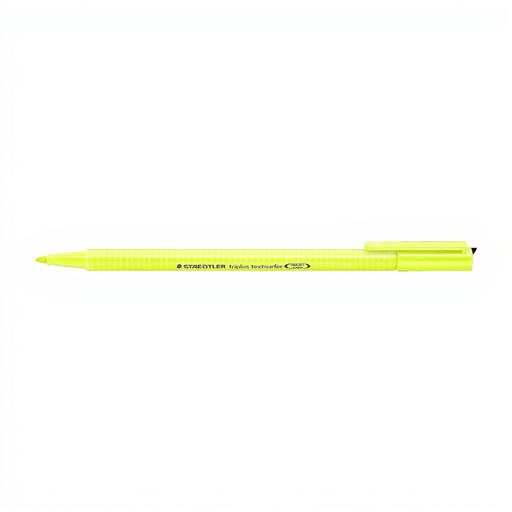
Why this product suits this profile: The triangular shape and soft round tip are designed for people who regularly highlight longer texts and want to switch between fine and broader lines.
The stated variable line width of around 1–4 mm reduces the need to switch between a fine and a broad highlighter.
Water-based, vivid ink, a triangular barrel and, according to the product information, suitability for inkjet printouts.
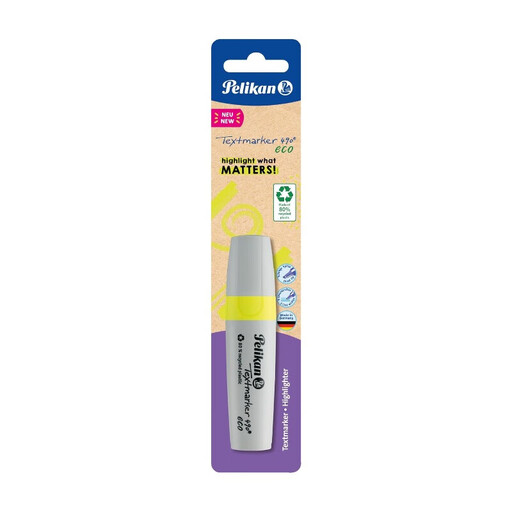
Why this product suits this profile: The highlighter combines a neon colour with a barrel made from 80% recycled material, according to the product information, and is suitable for school, the office and university.
The three stated widths of 1, 2 and 5 mm make the tip suitable for fine underlining and broad highlighting.
Water-based universal ink, an ergonomic grip recess and stated protection against drying out for up to eight hours.
We have put together a complete, regularly updated list of products that fully meet these strict selection criteria and the safety regulations applicable in the EU.
This depends on the paper weight, amount of ink and paper quality. Water-based ink can work well on many standard paper types, but it is not guaranteed to be bleed-proof. Test the highlighter along the edge of the page first. A gel highlighter may be worth considering for delicate paper if you want less ink penetration.
Its lifespan depends on how it is used, the ink reservoir, tip and cap. Large reservoirs are practical for frequent users. Even more important is replacing the cap firmly after every use and storing the highlighter according to the manufacturer’s instructions. Protection against drying out can extend its usable life under certain conditions, but it does not replace keeping the cap closed.
Yellow remains easy to read on many documents and is often used for general highlighting. Green, orange, pink or blue can also help organise information by topic. For extensive study materials, a limited colour system is recommended so that your markings remain clear and consistent. The colour names alone are not what matter most: contrast, legibility and how the ink behaves on the paper you use are key.