
Lieferung heute & morgen

Qualitätsgarantie

Willkommens-Angebote freischalten: KOSTENLOSE Lieferung | Bis zu 80 % RABATT | Kostenlose 30-Tage-JoyPlus-Testphase
App herunterladen
A highlighter should make important sections stand out without bleeding through the paper, smudging the text or drying out too quickly. In practice, though, colour and price aren’t the only things that can lead to a poor purchase. The tip, ink, surface and intended use all matter.
A particularly vivid neon highlighter can look impressive on the packaging. On thin paper, however, the ink may show through or obscure text when photocopied. For legal texts, newspapers, books or carbon-copy paper, highlighters with controlled ink flow or dry highlighter pencils are a practical alternative.
A chisel tip can highlight broad areas and draw fine underlines. That only works, though, if the tip stays firm and the stated line widths suit the way you work. For very fine notes, a marker with a 0.6 or 1.0 mm tip may be more suitable than a classic highlighter with a 1 to 5 mm tip.
A highlighter with dry-out protection can be left uncapped for longer while you work. That doesn’t mean you should leave the cap off indefinitely. To help it last as long as possible, replace the cap after every use. If you use it frequently in lessons or meetings, a stated cap-off time can still help reduce waste and replacement purchases.
First, think about whether you want to highlight whole lines of text, individual words or graphics:
A gel highlighter generally doesn’t need sharpening. A dry highlighter with a wooden casing, on the other hand, can be sharpened with a suitable pencil sharpener.
Water-based ink is typically suitable for paper and dries quickly on it. For transparencies, glass, plastic or whiteboards, a non-permanent marker with water-soluble ink is a better choice. Marks made with these pens can often be removed from smooth surfaces with a damp cloth. Test the marker on an inconspicuous area before using it for the first time.
A permanent marker is designed to make lasting marks, so it isn’t automatically an alternative to a highlighter. It may be difficult to remove from laminated materials or presentation transparencies. For content that changes regularly, refillable non-permanent markers are more practical.
If you highlight every day, look for a large ink reservoir, a durable tip and a secure cap. Refillable highlighters can last longer, provided the refill station is compatible and the ink colour matches. If you’re making an environmentally conscious choice, it’s also worth checking the material content. For example, the Pelikan Highlighter 490 Eco is stated to have a casing made from 80 % recycled material. This is a specific claim about the material, but it doesn’t replace checking the full packaging or disposal options.
For presentations, smell, drying time and line width also matter. A flipchart marker should write vividly on paper without smudging excessively during normal use. Transparencies have different requirements from flipcharts or school exercise books.
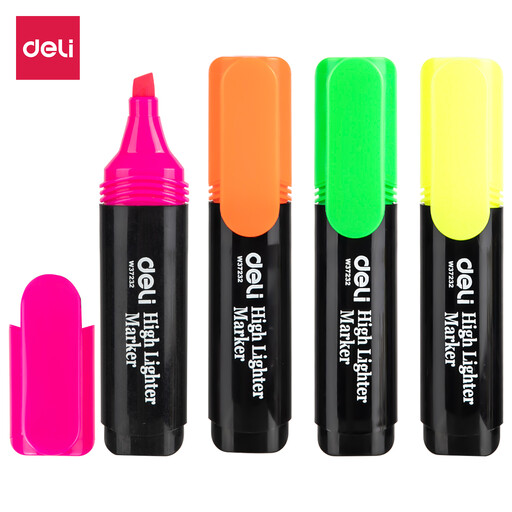
Why this product suits this profile: The set includes four colours for school, university and everyday office tasks. The clip makes it easy to attach to exercise books or notebooks.
The range of colours means you don’t need to buy a separate highlighter for every colour. The chisel tip lets you vary the line width.
Four water-based fluorescent colours, a chisel tip and a clip for on-the-go use.
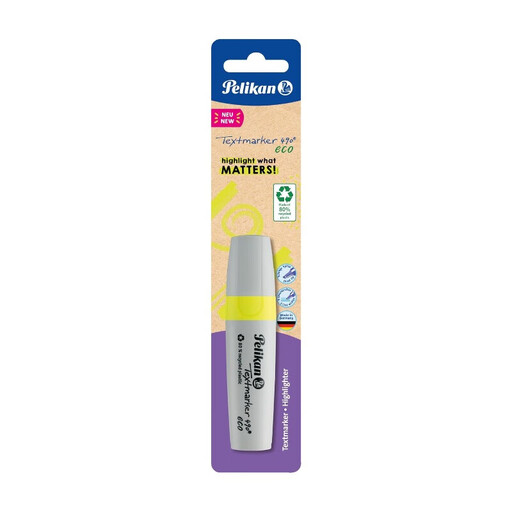
Why this product suits this profile: For longer study or work sessions, this model offers three line widths, an ergonomic grip and a stated cap-off time of up to eight hours.
Specific details about recycled content and dry-out protection make it easier to choose than broad claims about sustainability or durability.
80 % recycled material, 1, 2 and 5 mm line widths, and water-based neon ink.
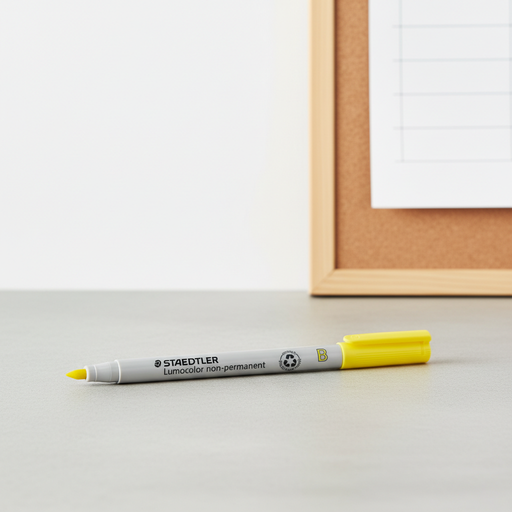
Why this product suits this profile: This model is designed for temporary marks on transparencies, plastic, glass and other smooth surfaces. The 1.0 or 2.5 mm tip suits a range of tasks.
The non-permanent label helps you distinguish it from a permanent marker when you need to remove marks later.
Water-soluble ink, wipes off transparencies and is refillable with the specified STAEDTLER refill station 487 15.
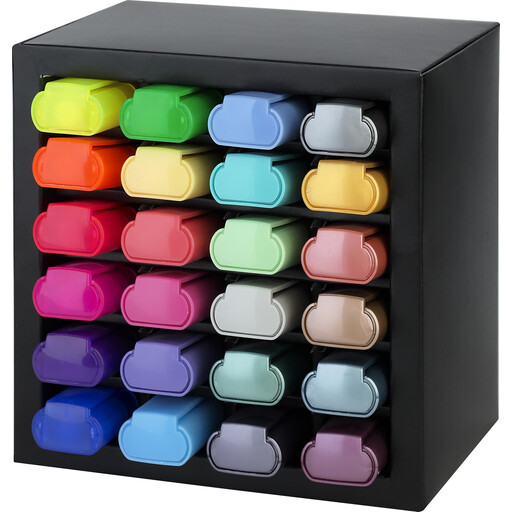
Why this product suits this profile: This highlighter set includes neon, pastel and metallic colours, making it ideal for colour-coding study materials, calendars and creative paper projects.
The different colour families make it easier to establish a consistent colour-coding system, rather than combining several unplanned individual purchases.
24 pieces, three stated line widths of 1, 2 and 5 mm, and a contoured grip area.
We’ve put together a complete, regularly updated list of products that meet these strict selection criteria and fully comply with the safety regulations in force in the EU.
How long it lasts depends on the ink reservoir, line width, pressure and how often you use it. A larger ink supply and caps that are closed properly will help it last longer. If you use highlighters regularly, refillable models may be more economical than disposable ones.
Models with a stated dry-out protection feature are designed to stay uncapped for longer periods. However, this shouldn’t be mistaken for unlimited cap-off time. Replace the cap after use and store the highlighter according to the manufacturer’s instructions.
In everyday German, the two terms are often used interchangeably. A highlighter is usually designed to highlight text on paper. Depending on the type, a marker can also be a dry wax pencil, a gel marker or a marker for transparencies and smooth surfaces. So it’s not just the name that matters: consider the ink, tip and suitable surfaces too.