
Lieferung heute & morgen

Qualitätsgarantie

Willkommens-Angebote freischalten: KOSTENLOSE Lieferung | Bis zu 80 % RABATT | Kostenlose 30-Tage-JoyPlus-Testphase
App herunterladen
Whether you are working with study notes, presentations, bullet journals or plant labels, highlighters and markers serve a range of purposes. A fluorescent highlighter needs to make paper easy to read, while a permanent marker should adhere to smooth or rough surfaces. However, if you focus only on colour or a large set size, you can easily end up buying something that does not meet your actual needs.
As a Joybuy Product Recommendation Officer, I filter relevant product data and match it to practical usage scenarios. What matters is clear information such as nib shape, line width, ink base and suitable surfaces – not empty marketing claims.
A marker set with lots of colours can look appealing. For studying, however, you usually only need a few clearly distinguishable colours. For illustrations or calligraphy, different nibs are more important than the number of colours alone. A highlighter set with four colours and a controllable chisel tip can be more useful in everyday life than a large set without suitable line widths.
A permanent marker is designed for making lasting marks. On porous materials such as untreated wood, cardboard or textiles, the ink may be difficult to remove. A whiteboard marker or non-permanent marker, on the other hand, usually uses water-soluble ink and is suitable for smooth surfaces that can later be cleaned with a damp cloth.
The terms should therefore always be considered together with the intended surface. A marker that can be wiped off glass may not be removable from paper.
A fineliner with a tip measuring 0.05 to 1.0 mm is designed for outlines, technical details and small labels. Brush pens have a flexible brush tip that can produce lines of varying width depending on the pressure and angle used. For calligraphy and flowing lettering, it is therefore not just the ink colour that matters, but also the flexibility of the tip.
A chisel tip usually allows several line widths when the marker is held at different angles. For example, the Pelikan Highlighter 490/B is specified as offering line widths of 1, 2 and 5 mm. With a fineliner, on the other hand, specific tip sizes such as 0.05, 0.1, 0.3 or 0.5 mm are more relevant for precision work.
A flat calligraphy tip may be more suitable for calligraphy. A brush tip in the region of approximately 1 to 6 mm, on the other hand, supports flexible changes in line width for lettering and drawing.
Fast-drying ink can reduce smudging, but it may not be completely smear-proof on every type of paper. Caps should be closed firmly after every use. Several products recommend horizontal storage to help keep the ink distribution at the tip more even.
Small parts such as caps or replacement tips can pose a choking hazard. Products carrying the relevant warnings should be kept out of the hands of children under three years of age. For creative markers described as “non-toxic”, you should also check whether an independent safety standard such as EN 71 or ASTM D-4236 is explicitly mentioned. The product data provided for the Ohuhu markers does not include any such independent certification details.
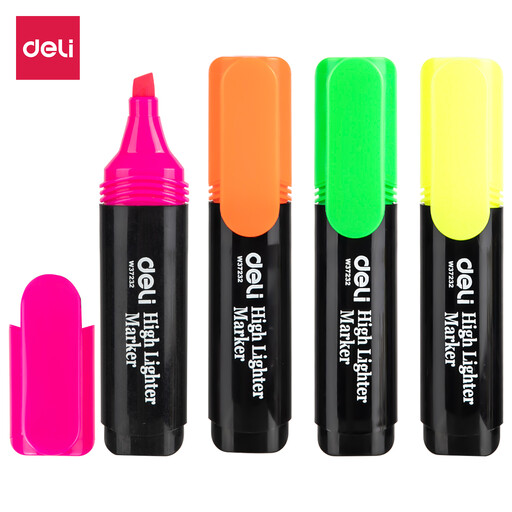
Why this product suits the profile: The four-piece set covers the standard highlighting colours used at school, university and in the office without requiring a wide selection of specialist shades.
The manageable number of colours reduces the risk of unused pens. Depending on the angle, the chisel tip can be used for different highlighting widths.
Four colours, water-based fluorescent ink and a clip for attaching the pens to books or notebooks.
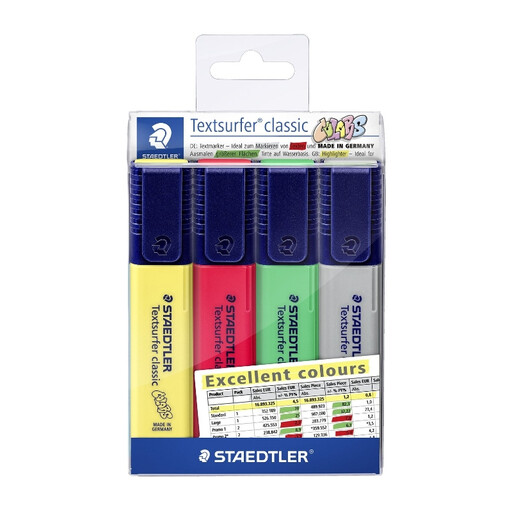
Why this product suits the profile: For regular studying and office work, a large ink reservoir, a pressure-resistant tip and a range of line widths are important selection criteria.
The stated soft chisel tip of approximately 1–5 mm helps you understand how the highlighter can actually be used before buying. The water-based ink is intended for paper, fax and photocopies.
Four colours, a large ink reservoir, a twist-lock cap and automatic pressure regulation for transporting the highlighter on a plane.
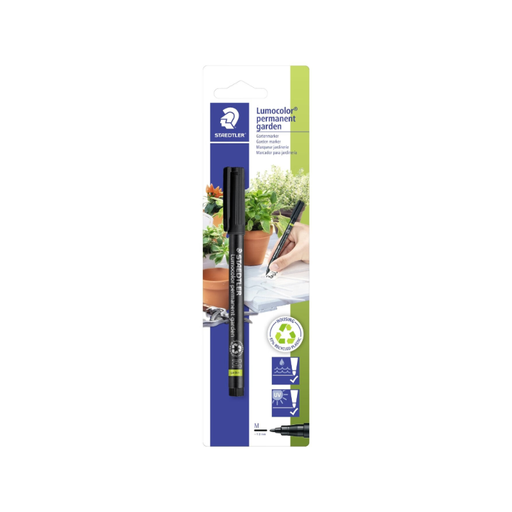
Why this product suits the profile: This marker is aimed at gardening enthusiasts and anyone who wants to label plant markers, wooden sticks, pots or other outdoor materials.
The product information explicitly states that the ink is resistant to weather, water and light. This makes its intended use clearer than that of a general-purpose marker.
Black ink, an approximately 1.0 mm round tip and a light- and weather-resistant formula designed for outdoor materials.
We have put together a complete, regularly updated list of products that fully meet these strict selection criteria and the safety regulations applicable in the EU.
For drawings featuring skin and hair tones, the Ohuhu Skin Tone Coloring Pens Set offers 36 colours, along with a 0.4 mm fine tip and a 1–2 mm brush tip. For illustrations, manga and technical details, the Ohuhu Fineliner Pens 8-Pack contains seven fine tips ranging from 0.05 to 1.0 mm, as well as a brush pen. Both sets use water-based ink; if you are working on absorbent paper, check for bleed-through in advance.
For decorative lettering on light or dark paper, the STAEDTLER Metallic Calligraphy Markers in gold or white are worth considering. The specified calligraphy tip produces lines approximately 2.8 mm wide. On smooth surfaces, the ink may be wipeable depending on the substrate, while on porous materials it may adhere permanently. Testing it on an inconspicuous area is therefore advisable.
For whiteboards, glass or transparencies, the STAEDTLER Lumocolor Non-Permanent Markers with water-soluble ink are designed for the job. They can be removed with a damp cloth. This is not the same as using a dry-wipe whiteboard marker: some surfaces explicitly require moisture for removal.
This depends on the paper thickness, amount of ink and speed of application. Water-based highlighters can show through thin paper. A small test at the edge of the page or on a separate sheet will show whether the combination you have chosen is suitable. For documents printed on both sides, tips that apply ink in a controlled, quick-drying manner are often more practical.
It is not possible to give a reliable fixed lifespan. It depends on the area covered, pressure, storage and whether the cap is properly closed. A large ink reservoir can extend the product’s lifespan, while tightly closed caps and horizontal storage help prevent the ink from drying out. With metallic markers, horizontal storage should also help distribute the pigments evenly.
For plant labels and other outdoor markings, choose a permanent marker explicitly described as a garden marker or as weather- and light-resistant. Before making permanent marks, check how well it adheres to plastic, wood, metal or terracotta. As permanent ink can be difficult to remove from porous materials, careful placement is important.