Who might find this selection useful?

Cyclists looking for a post-ride snack

If you’re after a handy serving of protein after cycling, an individually wrapped bar can be convenient. It’s not a meal replacement; according to the German Nutrition Society (DGE), your energy needs during sport depend, among other things, on the intensity of your activity.

Cyclists going on longer rides

If you’re choosing food for a longer or more intense ride, the carbohydrate content per bar is particularly important. The DGE describes carbohydrates as an important part of fuelling for sport.

Shoppers considering ingredients and tolerance

If you need to consider sugar, polyols or allergens, read the nutritional information and ingredients list together. “No added sugar” does not mean “sugar-free”.

What should you look for when buying?

First, decide whether you want the bar during your ride or as a snack afterwards. Then compare the figures for one actual bar: values per 100 g alone don’t tell you what you’ll consume in a serving.

Criterion What to check Who should consider it?
Carbohydrates for your ride Check the carbohydrates per bar and consider how the figure fits with your plans for fuelling during the ride. On a longer ride, I don’t want to mistake a protein bar for carbohydrate-focused ride fuel. This is the main concern for around 42% of consumers when it comes to energy for a ride.
Protein as a snack Compare the protein per bar rather than just per 100 g, and check the other nutritional values too. After cycling, I’m looking for a handy serving of protein without treating the bar as a meal replacement. This is the main priority for around 33% of consumers.
Ingredients and tolerance Check the sugar and polyols per serving, as well as the ingredients and allergen information. Before a ride, I want to know which sweetening ingredients and allergens a new bar contains. Around 25% of consumers prioritise this profile when choosing.

Common misconceptions

  • “High Protein” means it’s suitable fuel for a ride

    A high protein content doesn’t tell you how many carbohydrates a bar provides for a longer ride. The DGE highlights the role of carbohydrates in fuelling for sport.

    First decide when you want to eat the bar, then check the carbohydrates per serving if you’re taking it along for the ride.

  • “No added sugar” means “sugar-free”

    These two claims don’t mean the same thing. Even if a bar has no added sugar, the “of which sugars” figure in the nutritional information is still relevant.

    Check the ingredients list and information about polyols too, rather than relying on the front of the pack.

  • A new bar is bound to agree with you on the go

    Several of the protein bars considered contain polyols and carry a warning that excessive consumption may have a laxative effect. This is a practical factor to consider before a long ride.

    Follow the guidance on the specific pack, and don’t try a new bar for the first time during an important ride.

  • The protein figure tells you everything about the nutrition

    Protein content alone won’t tell you how much sugar, fat or carbohydrate a bar contains, or what ingredients it uses. According to the Consumer Advice Centre, you don’t need a specialist bar to get protein from your diet.

    Compare the full nutritional information per serving with foods and snacks that might also suit your plans.

Brands to consider

CORNY

CORNY offers, among other options, crunchy and soft protein bars in a 45-g format. The nutritional profile of each flavour is what matters when choosing.

  • REWE lists 13,5 g of protein and 17,6 g of carbohydrates per 45-g bar for its Proteinriegel Cookie Crunch.
  • Cookie Crunch also contains 14,4 g of polyols per bar. For the Soft Hazelnut Nougat variant, REWE warns that excessive consumption may have a laxative effect.

REWE PWR

REWE’s own-label range includes protein bars, including a Brownie bar in a 45 g serving size.

  • REWE lists 13,5 g of protein and 13,7 g of carbohydrates per 45-g Brownie bar.
  • REWE lists 11,7 g of polyols for the same serving. Check the ingredients and allergen information before buying.

ALDI SPORTS

The High-Protein and Lower-Carb bars described by ALDI SÜD have different nutritional profiles; the names alone don’t make them interchangeable.

  • ALDI SÜD lists 36 g of protein per 100 g for its High Protein Riegel Nougat, and 16 g of protein and 9,1 g of carbohydrates per 100 g for its Lower Carb Riegel Kokos-Mandel.
  • The product information includes warnings about polyols and their possible laxative effect if consumed in excess. ALDI SÜD also notes that nutritional values may vary between suppliers.

Max Balance

The coconut-flavoured protein bar described by EDEKA24 shows why it’s worth comparing sugar content as well as protein.

  • EDEKA24 lists 32 g of protein per 100 g for this flavour.
  • For the same 100 g, EDEKA24 lists 41 g of carbohydrates, of which 28 g are sugars. If you have allergies, check the ingredients and ‘may contain’ information on the specific pack.

Suitable bars at Joybuy

This selection includes two CORNY protein bars in individual serving sizes for a snack before or after your ride, plus a protein bar labelled Low Carb. If you’re planning to use any of them as fuel on a longer ride, check the carbohydrates per bar separately.

CORNY Crunchy Cookie Flavour protein bar, 12 × 45 g

CORNY Crunchy Cookie Flavour protein bar, 12 × 45 g

An individually portioned bar for a post-ride snack. The pack contains 12 bars of 45 g each. If you’re taking one along, check the carbohydrates per serving, polyols and allergen information.

View at Joybuy
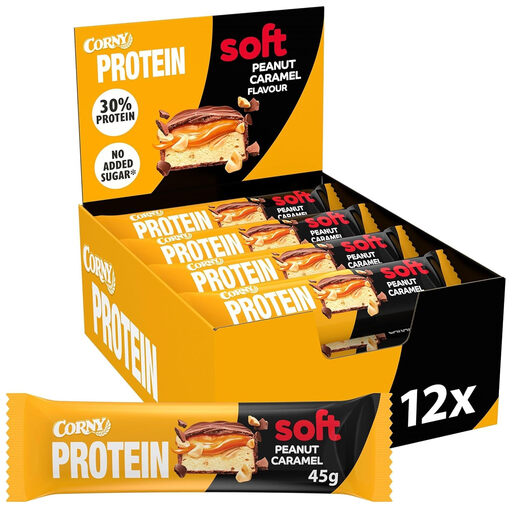
CORNY Soft Peanut-Caramel Flavour protein bar, 12 × 45 g

CORNY Soft Peanut-Caramel Flavour protein bar, 12 × 45 g

Another individually portioned option for a snack after cycling or between meals. The pack contains 12 bars of 45 g each. Check the information about sugar, polyols and allergens before buying.

View at Joybuy

Power System Low Carb Cookies & Cream Protein Bar, 40 g

Power System Low Carb Cookies & Cream Protein Bar, 40 g

A snack option labelled Low Carb for when you’re not riding. The bar weighs 40 g; check the carbohydrates in this serving before planning to use it as fuel for a longer ride.

View at Joybuy

Frequently asked questions

Is a protein bar a good source of energy for a longer bike ride?

Not just because of its protein content. The DGE describes carbohydrates as important for fuelling during sport, so check the carbohydrates per bar if you plan to eat it during a longer or more intense ride.

What does “no added sugar” mean on a protein bar?

It doesn’t mean that the bar is sugar-free. Check the “of which sugars” figure in the nutritional information, along with the ingredients and any polyols.

Where can I find allergen information on a wrapped bar?

For pre-packed foods, relevant allergens must be highlighted in the ingredients list under EU labelling rules. Also check the information on the specific pack, especially if milk, soya, peanuts or tree nuts are relevant to you.

How should I store a protein bar?

Follow the storage instructions on the pack. The CORNY examples described by REWE should be stored in a cool, dry place; the Soft variant also comes with a warning to protect it from heat.

Do I need a protein bar after recreational cycling?

No, a protein bar isn’t essential for getting enough protein. The Consumer Advice Centre notes that even people who are physically active can get protein from everyday foods; a bar is simply one possible snack option.