People who need a snack on the go
If you want a snack that fits in your bag between training and your next meal, the portion size and protein content per whole bar are useful points of comparison.


A high-protein cereal bar or protein bar can be a handy choice if you need a portioned snack to take with you after training. It isn’t automatically a meal replacement. Compare protein, energy and sugar per bar, as well as the ingredients and allergens. The Verbraucherzentrale notes that extra protein products are often unnecessary for meeting general protein needs.
If you want a snack that fits in your bag between training and your next meal, the portion size and protein content per whole bar are useful points of comparison.
If you want to fit a bar into your diet, compare energy, carbohydrates and sugar per portion rather than looking only at the claims on the front of the pack.
If you have allergies or need to avoid certain ingredients, check the ingredients list and allergen information for the specific variety. Sweeteners may also affect your choice.
First, decide what you want your post-workout snack to do for you. Then check the figures per whole bar and the information on the specific pack.
| Criteria | What to check | Who it matters to |
|---|---|---|
| Protein per bar | Compare the protein in g per bar with the bar’s weight; don’t assess figures per 100 g without considering the portion size. | I want to pack a snack with a clear protein content for the time between training and my next meal. Around 33% of consumers put this criterion first. |
| Ingredients and allergens | Read the ingredients list, allergen and trace warnings, and information about sweeteners on the pack. | If I need to avoid certain ingredients, the specific variety determines whether I’ll consider the bar at all. For around 27% of consumers, this check is the priority. |
| Energy and carbohydrates | Compare energy, carbohydrates and the amount of sugar per bar alongside the protein content. | I want to know how the whole portion fits in with my other meals, rather than looking at just one highlighted nutrient. Around 20% of consumers prioritise this. |
| Pack size and shopping | Check the weight per bar, the number of bars and the information on the pack actually being sold. | I need a suitable portion size for my gym bag and want to recognise the same variety when I shop next time. This is the most important point for around 20% of consumers. |
A bar can be handy on the go, but it won’t necessarily provide everything you’d get from a meal. According to the Verbraucherzentrale, it’s often possible to meet general protein needs with everyday foods.
Think of the bar as a snack alongside your other meals, rather than something you need after every training session.
Bars with similar marketing can have different nutritional values. For example, the nutrition information for two varieties described by ALDI SÜD lists 36 g and 16 g of protein per 100 g respectively; the bar’s weight also matters when choosing a snack.
Compare protein, energy, carbohydrates and sugar for the amount you actually plan to eat.
ALDI SÜD notes that excessive consumption of the protein bars it describes may have a laxative effect. This is particularly relevant if you’re considering having more than one bar as a snack.
Before buying, read the ingredients list and product-specific warnings on the current pack.
EDEKA24 stocks different Corny bar ranges, including Corny Protein, Corny Haferkraft Protein and Corny Nuts & Protein.
REWE introduced REWE PWR as its own brand in September 2026, launching with six protein bars.
ALDI SÜD describes products under ALDI SPORTS that include a High Protein Bar Nougat and a Lower Carb Protein Bar Coconut-Almond.
EDEKA24 is a retailer, not a bar brand. Its range includes different types of bars and brands, including several Corny ranges.
This selection includes individually portioned protein bars and a protein bite for a snack on the go after training. A protein bar isn’t automatically a cereal bar, so compare the specific product type and the information per portion.
 No image available
These individually wrapped bars could be a handy snack to take with you. The product description states that the pack contains twelve bars of 50 g each. If you’re allergic to peanuts, milk or soya, check the labelling on the specific pack.
 No image available
The 55-g portion could be worth considering if you want to compare nutritional values per bar. The protein figures in the nutrition table and the highlighted claim differ, so check the value on the pack. Also note the information about wheat, soya, peanuts and sweeteners.
 No image available
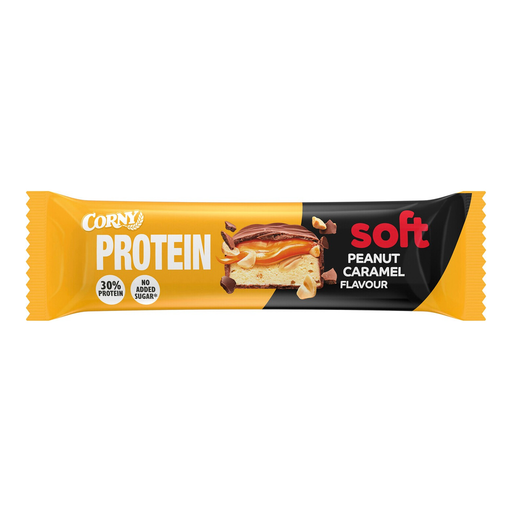
This 45-g bar makes a handy portioned snack to pop in your gym bag. If you’re comparing ingredients or nutritional values, check the information for the Peanut & Caramel variety. If you have allergies, pay particular attention to the information about milk, soya and peanuts.
 No image available
The 35-g pack is a smaller portion to take with you. If you’re comparing it with larger bars, check the nutritional information per piece on the pack, particularly energy, sugar and carbohydrates. Note the information about milk, soya and egg.
 No image available
The pack of twelve 45-g bars could be a good choice if you’re looking for a portioned snack for several training days. Compare energy, sugar and carbohydrates using the nutrition information on the pack. Also check the ingredient information about milk, soya and cereals.
No, there’s no general requirement to have a protein bar immediately after training. The German Nutrition Society considers protein intake in sport in relation to the type of sport and level of exertion. Take your other meals into account when deciding whether to have a snack, too.
Not automatically: a protein bar is a snack with a specific ingredients list and portion size. The Verbraucherzentrale notes that it’s often possible to meet general protein needs with everyday foods.
Check the ingredients list, highlighted allergens and any trace warnings for the exact variety. Depending on the product, milk, soya, peanuts or cereals containing gluten may be relevant, for example. The brand name alone isn’t enough to make this decision.
No, the claim alone tells you neither about the bar’s overall composition nor whether it’s suitable as a meal. The Verbraucherzentrale recommends checking the nutritional information, particularly for products marketed as high in protein. Compare the values per bar and the ingredients list.