If protein is a priority when shopping for the family, it’s worth comparing lentil and corn-and-pulse cakes with classic rice cakes. According to REWE.de, EDEKA24, Kallo and ALDI SÜD, the products described contain 18.4 to 25 g of protein per 100 g, compared with 6.7 to 8.5 g. The portion you actually eat matters too, of course. For families, ingredients, allergen information and variety in children’s snacks are also important.
Who is this selection for?
Family members who prioritise protein
If you’re planning to have snack cakes as a snack around sporting activities, check the protein content of the portion you’ll actually eat. A single cake contains considerably less than the figure given per 100 g.
Families with plant-based dietary requirements
When stocking up for several people, the main ingredients and vegan or gluten-free labelling may be important. Check the specific product for any additional may-contain warnings.
Households with young children
If children regularly eat these snacks too, a variety of snack bases matters more than choosing the highest possible protein content. The German Federal Institute for Risk Assessment notes that rice products such as rice cakes can contain comparatively high levels of inorganic arsenic.
What should you look for when buying?
Lentil cakes
A good choice if: lentils are suitable as the main ingredient and protein content is a priority when comparing products.
The trade-off: These aren’t rice cakes. Even at 25 g of protein per 100 g, the amount in a single cake is small, as the figures from REWE.de show.
Corn-and-pulse cakes
A good choice if: you’d prefer a mix of corn and pulses rather than a cake made mainly from lentils.
The trade-off: The Verival option described by REWE.de contains 18.4 g of protein per 100 g and has a longer ingredients list than the lentil cakes described here.
Classic rice cakes
A good choice if: you’re looking for a rice cake as a snack base and protein isn’t your main priority.
The trade-off: The products described by Kallo and ALDI SÜD contain 8.5 and 6.7 g of protein per 100 g respectively. For children, rice products shouldn’t be the only snack base you offer regularly.
| Criterion |
What to check when buying |
Who it matters to |
| Protein content |
Compare protein per 100 g and per portion eaten. |
If protein matters to me, I want to know how much a cake actually adds to my portion. Around 33% of consumers put this comparison first. |
| Stock and portions |
Check the pack weight, portion size and storage instructions. |
When shopping for several people, I need a pack size that suits the amount we plan to keep in stock. For around 27% of consumers, this planning is the main consideration. |
| Ingredients and labelling |
Read the main ingredients, vegan and gluten-free claims, and allergen information on the current pack. |
When different dietary requirements need to be catered for, I need to know the exact recipe. Around 20% of consumers prioritise this. |
| Variety for children |
For children who regularly eat these snacks too, plan a range of snack bases rather than relying only on rice cakes. |
If young children often eat these snacks, I don’t want to keep reaching for the same rice product. For around 20% of consumers, variety is the most important consideration. |
Common comparison pitfalls
-
Assuming every rice cake is high in protein
According to Kallo and ALDI SÜD, the classic rice cakes described contain 8.5 and 6.7 g of protein per 100 g respectively. The lentil cakes described by REWE.de and EDEKA24 contain 25 g per 100 g.
Compare the nutritional information using the same basis, then decide whether rice or a pulse-based option suits your shopping needs.
-
Assuming the per-100-g figure applies to one cake
REWE.de states that a 6.93 g lentil cake contains 1.7 g of protein, even though the product contains 25 g per 100 g.
When choosing a snack, go by the amount you’ll actually eat rather than looking only at the highlighted per-100-g figure.
-
Making rice cakes the only regular snack for children
The German Federal Institute for Risk Assessment notes that rice products such as rice cakes can contain comparatively high levels of inorganic arsenic.
Offer children a variety of suitable cereal-based and other snacks rather than relying exclusively on rice products.
-
Assuming vegan or gluten-free means allergen-free
EDEKA24 notes that the Alnatura lentil cakes described may contain traces of soya. Kallo states that its rice cakes described here may contain traces of milk, sesame and soya.
If you have relevant allergies, check the current labelling on the specific pack, even if another dietary claim is shown.
Brands to help you choose
REWE Bio
The sea-salted lentil cakes described by REWE.de are made mainly from red lentils.
- 25 g of protein per 100 g in the 90 g option described.
- According to REWE.de, a single 6.93 g cake contains 1.7 g of protein.
EDEKA Bio
EDEKA24 also describes lentil cakes in a pack of twelve 90 g packs.
- The option described contains 25 g of protein per 100 g.
- Before stocking up, make sure the number of packs suits your household’s needs.
Verival
The organic protein cake described by REWE.de combines corn and pulses.
- This option contains 18.4 g of protein per 100 g.
- If you’re looking for a cake made mainly from lentils, this has a different recipe.
Alnatura
EDEKA24 describes a 44 g option of organic lentil cakes made from lentil flour and sea salt.
- This 44 g option contains 25 g of protein per 100 g.
- The option described may contain traces of soya; check the details separately for other pack sizes.
ALDI SÜD GUT BIO
The salted organic rice cake described by ALDI SÜD is a rice option, not a lentil cake.
- A classic rice cake to use as a snack base.
- The option described contains 6.7 g of protein per 100 g.
Kallo
Kallo describes lightly salted wholegrain rice cakes.
- The information covers both 100 g and a single cake.
- For the option described, Kallo gives 8.5 g of protein per 100 g and 0.6 g per cake. It may also contain traces of milk, sesame and soya.
Suitable snack cakes at Joybuy
This selection features a lentil cake for comparing protein-focused snack bases when shopping for the family. Check the details on the specific pack when planning portions.
 No image available
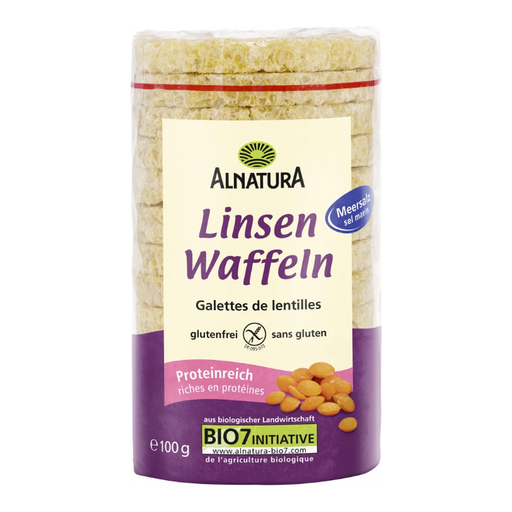
Alnatura organic lentil cakes, 100 g
A lentil cake for households looking to add an alternative snack base alongside classic rice cakes.
Pack size: 100 g. Check the portion and allergen information on the specific pack.
View at Joybuy
Frequently asked questions
Are classic rice cakes automatically high in protein?
No. Protein content depends on the specific product. Kallo and ALDI SÜD state that the classic rice cakes described here contain 8.5 and 6.7 g per 100 g respectively. Check the nutritional information on the relevant pack when shopping.
How much protein is in a single lentil cake?
It depends on its weight and recipe. For the REWE Bio lentil cake described, REWE.de gives 1.7 g of protein per 6.93 g cake. Don’t assume this portion figure applies to other products or pack sizes.
What should I bear in mind when giving rice cakes to young children?
Rice cakes don’t need to be ruled out altogether, but they shouldn’t be the only snack base offered regularly. The German Federal Institute for Risk Assessment notes that rice products such as rice cakes can contain comparatively high levels of inorganic arsenic and recommends offering a variety of products made from other grains.
Are lentil cakes always vegan and gluten-free?
You can’t make a general claim about all lentil cakes. The EDEKA Bio and Alnatura options described by EDEKA24 are labelled accordingly; check the current ingredients and allergen information for the product you’re buying.
How should I store a larger supply of snack cakes?
Follow the storage instructions on the relevant pack and protect opened cakes from moisture. For the EDEKA Bio multipack described, EDEKA24 recommends sealing the pack airtight after opening.


