Hikers with a strict sugar-free goal
For them, the sugar content per 100 g is what matters. A chocolate bar labelled “no added sugar” does not automatically meet the “sugar-free” criterion too.


If you specifically want a product labelled “sugar-free”, compare the sugar content per 100 g: the German Food Federation sets the limit at 0.5 g or less. “No added sugar” is not the same thing. For a longer or more demanding hike, a chocolate snack should be just one part of your provisions. The German Alpine Club recommends planning drinks and available carbohydrates to suit your route. If you choose products containing sweeteners, also check the portion size, ingredients and how well you tolerate them.
For them, the sugar content per 100 g is what matters. A chocolate bar labelled “no added sugar” does not automatically meet the “sugar-free” criterion too.
You want to be able to portion your snacks easily, and compare the nutritional values per bar. On longer walks, you plan drinks and other provisions separately from your chocolate snack.
Allergen labelling, claims about vegan or gluten-free recipes, and information about polyols matter just as much to them as the sugar content.
First, decide whether you’re looking for “sugar-free” or “no added sugar”. Then choose between a chocolate bar and a portioned snack bar, and check the ingredients for the hike you have planned.
| Criterion | What to check | Who it matters to |
|---|---|---|
| Sugar claim | Compare the sugar content per 100 g and distinguish “sugar-free” from “no added sugar”. The German Food Federation sets the limit for “sugar-free” at 0.5 g of sugar or less per 100 g. | If I specifically want sugar-free chocolate, “no added sugar” on the front of the pack isn’t enough for me. Around 40% of consumers put this strict sugar goal first. |
| Portion size and provisions for your hike | Check the pack size and nutritional values per portion. Plan for drinks and, on longer or more demanding hikes, additional provisions, as recommended by the German Alpine Club for the level of exertion involved. | For breaks, I want to pack a snack that’s easy to portion. On a long hike, I wouldn’t rely on chocolate alone. Around 30% of consumers put this need first. |
| Ingredients and suitability | Read the ingredients and allergen information, as well as any guidance about sweeteners. Claims such as “vegan” or “gluten-free” apply only to the product carrying that label. | If I need to avoid certain ingredients or react to polyols, I want to know exactly what’s in the product before packing it. For around 30% of consumers, this check takes priority. |
Chocolate with no added sugar can still contain sugar. For example, Lindt states that its dark chocolate bar with no added sugar contains 1 g of sugar per 100 g.
If you specifically want a “sugar-free” product, check the nutritional information per 100 g rather than relying on the product name alone.
Some of the chocolate bars and snack bars mentioned contain maltitol, isomalt or erythritol. Their product information warns that excessive consumption may have a laxative effect.
Read the packaging guidance and, if you know you’re sensitive to these ingredients, choose an amount you already know you can tolerate.
On longer and more demanding hikes, your provisions shouldn’t depend solely on whether a snack bar fits in your bag. The German Alpine Club highlights fluids and available carbohydrates as important factors.
Choose drinks and other food to suit the length and difficulty of your hike, and treat chocolate or cereal bars as an additional snack.
Recipes vary. For example, the ja! chocolate cereal bar with no added sugar listed by REWE contains wheat, milk and peanuts.
Check the current ingredients list, allergen information and any “may contain” warnings for every product, even if you know the brand.
Lindt sells dark and milk chocolate bars labelled “no added sugar”. According to Lindt, both contain maltitol.
The dark chocolate listed by REWE is aimed at people looking for a bar specifically labelled as sugar-free.
The chocolate cereal bar with no added sugar listed by REWE is a portioned alternative to a chocolate bar.
The organic chocolate with no added sugar listed by REWE is labelled as vegan and gluten-free.
This selection includes chocolate bars and a portioned chocolate cereal bar labelled “no added sugar”. If you specifically want a “sugar-free” product, check the sugar content per 100 g for each item.
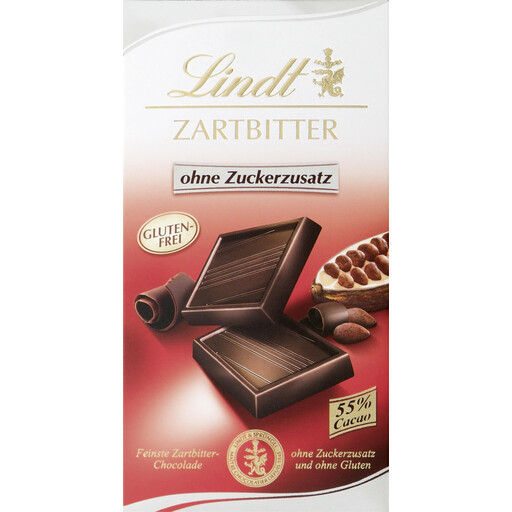 Image unavailable
A chocolate bar for your break if you’re looking for dark chocolate with no added sugar, but don’t need a product specifically labelled as sugar-free.
Lindt states that this dark chocolate contains at least 55% cocoa and 1 g of sugar per 100 g. It contains maltitol; check the warning about excessive consumption, as well as the ingredients and allergen information.
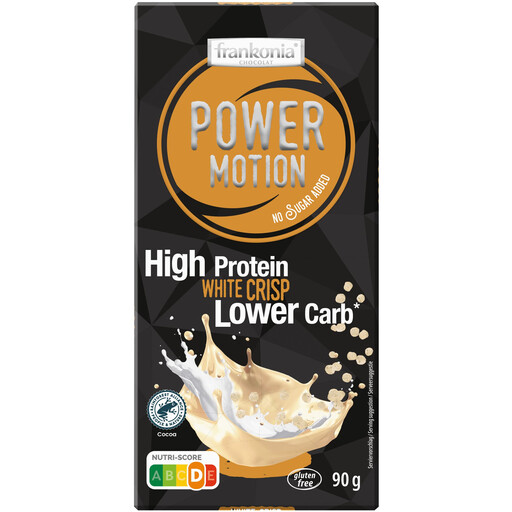 Image unavailable
This could be a good choice if you’d rather have white crisp chocolate than dark chocolate for your break.
The product name describes a 90 g bar with no added sugar. Check the nutritional information per 100 g against your sugar goals, and read the ingredients and allergen information.
 Image unavailable
Individually portioned cereal bars are handy for breaks when you’d rather pack a bar than a chocolate slab.
The pack contains six 20 g bars. These are cereal bars, not plain chocolate bars, so check the sugar content per 100 g, as well as the ingredients and allergens, before choosing.
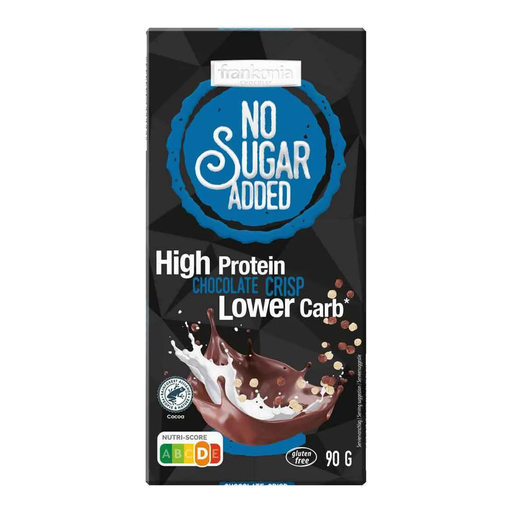 Image unavailable
This chocolate crisp bar is an option if you’re looking for a snack with no added sugar to enjoy during a break.
The product name states that it’s a 90 g bar with “no added sugar”. If you specifically need a sugar-free option, compare the sugar content per 100 g before buying. Check the ingredients and packaging information too.
No, the terms don’t mean the same thing: chocolate with no added sugar can still contain sugar. The German Food Federation sets the limit for “sugar-free” at 0.5 g of sugar or less per 100 g, so check the nutritional information for the specific product.
Don’t plan a longer or more demanding hike around sugar-free chocolate alone. The German Alpine Club recommends choosing provisions to suit the length and difficulty of your route, and highlights fluids and available carbohydrates as important factors.
Read the ingredients list and guidance on how much to eat. Several of the products mentioned here that contain polyols warn that excessive consumption may have a laxative effect. If you know you’re sensitive to these ingredients, a hike isn’t the best time to try a new product in large quantities.
Compare the ingredients, allergens, nutritional values per 100 g and, where available, per portion, as well as the use-by or best-before date. If the pack contains several portions, the serving size can help you plan how much to take. If you have specific dietary requirements, check the labelling for the exact product you’re considering.