Hikers travelling light
If you’re planning a longer walk, it’s the weight of the camera ready to use, including its lens and other accessories, that matters – not just the body.


If you want to carry less on a hike and switch between wide views and distant details without changing lenses, a compact camera with optical zoom could be a good option. If you want to choose different angles of view, an interchangeable-lens camera is an alternative. Compare the weight of the complete set-up, image stabilisation for stills, and the protection offered for both camera and lens. The Rennsteig can be misty along the ridge, even when the surrounding area is sunny, according to Rennsteig.de.
If you’re planning a longer walk, it’s the weight of the camera ready to use, including its lens and other accessories, that matters – not just the body.
If you want to capture both the entire ridge and distant details from the same spot, check the zoom range and whether you’ll need to change lenses.
If you want to take photos in mist or rain, check the stated weather protection for the specific camera-and-lens combination.
A good fit if: you want to capture wide and tighter views from the same spot without changing lenses. Sony gives the RX100 VII a 24–200 mm 35mm-equivalent range and optical image stabilisation for stills.
Bear in mind: The lens is built in, so you’re limited to its zoom range.
A good fit if: you want to choose lenses to suit the angle of view you’re after. For a lightweight standard zoom kit, Canon lists the stabilised RF-S 18–45 mm lens for the EOS R50.
Bear in mind: Weight and protection also depend on the lens you use, and you may need to change lenses to get a different angle of view.
For handheld shots, it’s worth checking the still-image stabilisation offered by the specific lens or camera body. The four points below will help you weigh up framing, carry weight and weather protection.
| Criteria | What to look for | Who it matters most to |
|---|---|---|
| Handheld image stabilisation | Check the image stabilisation in the camera body or specific lens, and read the test conditions behind any figures provided by the manufacturer. | When I’m taking handheld photos in changeable light, I want to know what stabilisation the specific combination offers. Around 33 % of consumers put handheld stabilisation first. |
| Framing and zoom | Compare focal lengths as 35mm equivalents and check which lenses are included in the kit. | If I want to capture both the whole ridge and distant details from an accessible spot, the range of framing options matters to me. Around 25 % of consumers prioritise different framing options. |
| Carry weight | Compare like with like: the weight of the body alone is not the same as the weight of the camera with battery, memory card and lens. | If I’m walking for a long time, I want to know how heavy the camera I’ll actually be carrying is. Around 25 % of consumers put low carry weight first. |
| Protection in changeable weather | Check the protection rating for the body and the specific lens you’ll be using separately. | If I’m taking photos in changeable weather, I want to understand the limits of the protection offered by my complete set-up. Around 17 % of consumers prioritise weather protection. |
Manufacturers’ figures may refer to different configurations. With an interchangeable-lens camera, you’ll also need to factor in the lens and, depending on your walk, other accessories.
Compare the combination you actually plan to take and check whether the stated weight includes the battery and memory card.
An extra lens adds to your luggage, and you’ll have to carry any additional telephoto lens with you on the walk.
A stabilised lens isn’t automatically protected against dust or water splashes. Canon doesn’t specify this kind of protection for the RF-S 18–45 mm, while OM SYSTEM gives the OM-5 Mark II body an IP53 rating.
Check stabilisation and protection separately for the camera body and the lens you plan to use.
On the EOS R50, the RF-S 18–45 mm is equivalent to 29–72 mm in 35mm format. You may need a different lens for tighter shots of distant ridge details; Nikon’s Z50II dual-zoom kit includes a separate 50–250 mm lens for this purpose.
Before buying, think about whether you’ll mainly be photographing the landscape as a whole or smaller, more distant details.
With an interchangeable-lens system, an additional telephoto lens means more to carry and you may need to change lenses while you’re out.
The RX100 VII is a compact camera with a fixed travel zoom, while the Alpha 6700 is an APS-C camera with interchangeable lenses.
The EOS R50 kit with the RF-S 18–45 mm is an entry-level APS-C kit with a standard zoom lens.
The OM-5 Mark II could suit hikers looking to combine in-body image stabilisation with a compatible lens.
The Z50II kit with 16–50 mm and 50–250 mm lenses offers two zooms for different framing options.
The X-S20 is an APS-C interchangeable-lens camera with in-body image stabilisation.
According to their product names, the following Joybuy listings are compact cameras or an APS-C kit for taking photos on the go.
 No image available
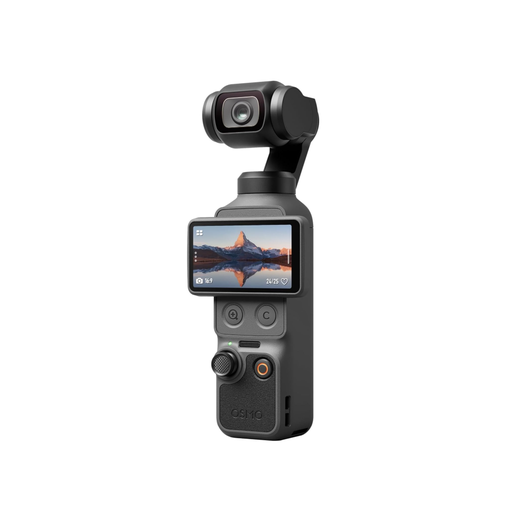
The product name describes this model as a pocket gimbal and camera for taking on the go.
Features listed include a 1-inch CMOS sensor, 3-axis stabilisation, 2× lossless zoom, 107 GB of built-in storage and a rotating 2-inch screen.
 No image available
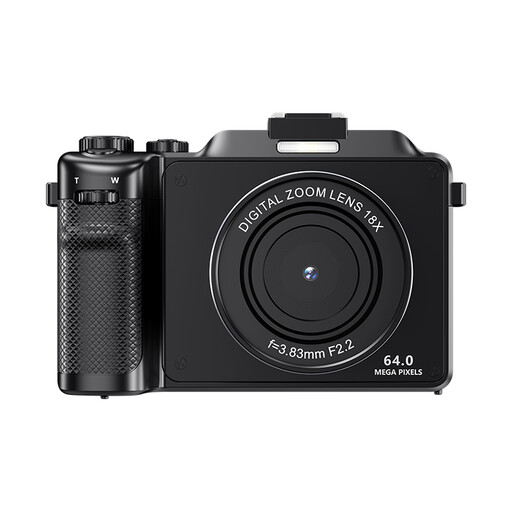
The product name describes the X9 as a portable camera for travel and photography.
Features listed include 64 MP, autofocus, 18× zoom and flash.
 No image available
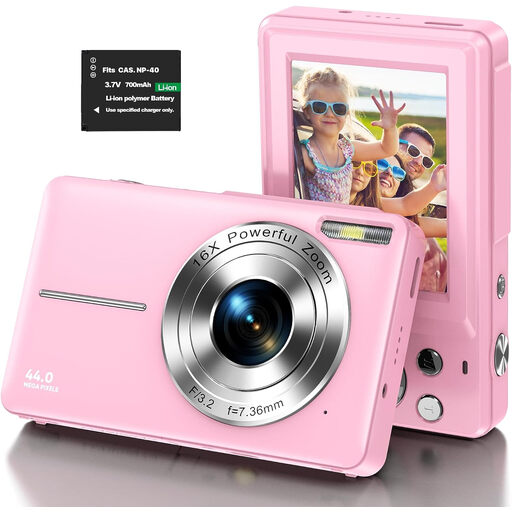
The product name describes it as a pocket camera for photography and video.
Features listed include 44 MP, autofocus, 4K and 16× zoom.
 No image available
According to the product name, this listing includes a mirrorless APS-C camera with a 16–50 mm lens.
The product description notes that the camera isn’t water-resistant; protect it accordingly in rain or wet conditions.
 No image available
The product name describes the G7-A as a portable travel camera for photography.
Features listed include 4K and 18× zoom. The product description says the camera isn’t waterproof; protect it accordingly in rain or wet conditions.
A stabilised lens can compensate for camera shake, but check whether stabilisation is specified for stills and for the particular lens you’re using. Canon says the EOS R50 doesn’t have in-body image stabilisation, but the RF-S 18–45 mm has optical stabilisation. This doesn’t guarantee a sharp image at every shutter speed.
Check the mount and what’s included: the body, lens, battery and charging options. Nikon lists two VR lenses in the Z50II dual-zoom kit and notes that a charger isn’t included.
For a fault, the seller is generally your point of contact for your statutory rights; a voluntary guarantee is separate. The Verbraucherzentrale explains that the statutory guarantee period is generally two years, with a one-off extension of the time limit if you choose a repair for sales contracts from 31 July 2026 onwards.
There’s no general answer without knowing the specific location. The Thuringia environmental portal describes nature reserves as strictly protected areas and refers to the relevant nature conservation authorities for exceptions; check the rules for your chosen photography spot. Under certain conditions, § 59 UrhG concerns images of works permanently situated on public paths, roads or squares; it doesn’t create a general right of access.