
Lieferung heute & morgen

Qualitätsgarantie

Willkommens-Angebote freischalten: KOSTENLOSE Lieferung | Bis zu 80 % RABATT | Kostenlose 30-Tage-JoyPlus-Testphase
App herunterladen
Choosing the right infant formula is one of the first major decisions parents make for their child. The extensive range of HiPP baby food can seem overwhelming at first. Many parents feel unsure which formula is right for their baby's age and individual needs. This guide is designed to provide clarity and help you avoid common pitfalls when buying baby milk powder.
A common mistake is choosing an inappropriate age stage, such as switching to a follow-on milk too early. Another pitfall is uncertainty regarding specialised formulas: not every baby needs a hypoallergenic formula, and making the wrong choice can be unnecessary. Furthermore, important ingredients are often overlooked while parents are guided by marketing terms. The goal is to make an informed decision based on the actual needs of your child.
To buy the right infant formula, it's crucial to understand the fundamental differences between the products. Instead of relying on general advertising claims, you should check three core parameters.
The numbering on the packages (PRE, 1, 2, 3) is not a marketing gimmick, but a system tailored to the developmental stages of an infant.
Hypoallergenic baby food, often labelled as HA (hydrolysed infant formula), is intended for babies with an increased risk of allergies. This is typically the case if parents or siblings suffer from allergies.
The quality of infant formula is determined by its composition. HiPP places a high value on ingredients from organic farming.
Instead of a one-size-fits-all recommendation, we present products tailored to specific profiles and life stages.
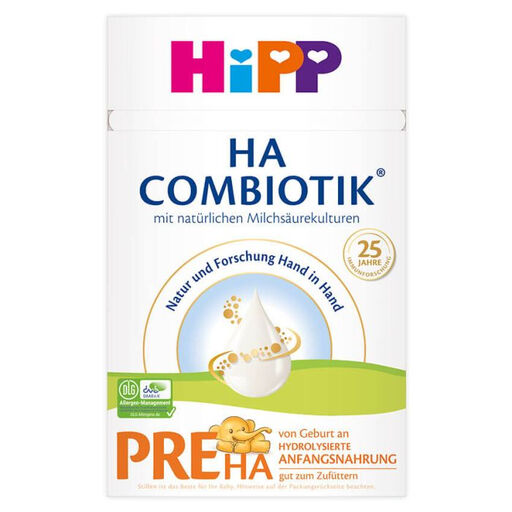
Why this product is a good fit: Developed for infants who have an increased risk of allergies due to family history (e.g., allergies in parents or siblings).
This product specifically addresses the need for a low-allergen diet and prevents the choice of an unsuitable standard formula that may not reduce the allergy risk.
Contains hydrolysed (broken down) protein, natural lactic acid cultures, and LCPs (Omega-3 & -6). Only lactose as a carbohydrate.
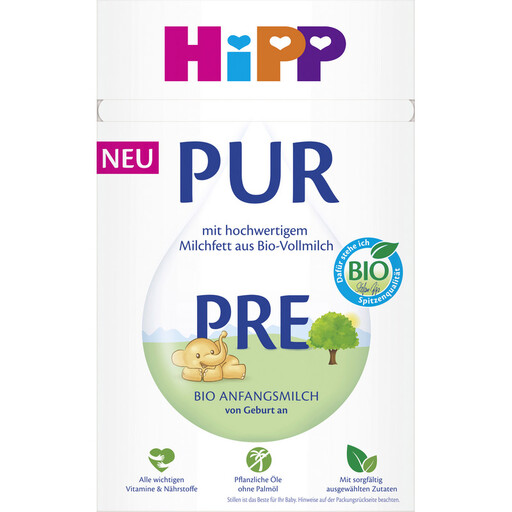
Why this product is a good fit: A straightforward and high-quality organic first infant milk for newborns without special dietary requirements, suitable as a sole source of nutrition or for supplementing.
Prevents the unnecessary use of a specialised formula (like HA) or a follow-on milk for a newborn. This is the direct and appropriate choice for starting out.
Organic quality with high-quality milk fat from organic whole milk. Contains only lactose and can be fed on demand, just like breast milk.
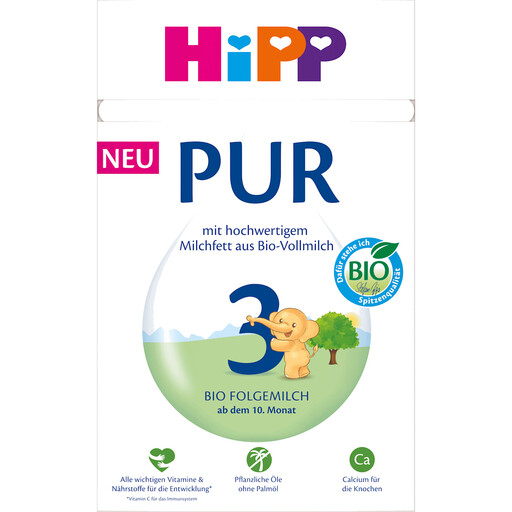
Why this product is a good fit: Ideal for babies from the 10th month who are already eating complementary foods and whose nutritional needs differ from those of a newborn.
Ensures the child receives age-appropriate nutrition and avoids the continued use of first infant milk, which may no longer optimally cover their needs (e.g., for iron).
Adapted to the weaning period with important nutrients like iron, calcium, and Vitamin D, which support growth and bone development.
We have compiled a complete, up-to-date list of products that fully meet these strict selection criteria and German safety regulations.
HiPP PRE First Infant Milk can be fed throughout the entire first year of life, even after the introduction of complementary foods. Since its composition is modelled on breast milk and it only contains lactose, it can be given on demand and covers fluid and nutrient needs alongside solid meals.
Both are first infant formulas and are suitable from birth. The main difference is the carbohydrate: HiPP PRE contains only lactose (milk sugar). HiPP 1 contains a small amount of gluten-free, easily digestible starch in addition to lactose. This makes the formula slightly creamier, which can lead to a longer feeling of fullness for some babies.
Yes, for the preparation of infant formula, drinking water should always be freshly boiled and then cooled to the recommended temperature (usually 40–50 °C). This is for safety, as it kills any germs that may be present in the water. Even cold water taken fresh from the tap should be boiled. Mineral water is only suitable if it is explicitly labelled as "suitable for the preparation of infant formula."