
Lieferung heute & morgen

Qualitätsgarantie

Willkommens-Angebote freischalten: KOSTENLOSE Lieferung | Bis zu 80 % RABATT | Kostenlose 30-Tage-JoyPlus-Testphase
App herunterladen
The range of HiPP organic baby food extends from first infant milk and follow-on milk to baby jars, bedtime porridge and fruit purée. However, not every product is suitable for every age or purpose. Eye-catching packaging, an organic label or a multipack alone says little about whether the food fits into your family’s everyday routine.
Typical purchasing problems arise from three points:
The age guidance on the packaging is the most important selection criterion. For the first few months, HiPP first infant milk or another first infant formula may be suitable, for example. The product details for HiPP 1 PUR state that it is suitable from birth; according to the product information, HiPP Combiotik 1 is intended for the period from 0 to 6 months.
From the age when complementary foods are introduced, products such as baby food from 5 months or baby food from 6 months become relevant. These include finely puréed vegetable jars, fruit preparations and cereal porridges. According to the product description, a bedtime porridge with oat and apple is intended from the 8th month, while HiPP organic semolina milk porridge is available from the 6th month.
After the first birthday, HiPP growing-up milk from 1 year may be an option as part of a varied diet. The information on the specific pack should always take priority.
“No added sugar” does not mean sugar-free. Fruit purées naturally contain sugar. According to the product information, the ingredients list for HiPP organic apple from the 5th month consists of 100% apples; the apple and forest fruits purée lists 99.7% fruit. The sugar comes from the fruit used.
For a organic baby porridge with no added sugar, parents should therefore read the ingredients list and nutritional table together. Milk and cereal porridges may contain lactose or naturally occurring sugars from milk, for example.
Allergen labelling is equally important:
If your child has known allergies or specific dietary needs, you should discuss your choice with your paediatrician’s practice or a midwife.
Multipacks such as 6 × 125 g or 6 × 160 g can be useful when a particular variety is eaten regularly. For new flavours, a smaller format is often more practical, so opened leftovers do not have to be stored unnecessarily long.
The preparation instructions for powdered products must be followed precisely. The instructions for the HiPP milk formulas mentioned above include using freshly boiled water cooled to around 40 to 50 °C, the measuring spoon provided and preparing each feed fresh. Leftovers should not be reused. Opened packs should be stored dry, sealed and according to the pack instructions; several products specify that they should be used within three weeks.
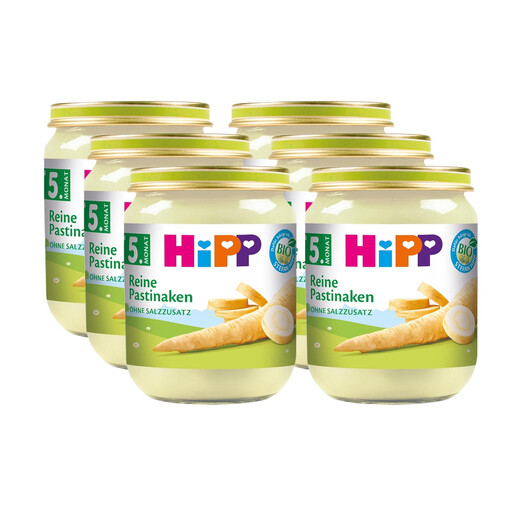
Why this product suits this profile: The multipack with six 125 g jars contains one clearly defined vegetable ingredient and is suitable for families who want to introduce complementary foods portion by portion.
The guidance from the 5th month and the ingredients list showing 100% parsnips provide more clarity than a general marketing claim.
Organic ingredient; no added salt, colouring or preservatives according to the product information; 6 × 125 g.
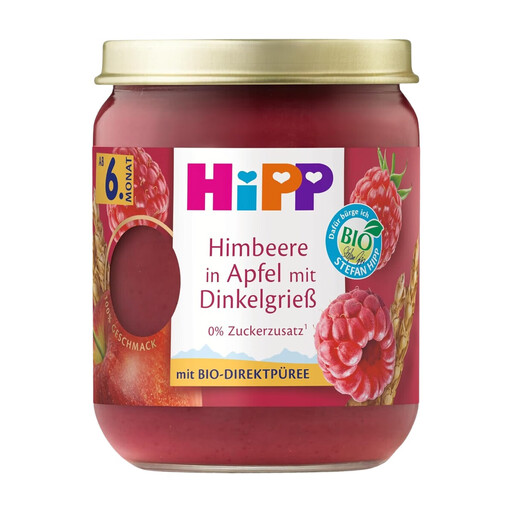
Why this product suits this profile: The combination of fruit and spelt semolina appeals to parents who value clearly identifiable ingredients and organic certification when introducing complementary foods.
The product information states 75% fruit, 5% spelt and suitability from the 6th month. Gluten and possible traces of mustard are clearly indicated.
EU organic-certified ingredients according to the product description; no added sugar; 6 × 160 g.
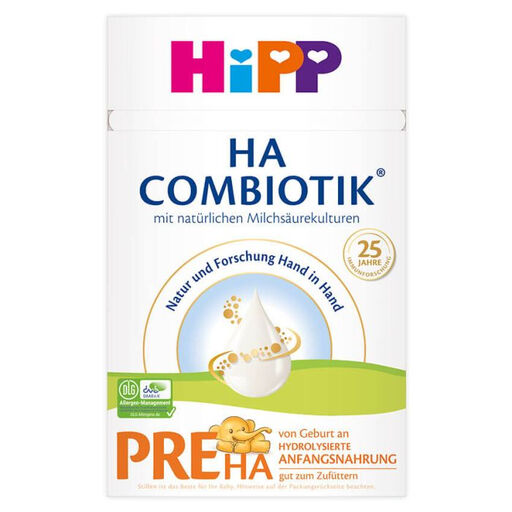
Why this product suits this profile: According to the product information, this powder is suitable from birth and can be used as the sole source of nutrition or alongside breastfeeding.
The product details state the age range, lactose as the sole carbohydrate source, and that the product is not suitable in cases of suspected cow’s milk protein allergy.
600 g pack; according to the product information, no added starch and gluten-free; prepared using the measuring spoon provided.
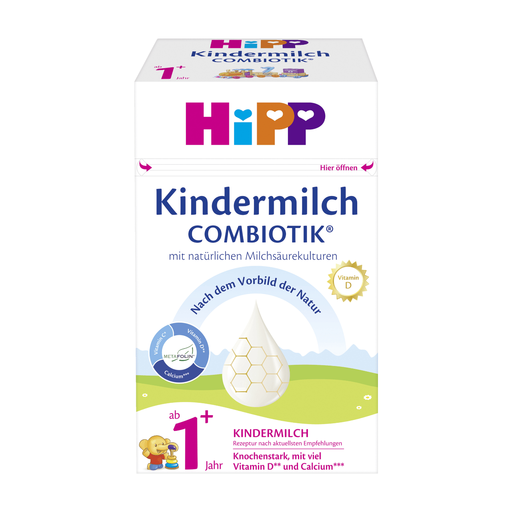
Why this product suits this profile: According to the product information, this growing-up milk is suitable from one year and can be incorporated into the daily routine as a milk drink.
The clear age guidance from 1 year prevents the product from being confused with first infant or follow-on milk.
600 g contents; according to the nutritional information, contains calcium, iron and iodine, plus vitamins A, C and D.
We have put together a complete, regularly updated list of products that fully meet these strict selection criteria and the safety regulations applicable in the EU.
This depends on the type of product. According to the product information, HiPP first infant milk and certain first infant formulas are suitable from birth. Vegetable and fruit preparations often start from the 5th month, while cereal porridges are suitable from the 6th or 8th month, depending on the recipe. The age guidance on the relevant packaging is always decisive.
For several powdered products mentioned, the recommendation is to store the opened pack tightly sealed, in a dry place at room temperature, and use it within three weeks. The exact period may vary depending on the product. Prepared bottles should be given fresh; leftovers should not be kept.
According to the product description, many of the fruit and vegetable products mentioned are made without added sugar. This does not mean they contain no sugar: fruit preparations contain natural sugars from apples, bananas or berries. Pouches should ideally be consumed from a spoon rather than through prolonged, repeated sucking.