
Lieferung heute & morgen

Qualitätsgarantie

Willkommens-Angebote freischalten: KOSTENLOSE Lieferung | Bis zu 80 % RABATT | Kostenlose 30-Tage-JoyPlus-Testphase
App herunterladen
The range of HiPP organic baby food extends from first vegetable purées and organic milk porridge to complete baby meals and toddler meals from 1 year. Many packs look similar at first glance, but differ in terms of age range, consistency, allergens, portion size and preparation.
Anyone who focuses only on terms such as “organic”, “no added sugar” or “multipack” could still choose a product that does not suit their baby’s stage of development or their family’s everyday routine. The following criteria can help you compare baby jars and porridges objectively.
“From 6 months”, “from 8 months” and “from 10 months” are not interchangeable recommendations. They provide guidance on the product’s ingredients and consistency. A smooth organic vegetable purée from 5 months is formulated differently from a meal with pieces for babies from 8 months.
Products for toddlers from 1 year are not automatically suitable for a younger baby either. Always check the age recommendation on the packaging before buying and take your child’s individual development into account.
Fruit, milk and cereals naturally contain sugar. An organic fruit purée with no added sugar can therefore still have a higher natural sugar content than a plain vegetable purée. The product information should distinguish between “sugars” in the nutritional table and “added sugar” in the ingredients list.
When choosing a product, terms such as flavourings, thickeners, colourings and preservatives are also relevant. “No additives” should always be checked against the specific ingredients list rather than judged solely by the front of the packaging.
Baby food in a multipack can make stocking up easier and reduce the cost per jar. However, this is only worthwhile if your child accepts the product and the age range will remain suitable for long enough. When trying new flavours, a single jar or smaller quantity is often more sensible before buying a pack of six.
For starting solids at around 5 months, smooth varieties with a straightforward ingredients list are suitable. One example is a plain pumpkin purée made with 90% organic pumpkin and water. From 6 months, organic evening porridge, milk porridge and finer cereal blends can be introduced.
From 8 months, finely textured meals or combinations with pulses, rice and pasta may be interesting options. The texture should match your baby’s current ability to chew and swallow. From 10 months, breakfast porridges and muesli with finer cereal ingredients are suitable. Toddler meals from 1 year usually have a noticeably firmer consistency, with ingredients such as pasta, rice, meat or vegetables in larger pieces.
Read the full ingredients list. It is particularly important to look for milk, gluten, wheat, oats, egg, celery, mustard and other allergens that must be declared. Plant-based meals may contain chickpeas, pea protein or other pulses.
A meal containing rapeseed oil may contain alpha-linolenic acid. This is an objectively declared omega-3 fatty acid. However, it should not be interpreted as a therapeutic or medical claim. If your child has known allergies or you are unsure about introducing new foods, individual advice from a paediatrician or qualified nutrition professional can be helpful.
Common sizes range from 125 g for first vegetable purées to 220 g or 250 g for complete meals. Evening porridges in jars, for example, are often available in 190 g portions. Check whether the product is ready to serve or needs to be mixed with water.
After opening, uneaten portions that have not been heated should be refrigerated in accordance with the packaging instructions and generally used the following day. Portions that have already been heated or touched with a used spoon should not be put back in the jar. Check the temperature before feeding, and do not use damaged jars or foil seals.
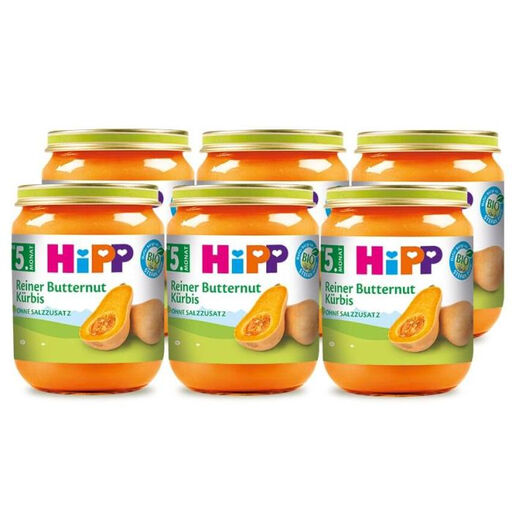
Why this product suits this profile: The plain vegetable purée is suitable for starting solids and provides six small portions with a straightforward ingredients list.
The from-5-months age recommendation and short ingredients list make it easier to compare products. According to the product information, it contains no added salt or flavourings.
125 g jars, pack of six, 90% organic pumpkin and no declared allergens.
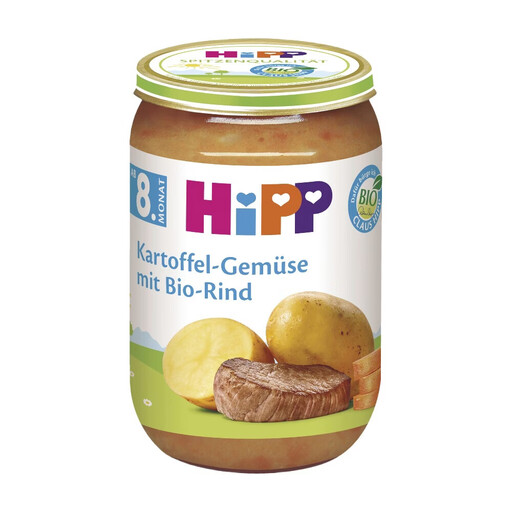
Why this product suits this profile: This meal combines organic vegetables with beef and is intended for babies from 8 months. The fine pieces are designed for the next texture stage.
The packaging states that no added flavourings, preservatives or colourings are included. The meal is also described as containing no added salt and no dairy products.
220 g portions, 65% vegetables according to the product information and organic rapeseed oil as an ingredient.
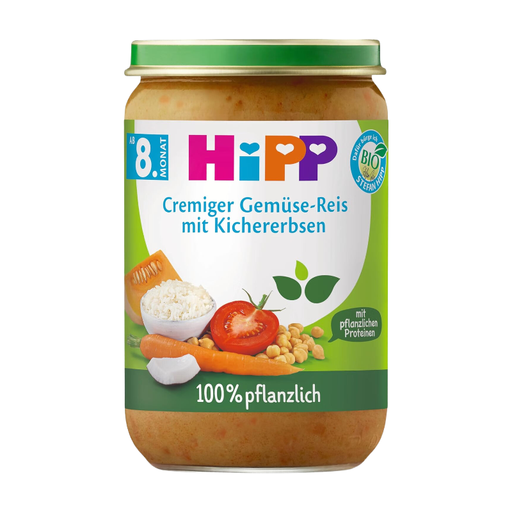
Why this product suits this profile: This plant-based meal is an appealing option for families looking for an alternative to meat-based baby meals from 8 months.
The ingredients list specifically names chickpeas and pea protein. This makes it possible to identify the plant-based protein source before buying.
51% vegetables according to the product description, multipack of six and no added salt.
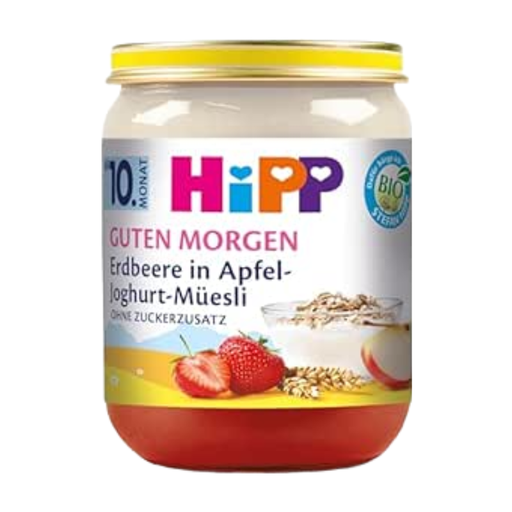
Why this product suits this profile: The ready-to-serve combination of fruit, yoghurt and cereals is ideal for breakfast or a snack when you do not want to prepare dry muesli.
The from-10-months age recommendation is clearly stated. “No added sugar” is supported by the ingredients list; naturally occurring sugars from fruit and yoghurt are still present.
160 g portions, pack of six, 34% fruit and 33% yoghurt according to the product information.
We have put together a complete, regularly updated list of products that fully meet these strict selection criteria and the safety regulations applicable in the EU.
From 6 months, options include organic milk porridge and evening porridges such as a seven-grain product. Look out for allergens including milk, wheat, oats or barley. A product labelled “from 6 months” does not replace an individual assessment of whether your baby is ready to start solids.
This depends on the instructions on the individual packaging. Uneaten portions that have not been heated are normally kept covered in the fridge and used the following day. Fruit and cereal products may have different storage times. Portions that have already been heated should not be served again.
A multipack can be practical if the age range, flavour and portion size are consistently suitable. When introducing a variety for the first time, a smaller quantity is often more sensible. Also compare the unit price per 100 g and check the best-before date.