Archivists working with linked source files
If you catalogue adverts as records, you’ll want the associated scans to remain accessible after moving them or using another computer. Zotero explains how linked files can be used in a library.


For an archive of historical adverts, your desktop PC should suit your indexing software, source file locations, OCR workflow and existing devices. Zotero does not sync linked files itself, so plan for accessible file paths and a separate backup that you can test (Zotero; Federal Office for Information Security). A mini PC saves space, while a tower may be worth considering if you plan to add components internally. OCR results should still be checked against the scan (Library of Congress).
If you catalogue adverts as records, you’ll want the associated scans to remain accessible after moving them or using another computer. Zotero explains how linked files can be used in a library.
If you need to search through a large number of adverts, OCR can make scanned documents searchable. The Library of Congress and Adobe Acrobat explain OCR methods and their use with historical and scanned materials.
As your collection grows, it’s worth comparing a space-saving mini PC with a larger desktop. Check expansion options for the exact model variant; Lenovo and HP offer different specifications across their ranges.
A good fit if: desk space is limited and the ports, storage and operating system of the specific configuration suit your workflow.
Bear in mind: the case size alone tells you nothing about what’s included or how much you can upgrade. Check the exact variant.
A good fit if: you plan to add internal drives or upgrade the hardware later, and have enough room for the PC.
Bear in mind: a larger case takes up more space. Check the upgrade options for the specific model.
A good fit if: your indexing, OCR and scanning software runs on macOS and you prefer a compact workstation.
Bear in mind: Apple offers different storage and chip configurations. Check which configuration you need and whether it’s compatible with your devices.
| What matters | What to check when buying | Who it matters most to |
|---|---|---|
| Finding source files again | Check the software, operating system and file locations. Zotero does not sync linked files itself (Zotero). | When I open a record later, the linked scan needs to be accessible in its intended location. That’s why around 25% of consumers put being able to find the source file long term first. |
| Making historical scans searchable with OCR | Check that your chosen OCR software works with the operating system. The Library of Congress notes the limitations of automated OCR with historical newspapers. | When I search old adverts for names and details, I want to be able to check the results against the scan. For around 20% of consumers, searching and checking historical scans is their top priority. |
| Storage for a growing collection | Work out how much storage you need now and how much you expect your collection to grow. Then compare SSD capacity and documented upgrade options for the specific variant. | As my collection of scans grows, I want to be able to estimate how much local storage I’ll need. That’s why around 20% of consumers put space for growing source files first. |
| Backing up your collection and links | Plan to back up your index data and source files, and check that you can restore them (Federal Office for Information Security). | If a device fails, I want to be able to restore my index data and source files together. That’s why around 20% of consumers prioritise a backup of their archive that they can test. |
| Connecting your existing devices | Compare the ports on the specific PC variant with your scanner, drives and monitor. Also check which input devices are included. | When my scanner, drives and monitor are already decided, I want to be able to connect them easily. That’s why around 15% of consumers put ports for their existing work devices first. |
Moving or deleting files can break links. Zotero does not sync linked files itself.
Plan to back up your index data and source files together, keep a record of their locations, and test the restore process with individual entries.
Separate backups require extra storage and regular maintenance.
The Library of Congress notes the limitations of automated text recognition with historical newspapers. Small print and damaged originals can make text harder to recognise.
Keep the scan as a source you can check, and verify important names, dates and advert details against the image.
Allow time for spot checks and corrections.
A barebone may not include RAM, a drive or an operating system. According to COMPUTER BILD, the Intel NUC 13 NUC13ANKI7 configuration they tested needed these components to be added separately.
Compare what’s included with the specific variant against a ready-to-use PC.
For the NUC configuration tested by COMPUTER BILD, you’ll need to budget for and set up the RAM, storage and operating system separately.
Processor, RAM and SSD can vary even within the same product family. For example, GEEKOM offers A5 Pro variants with different processors, while HP lists different specifications for its mini and tower models.
Before buying, check the full model number, processor, RAM, SSD, operating system and ports for the variant on offer.
The A5 Pro range is a compact Windows PC option; the exact specifications depend on the variant.
The Cubi NUC range is designed for compact workspaces with limited room.
The NucBox M6 Ultra is a mini PC range with different storage and port configurations to check.
The Pro 400 G9 family includes compact mini PCs and larger tower PCs.
The ThinkCentre M70q Gen 5 range is another Tiny desktop option for compact workspaces.
The Mac mini is a compact macOS option if your archive workflow is compatible with the operating system.
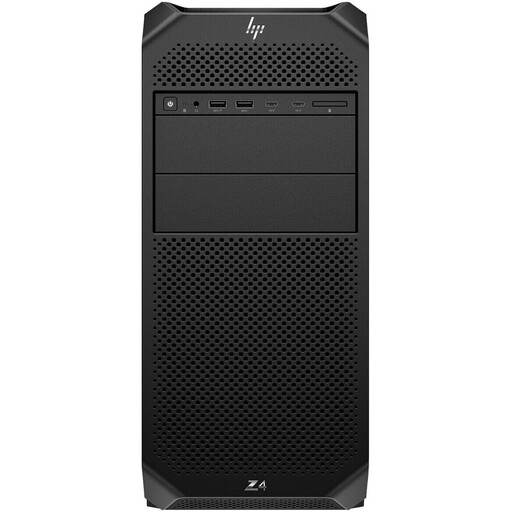
The Joybuy models below include tower PCs and a mini PC. Compare the specifications of each model with your storage needs, software and existing ports.
 No image available
This tower could suit a fixed archive workstation if you have room for its larger footprint.
Listed specifications include a 3.5 GHz Xeon W3-2535, 64 GB DDR5, a 1-TB NVMe SSD and Windows 11 Pro.
 No image available
This tower design could suit a fixed workstation if you’ve checked its footprint and the specifications of the specific variant.
Listed specifications include a Core Ultra 7 265, 32 GB DDR5 and Windows 11 Pro.
 No image available
This tower is an option for a fixed workstation if the listed configuration suits your archive workflow.
Listed specifications include a Core Ultra 9 285, 64 GB DDR5, a 1-TB M.2 SSD and Windows 11 Pro.
 No image available
This tower is worth considering for a fixed workstation if it fits your available space and has the ports your existing peripherals need.
Listed specifications include a Core Ultra 7 265, 32 GB DDR5, a 512-GB NVMe SSD and Windows 11 Pro.
 No image available
This mini PC saves space, provided its specific configuration suits your files, software and existing devices.
Listed specifications include an Intel Celeron N5095, 16 GB LPDDR4X, a 256-GB M.2 SATA SSD and Windows 11 Pro.
Transfer the files using the method designed for your workflow, then check a few individual records. In Zotero, moving files or setting the wrong base directory can break links; Zotero does not sync linked files itself.
You’ll need an OCR step to search text in scanned PDFs. Microsoft says that enhanced search mode may use more system resources, while the Library of Congress notes the limitations of automated OCR with historical newspapers. Test it with your own files to see what the search actually finds.
First, work out how much space your existing scans and documents take up, then estimate how much your collection is likely to grow. Compare this with the SSD capacity of the specific PC variant and check which upgrades are documented for that exact model.
You can, provided your indexing and OCR software and existing devices work with macOS and the configuration you choose. Apple offers different chip and storage options, so check which configuration you need before buying.
No. The age of an advert alone doesn’t automatically mean you’re free to publish it. The German Patent and Trade Mark Office explains that copyright protection for works in Germany generally expires 70 years after the author’s death. Check the rights to the specific materials before publishing a collection.