What should you consider when choosing?
Start with the fields you actually use, then check that the layout, connection and workspace setup suit the way you work.
| What matters |
What to look for when buying |
Who it matters to |
| Moving between fields |
Check supported key assignments and operating system compatibility; test shortcuts with a sample record. |
If I often move between custom form fields, I only want to use shortcuts if the application handles them correctly. Around 33% of consumers prioritise moving between fields and repeating entries. |
| Accuracy to the source |
Check that the layout is German and confirm the full model code; check difficult characters against the scan. |
When transcribing historical names, I want to find characters quickly and check unclear details against the original. Around 27% of consumers prioritise accuracy to the source and a suitable character layout. |
| Long typing sessions |
Try the key layout where possible and measure the space available for your keyboard, mouse and source document. |
If I’m entering information on screen for long periods, I want to choose a layout that suits my workspace and typing style. Around 20% of consumers pay particular attention to posture during longer typing sessions. |
| Number fields |
Check how often you enter numbers when working with typical advertisements; consider how much space a full-size keyboard takes up. |
When I have lots of dates, page numbers or amounts to enter, I want to do so easily without giving up more mouse space than necessary. Around 13% of consumers prioritise number entry. |
| Connection and setup |
Check whether you need USB-A or a wireless receiver, along with operating system compatibility and any required software installation. |
If I want to keep setup to a minimum, the connection should suit my workstation straight away. Around 7% of consumers place the greatest importance on easy setup and a suitable connection. |
Joybuy products for data entry
These Joybuy products may suit data entry using a German layout, from compact options to ergonomic or wired models. For each one, check that the key layout, connection and space requirements suit your form and workspace.
 No image available
CHERRY MX-LP 2.1 Wireless, German QWERTZ layout
The compact layout may suit a workspace with limited desk space.
65% layout; German QWERTZ layout; tri-mode connection via 2.4 GHz, Bluetooth or USB-C; MX Speed switches.
Joybuy
 No image available
Logitech ERGO K860, QWERTZ layout
The split, full-size layout and integrated numeric keypad may suit longer typing sessions and forms with lots of number fields.
Wireless; QWERTZ layout; customisable through Logitech Options+. The F.A.Z. Kaufkompass notes that this model can’t be used with a cable.
Joybuy
 No image available
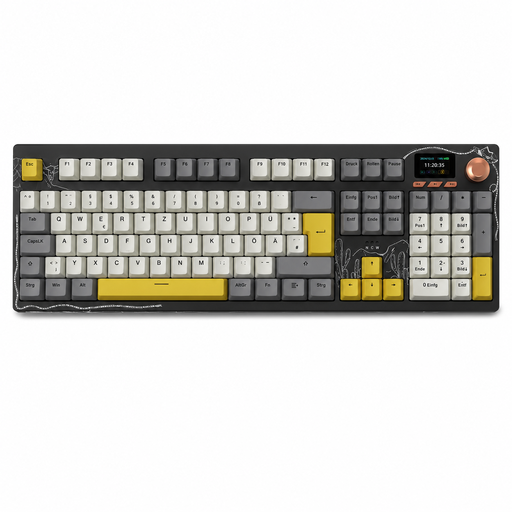
AJAZZ AK35I V4, German QWERTZ layout
The German QWERTZ layout is specified for entering German text.
Mechanical keyboard; tri-mode connection via Bluetooth, 2.4 GHz or USB-C; hot-swappable switches; 1.14-inch TFT colour screen.
Joybuy
 No image available
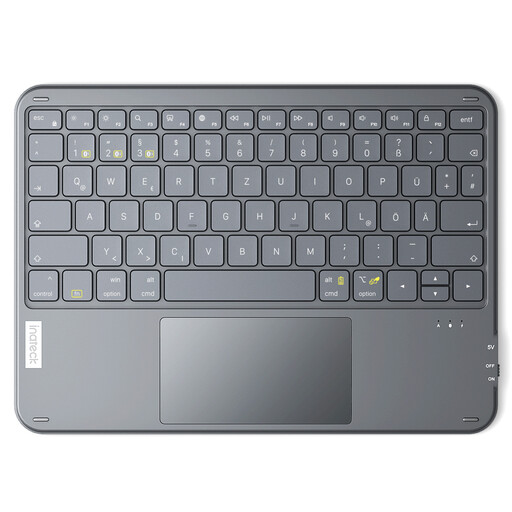
Inateck KB01105, tablet keyboard with touchpad
This keyboard with touchpad may suit typing on a compatible tablet or PC.
German QWERTZ layout; wireless; stated to be compatible with iPad, Android tablets, Windows, laptops and PCs. To type in German, the connected device must be set to German (QWERTZ).
Joybuy
 No image available
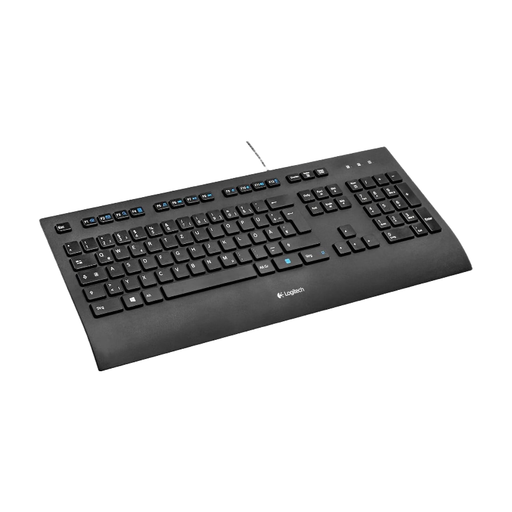
Logitech K280e, German QWERTZ layout
The wired design may suit a fixed workstation where a German key layout is required.
Wired; German QWERTZ layout.
Joybuy
Frequently asked questions
Do I need a macro keyboard for custom data fields?
No. First check which shortcuts your data-entry application supports for moving between fields and saving. According to CHERRY, CHERRY KEYS can assign shortcuts and text snippets to supported special and F keys; Microsoft Support notes that keyboard shortcuts may work differently in different applications.
How should I set up a keyboard for long data-entry sessions?
Allow space for your keyboard, mouse and source document, then try out the layout. The German ASR A6 from the Federal Institute for Occupational Safety and Health covers screen-based workstations within its scope; it doesn’t promise that any particular keyboard shape will prevent discomfort.
How should I clean my keyboard?
Follow the instructions for your specific model. Bitkom advises against using aggressive cleaning products or allowing liquid to get inside the device.
What rights do I have if my keyboard is faulty?
If you buy from a business seller in the EU, you generally have a statutory legal guarantee of at least two years from the date you receive the goods. Your Europe, the European Union’s consumer portal, distinguishes this right from any additional voluntary manufacturer’s guarantee.
What should I look for in the CE marking on a wireless keyboard?
Within its remit, the Federal Network Agency checks matters including CE marking, manufacturer details, German instructions and the declaration of conformity. The CE marking is the manufacturer’s declaration of conformity, not an independent quality mark for the ergonomics of a particular model.


