Batch cooks using a large pot
If you’re making several portions of creamed leeks, the cooking zone should match the base of your large pot. Also consider whether you’ll need space for other pots alongside it.


For batch-cooking creamed leeks, the cooking zone should match the base of your large pot. If you’ll have other pots on the hob at the same time, you’ll need to allow for those too. Electrolux Customer Care recommends matching the base of the pot—not its top rim—to the zone specifications. With induction, the base must also be suitable. Built-in induction hobs, portable hot plates and non-induction alternatives mainly differ in their installation and connection, number of cooking zones, and whether you can keep using your existing pans.
If you’re making several portions of creamed leeks, the cooking zone should match the base of your large pot. Also consider whether you’ll need space for other pots alongside it.
If you often want to adjust the heat after warming food up, check the controls and settings available on the specific hob—not just its maximum power rating.
If you need an extra cooking spot or want to keep using your existing pans, compare portable induction hobs with non-induction electric hot plates.
First, check that your pans are suitable for the heating type and that the zone matches the pan base. Then decide whether a built-in hob or a portable hot plate is a better fit for your kitchen space and connection.
| What you need | What to check before buying | Who it matters most to |
|---|---|---|
| Space for a large batch-cooking pot | Pan base diameter, the maximum pan size for the zone, and space for other cookware. | If I’m cooking several portions in one large pot, its base needs to match the zone, while leaving room for other pots alongside it. Around 33% of consumers put a suitable zone for a large batch-cooking pot first. |
| Adjusting the heat while simmering | The controls and adjustable power levels on the specific model. | When simmering creamy dishes, I want to be able to adjust the heat precisely after warming them up. Around 27% of consumers prioritise being able to adjust the heat while cooking. |
| Keeping and using your existing pans | For induction, check that the base is magnetic. For any heating type, check the base diameter. | If I want to keep using my existing pans, I need to know whether they’re suitable for the heating type and zone I’ve chosen. Around 20% of consumers focus on cookware compatibility. |
| An extra cooking spot instead of a built-in hob | The number of cooking zones you need and the space available; for a built-in hob, check the cut-out size and connection type. | If I’m looking for an extra cooking zone without cutting a new opening in my worktop, a portable hot plate could be an option. Around 20% of consumers prioritise an extra cooking spot that doesn’t need to be built in. |
A hob’s width doesn’t tell you whether its cooking zone will suit your pan base or whether the appliance will fit your existing worktop cut-out.
Measure the base of your pan and, for a built-in hob, the existing cut-out. Compare both measurements with the specifications for the model you’re considering.
What matters is whether the pan base is suitable for induction. Its diameter must also match the cooking zone. Electrolux Customer Care highlights a magnetic base as a requirement.
Check the pan’s markings and base, along with the hob’s permitted pan sizes. If you want to keep using your cookware, consider a non-induction heating type too.
A timer doesn’t replace cooling and refrigerating cooked food.
The German Federal Institute for Risk Assessment recommends cooling leftovers to below +7 °C within a few hours. To help them cool, divide large quantities between several shallow dishes, then eat them within two to three days if stored in the fridge.
For its PVS831HC1E built-in induction hob, Bosch lists four cooking zones, including a round 28-cm zone and zones that can be combined.
For its independent LIV63340CK induction hob, Electrolux lists three cooking zones, including an 18/28-cm zone and a bridge function.
For its EX975LXC1E built-in induction hob, Siemens lists five cooking zones on a 90 cm-wide hob.
SEVERIN offers portable alternatives with different heating types: the KP 1071 single induction hot plate and the non-induction DK 1042 double hot plate with cast-iron cooking zones.
The TII84B00FZ independent built-in induction hob is an example of a wider hob with a bridge function.
This selection includes built-in induction hobs and a ceramic glass hob. Check the cooking zones, heating type and installation requirements against your pans and kitchen.
 No image available
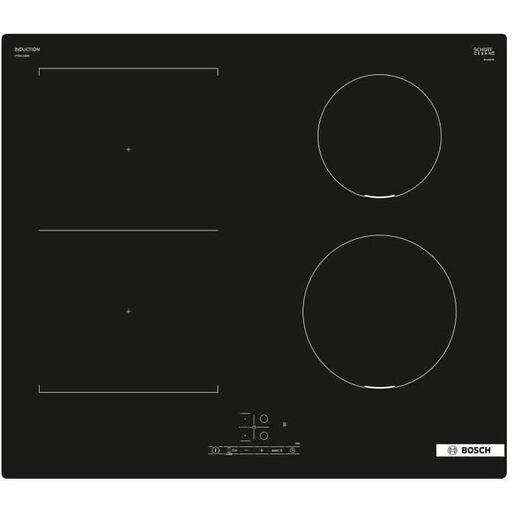
The four zones make this a relevant option for a kitchen where you want to use several pans at once.
Built-in induction hob, 60 cm wide, with 6.900 W and a timer. Use induction-compatible cookware with a magnetic base. The product description states that installation must be carried out by a qualified electrician.
 No image available
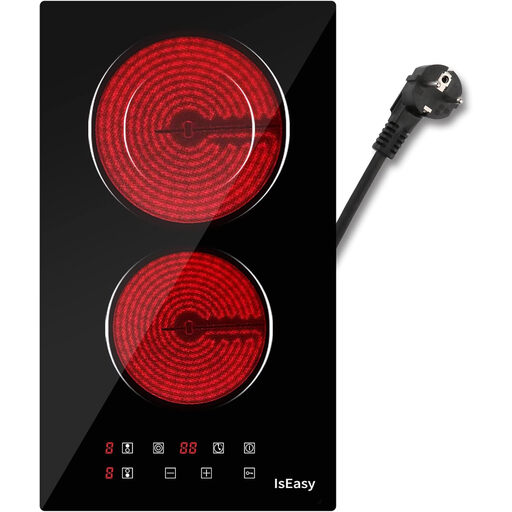
Two cooking zones and nine power levels could be useful if you’re planning to work on several dishes at once and want to adjust the heat.
The model has nine power levels, touch controls and a timer that can be set from 1–99 minutes.
 No image available
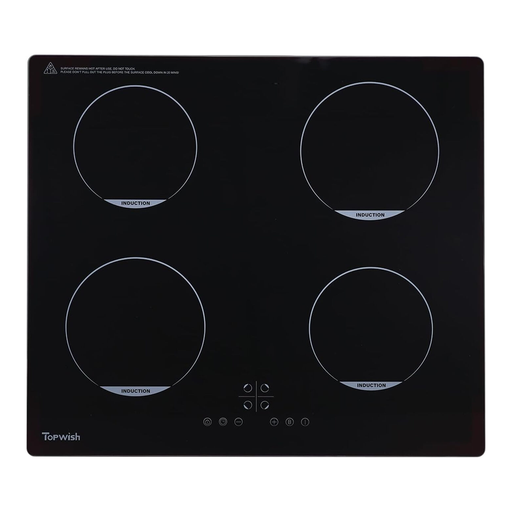
Four cooking zones could suit you if you want to use several pans at once on a built-in hob.
The product name lists nine power levels, touch controls, Boost, a timer, a child lock and a residual heat indicator. According to the product information, it requires a hardwired connection without a plug, which must be carried out by a qualified electrician.
 No image available
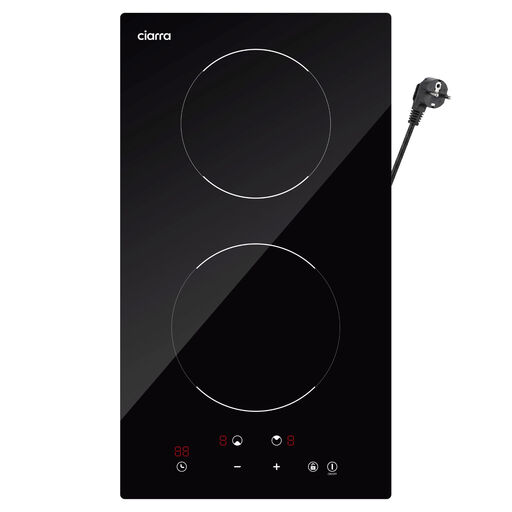
Two zones and a zone specified in the product description for pans measuring 120–260 mm could be useful if you want to fit a larger pan base.
The model has nine power levels and individual timers. Use induction-compatible cookware with a magnetic base. The product information states that installation must be carried out by a qualified electrician.
 No image available
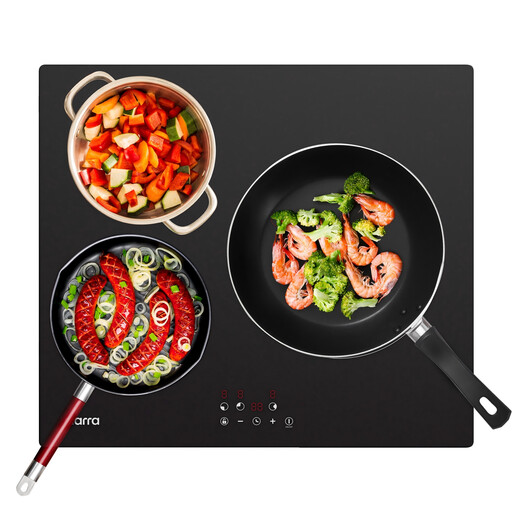
Three cooking zones could be useful if you want to use several pans at once while preparing a meal.
The product description lists a 280-mm zone, two other cooking zones and nine power levels. Use induction-compatible cookware with a magnetic base. The product information states that installation must be carried out by a qualified electrician.
No. Compare the diameter of the pan base with the permitted sizes for the specific cooking zone. Electrolux Customer Care points out that the base diameter is what matters. With induction, the base must also be suitable.
According to the manufacturer, the SEVERIN KP 1071 reviewed here comes with a Schuko plug. The built-in Bosch PVS831HC1E and Siemens EX975LXC1E models, on the other hand, are listed as having no plug. Their manufacturers specify that they must be connected by a qualified electrician. These details apply to the models named and don’t mean you should carry out work on a fixed electrical installation yourself.
The German Federal Institute for Risk Assessment recommends cooling leftovers to below +7 °C within a few hours. To help them cool, divide large quantities between several shallow dishes, then eat them within two to three days if stored in the fridge. A keep-warm or timer function on the hob doesn’t replace refrigeration.
The two connection types shouldn’t be treated as the same: manufacturers distinguish between portable plug-in hot plates and built-in models without a plug. Bosch recommends leaving the connection of a hob to a qualified professional. The requirements for work on a fixed electrical installation depend on the specific job, so check them before installation.
The German Federal Office for Radiation Protection notes that electromagnetic fields can affect electronic implants, and the risk of interference depends on the implant. Check the guidance from your implant manufacturer and speak to your healthcare professional about whether induction is suitable for you. General advice about pan size isn’t a substitute for an individual assessment.