Cooking with large pans and preparing several portions
If you regularly cook several portions in a large frying pan, the cooking zone needs to suit the base of your pan. Also consider whether you’ll need space for a saucepan alongside it.


For larger frying pans and cooking several dishes at once, consider a built-in hob with suitable large or flexible zones, provided the pan base, cut-out dimensions and electrical connection are all compatible. If your pans are not induction-compatible, an electrically heated ceramic glass hob is one possible alternative. A portable double hob gives you extra cooking space, but it won’t necessarily let you use a large pan on a suitably sized zone. Built-in appliances without a plug must be connected by a qualified professional.
If you regularly cook several portions in a large frying pan, the cooking zone needs to suit the base of your pan. Also consider whether you’ll need space for a saucepan alongside it.
If you don’t want to, or can’t, install a built-in hob, a portable double hob can give you extra cooking space for vegetables and a side dish. Check that your pans and available worktop space are suitable for the cooking zones.
If you want to continue using your current cookware, check that your pans are induction-compatible before choosing an induction hob. If they aren’t, an electrically heated ceramic glass hob could be an option.
| What you need | What to check before buying | Who should consider this? |
|---|---|---|
| Room for a large pan and other cooking | Pan base rather than rim diameter, usable cooking zone and space for other pans | If I’m preparing vegetables for several meals in a large pan, I don’t want to be limited to cooking zones that are too small. Around 33% of consumers put a large pan and the ability to cook other things at the same time first. |
| Cooking space without a built-in hob | Number and size of zones, available worktop space and power supply requirements | If I don’t want to install a built-in hob but want to cook vegetables and a side dish at the same time, a portable option appeals to me. Around 27% of consumers prioritise extra cooking space without a permanent installation. |
| Continuing to use existing pans | Induction compatibility and the magnetic area of the pan base | If I want to keep my current pans, the heating method needs to suit their bases. Around 20% of consumers put compatibility with their existing cookware first. |
| Installation and power supply | Cut-out dimensions, connection details and, where necessary, professional installation | If I’m planning a built-in hob, I want to know in advance whether it will fit my kitchen and work with the existing connection. Around 20% of consumers focus first on installation, power supply and any additional costs. |
The flat base of the pan is what matters when choosing a suitable cooking zone. With induction, the relevant area of the base must also be magnetic.
Measure the flat base and compare it with the cooking-zone specifications for the model you’re considering.
Ceramic glass describes the surface; the heating technology underneath can vary depending on the hob.
Check the stated hob type. If it’s an induction hob, you should also check that your pans are compatible.
Built-in hobs have specific cut-out dimensions and may be supplied without a plug. In Germany, specific connection rules apply to work on fixed electrical installations.
Check the cut-out and connection details before buying. If work on the fixed installation is required, arrange the connection with a suitable qualified professional.
For the built-in PVS845HB1E, Bosch specifies a 28 cm induction zone and zones that can be combined.
The models mentioned use two different heating methods: the 90 cm EX975LXC1E induction hob with five zones, and the ET645HN17E with electrically heated ceramic glass.
According to the manufacturer, the portable CT 3410/IN double induction hob has two separately controlled cooking zones.
For the portable DK 1031 double induction hob, Severin specifies two cooking zones and a Schuko plug.
For the KIF6840AS built-in induction model, AEG describes a FlexBridge zone that can be combined to accommodate different cookware arrangements.
This selection includes built-in ceramic glass hobs, induction hobs with integrated extractors and a portable double induction hob.
 No image available
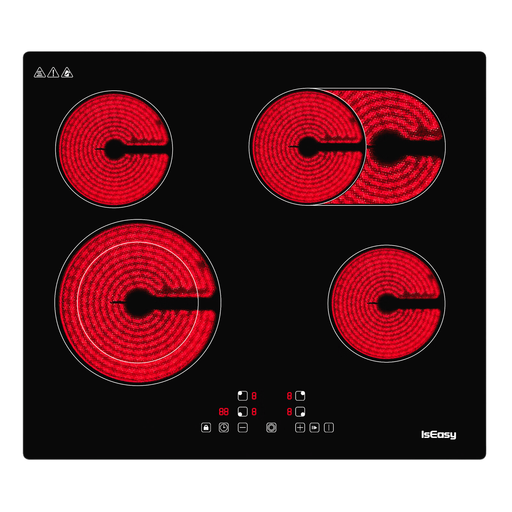
An option if you’re looking for a built-in ceramic glass hob with several cooking zones.
The product details list 4 zones, a dual-ring zone, an oval roasting zone, touch controls and 6.600 W. According to the description, it requires a hardwired connection and professional installation.
 No image available
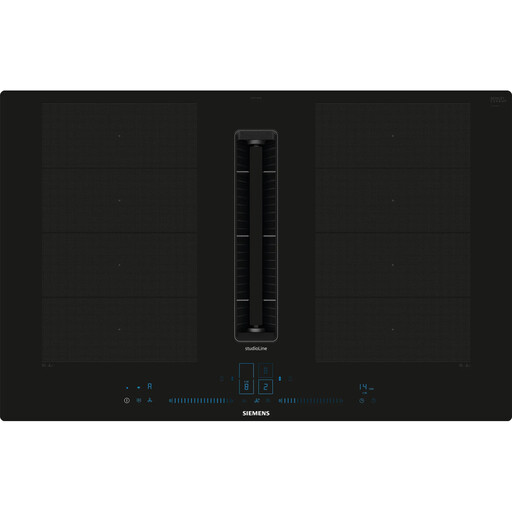
This built-in induction hob could suit you if you’re looking for several cooking zones and an integrated extractor.
The product description lists four cooking zones and two 40 cm varioInduction zones. The appliance is intended for professional installation and electrical connection.
 No image available
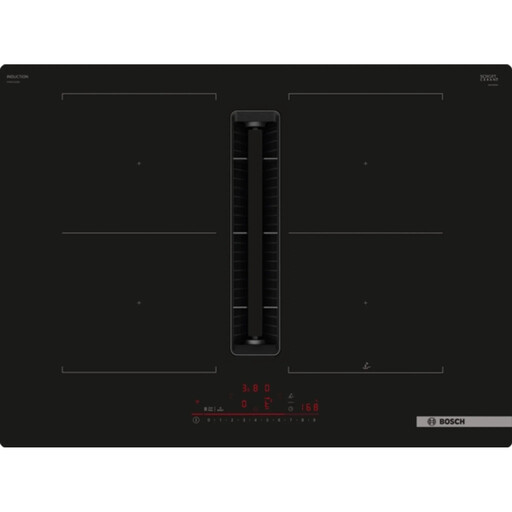
A possible choice if you’re looking for a built-in induction hob with cooking zones that can be combined and an integrated extractor.
The product details list four cooking zones and two combinable Combi zones. According to the description, installation should be carried out by an authorised electrician.
 No image available
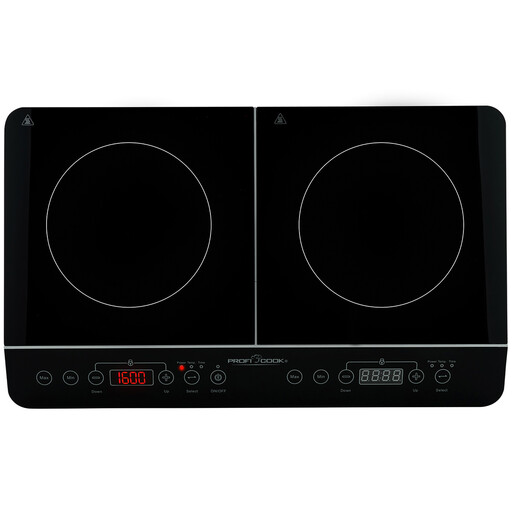
This portable double hob could suit you if you want two cooking zones without a built-in installation.
The product description lists two independently controlled zones, ten temperature settings from 60 to 240 °C and a 180-minute timer. The stated maximum output is 3.500 W at 220–240 V; check that your intended power supply is suitable.
 No image available
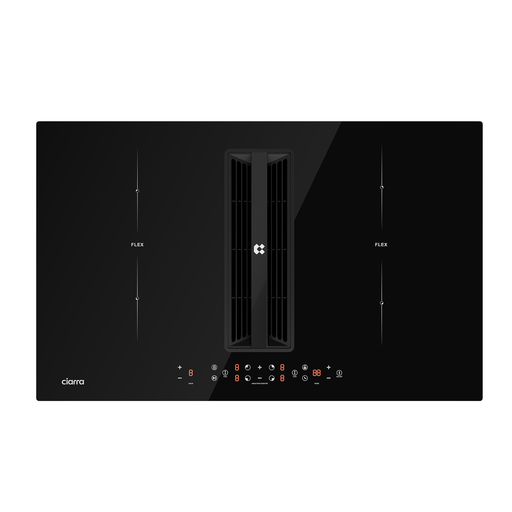
This built-in appliance is an option if you want to combine an induction hob with an integrated extractor.
The product details list four cooking zones and a combinable Flex zone. The CBEHKIT installation accessories are not included and are sold separately, according to the description; installation and connection should be carried out by a qualified professional.
Not necessarily. What matters is whether the pan is induction-compatible and the size of its base. Check the markings, whether the relevant area of the base is magnetic, and the cooking-zone dimensions. A compatible base doesn’t make up for a zone that’s the wrong size.
In Germany, work on a fixed electrical installation is generally restricted under § 13 of the Low Voltage Connection Ordinance to the network operator or an installation company registered in its installers’ directory. The Siemens built-in appliances mentioned are supplied without a plug and are specified for connection by a qualified electrician. This is different from a portable hob designed to plug into a mains socket.
The German Federal Institute for Risk Assessment says that storing prepared food for longer increases the risk of microbial contamination. Plan suitable refrigeration and containers; the hob doesn’t replace safe food storage after cooking.
No. According to the Verbraucherzentrale, hobs don’t have an EU energy label. For a combined cooker and oven, the label applies to the oven.
No. If a product is faulty, your statutory rights are against the seller; a guarantee is an additional voluntary service with its own terms. So compare repair options and the specific guarantee terms separately.