Making polenta for several portions
If you’re cooking several portions, you’ll need a low heat after bringing the polenta to the boil, and should stir it occasionally as it thickens. That’s also what Alnatura’s basic recipe recommends.


Choose a hob based first on your pan’s base, the weight of the filled pan and the usable cooking zone. Then decide whether a portable hob or a suitable built-in hob is right for your kitchen. According to Alnatura’s basic recipe, polenta thickens after coming to the boil when cooked over a low heat and stirred occasionally. Multiple power settings or a timer do not guarantee a particular cooking result. If you’re storing food for longer, the German Federal Institute for Risk Assessment recommends cooling hot food quickly to below 7 °C.
If you’re cooking several portions, you’ll need a low heat after bringing the polenta to the boil, and should stir it occasionally as it thickens. That’s also what Alnatura’s basic recipe recommends.
The key things to consider are the pan’s base, the size of the cooking zone and, for a portable hob, the maximum weight it can support. Electrolux Support notes that induction hobs require a magnetic pan base. Size and weight limits given by manufacturers apply to the specific model only.
A portable hob needs a suitable place to stand. For a built-in hob, the cut-out and electrical connection must be right for the model you choose. Manufacturer information, such as that provided by Bosch and AEG, applies to the specific appliances.
First compare your pan with the usable cooking zone, then decide how you want to use the hob: as an additional portable cooking surface or as a built-in replacement.
| What matters | What to check when buying | Who is this important to? |
|---|---|---|
| Low heat after bringing to the boil | Check the controls and temperature range of the specific model. Reduce the heat as the polenta thickens and stir occasionally. | If I’m letting polenta thicken over a low heat after bringing it to the boil, I want to be able to set the right heat and keep stirring the pan. Around 33% of consumers put this first. |
| Large pan and filled weight | Compare the pan’s base with the usable cooking zone. For portable hobs, also check that the maximum supported weight is sufficient for the filled pan. | If I’m cooking a large batch in a wide or heavy pan, its base needs to fit the cooking zone and the appliance needs to be able to support it. Around 27% of consumers put pan compatibility first. |
| Additional portable hob | Check you have a suitable, stable place for the appliance. Also consider whether the pan is compatible and what type of connection the appliance needs. | If I want to keep my existing hob and add another cooking surface for the polenta, a suitable portable option matters to me. Around 20% of consumers prefer this option. |
| A suitable replacement built-in hob | Check the cut-out dimensions, not just the overall width. Make sure the cooking zones and connection requirements match those of the exact model. | If I want to replace a built-in hob, the new model needs to fit the existing cut-out and suit my kitchen. Around 20% of consumers put this fit first. |
A ceramic glass surface doesn’t necessarily mean the appliance uses induction to heat your pan. The ROMMELSBACHER CT 2200/E uses HiLight radiant heating elements, while the CASO S-Line 2100 is an induction hob.
Check the heating type of the specific model. For induction, you’ll need a magnetic pan base that’s compatible with the appliance.
For the CASO S-Line 2100, the manufacturer specifies a pan diameter of 12–24 cm and a maximum supported weight of 6 kg. Diameter alone therefore won’t tell you whether a filled stockpot is suitable for this model.
Check the pan’s base and the total weight of the pan and its contents against the limits of the appliance you’re considering.
For a built-in hob, its overall dimensions aren’t necessarily the same as the cut-out size required. Bosch also states that the PIE611BB5E is supplied without a plug and must be connected by a qualified electrician.
Measure the existing cut-out and check the connection requirements in the documentation for the exact model before buying.
A hob’s automatic shut-off function doesn’t actively cool the contents of the pan. If you’re planning to store hot food for longer, the German Federal Institute for Risk Assessment recommends cooling it quickly to below 7 °C.
Plan how you’ll portion and cool the food separately from any timer or keep-warm functions on the hob.
Portable single-zone induction hobs for extra cooking capacity; the S-Line 2100 is the specific model featured here.
Portable radiant hobs are an alternative for anyone who doesn’t want an induction hob; the example here is the CT 2200/E.
Built-in induction hobs with standard round cooking zones; the PIE611BB5E is the model featured here.
Built-in induction hobs with connectable cooking zones; this section looks at the EK60IBI model.
Simple portable cast-iron hotplates are another electric option; the model featured here is the KP 1091.
These products include built-in induction hobs for a permanent cooking surface, as well as portable hobs for extra cooking capacity.
 No image available
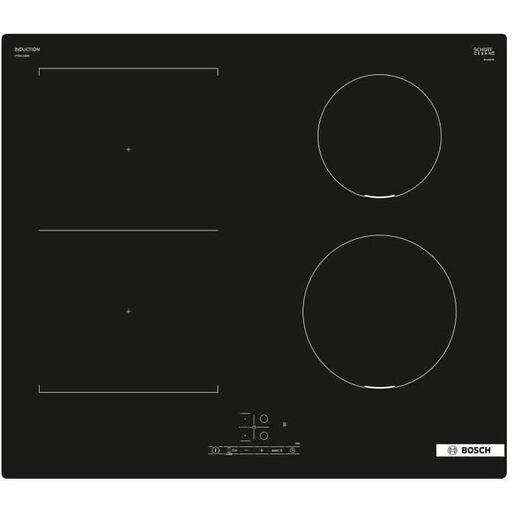
For a permanent cooking surface with multiple zones. Before buying, make sure your pans and installation space are compatible.
60 cm wide, 6.900 W and four cooking zones, with TouchSelect and a timer for each zone. You’ll need induction-compatible pans with magnetic bases. According to the product description, installation should be carried out by a qualified electrician.
 No image available
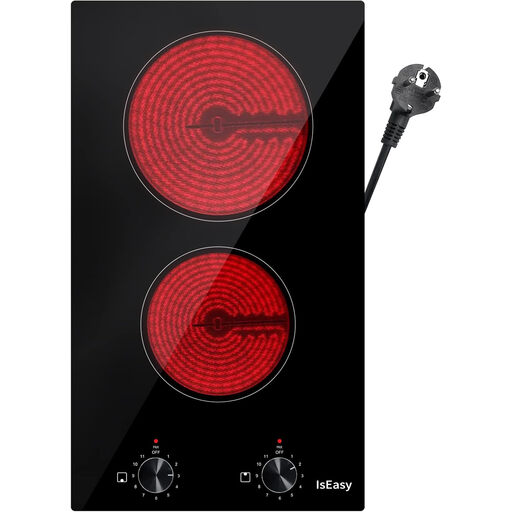
For a permanent cooking surface with two zones. Before buying, check that the cut-out dimensions suit your existing worktop.
11 power settings, 3.200 W and cut-out dimensions of 49 × 27 cm. The product description lists rotary controls and compatibility with common cookware materials.
 No image available
A portable extra cooking surface, provided your pan is within the appliance’s compatible cookware size range.
Nine heat settings and a timer. According to the product description, it’s suitable for cookware measuring 12–26 cm in diameter and weighs 1,9 kg. You’ll need magnetic, induction-compatible cookware.
 No image available
A portable cooking surface if you’re looking for an extra zone and your pan is suitable for induction.
The product description lists ten power settings from 400 to 3.500 W, as well as timer and pre-set functions. You’ll need induction-compatible cookware.
 No image available
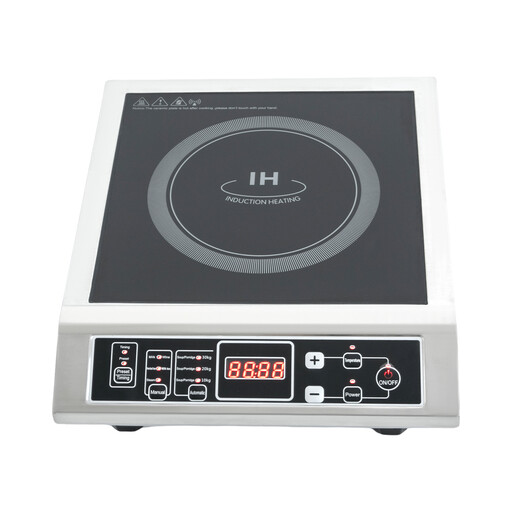
A portable single-zone hob for households looking for an extra cooking surface.
The product description lists ten power settings from 400 to 3.500 W, a timer and an automatic soup or porridge function. You’ll need induction-compatible cookware.
No. In the Alnatura basic recipe we checked, it thickens over a low heat with occasional stirring. Also follow the instructions for the polenta you’re using.
No. The temperature set on the hob doesn’t tell you what temperature the food reaches throughout. The German Federal Institute for Risk Assessment recommends keeping all parts of food at a minimum of 60 °C to keep it hot. If you’re storing it for longer, it recommends cooling hot food quickly to below 7 °C.
If you’re storing the food for longer, cool it quickly and transfer it to suitable freezer containers. The Verbraucherzentrale recommends labelling containers with their contents and the date they were stored. As a general guide, it gives a freezer storage time of up to three months for cooked dishes. This isn’t a shelf-life recommendation specifically tested for polenta.
Check the instructions for the specific model and follow its connection requirements. Bosch explicitly states that the PIE611BB5E is supplied without a plug and must be connected by a qualified electrician. This doesn’t establish a general requirement for portable hobs.