
Lieferung heute & morgen

Qualitätsgarantie

Willkommens-Angebote freischalten: KOSTENLOSE Lieferung | Bis zu 80 % RABATT | Kostenlose 30-Tage-JoyPlus-Testphase
App herunterladen
Modernising a kitchen or replacing a faulty appliance often raises the question of which hob is the right fit. A 60 cm standalone hob is a popular choice for many households, as it integrates seamlessly into standard kitchen units and can be installed independently of the oven. However, deciding between different technologies and features can be complex.
This article serves as a practical guide. We explain the key criteria you should consider when making your selection and present a range of models that stand out for their specific characteristics and functions. Our goal is to provide you with an informed basis for your purchasing decision.
To find the right model for your needs, a few technical aspects and features are crucial.
The choice of heating technology is one of the most fundamental decisions, affecting both the cooking experience and energy efficiency.
Modern hobs offer a range of features that make daily life safer and more convenient.
A standalone built-in hob requires professional installation. Before purchasing, check the exact cut-out dimensions (width x depth) required for installation in your worktop. These appliances are typically supplied without a plug and must be connected to a dedicated cooker outlet (high-power) by a qualified electrician to ensure safe and compliant operation.
Here is a selection of models that stand out for their specific technical features and functional profiles.
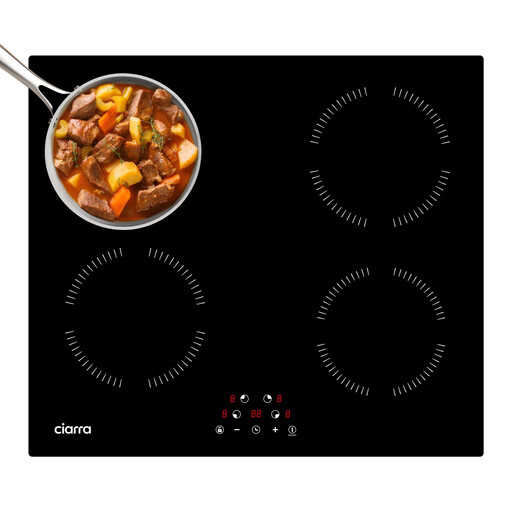
Why it stands out: This model combines the efficiency of induction technology with a comprehensive suite of safety features. The four independent cooking zones and precise power control make it a versatile appliance for everyday use.
Advantages:
Who is it for? This hob is an excellent choice for households looking for a reliable induction hob with a strong focus on safety and user convenience. It fits perfectly into standard kitchens and is aimed at users who appreciate precise cooking.

Why it stands out: With a total power of up to 7200 W and a boost function on all four zones, this hob is built for speed. It allows for exceptionally fast heating of food and liquids.
Advantages:
Who is it for? Ideal for users who cook frequently and value time savings. The boost function is particularly practical for families or individuals who often need to prepare meals quickly.
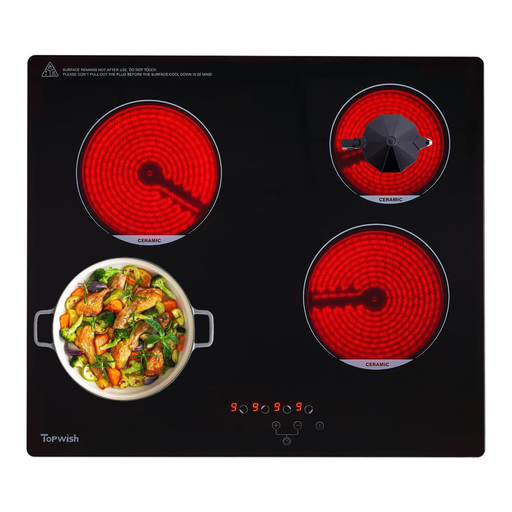
Why it stands out: This ceramic hob offers maximum flexibility in your choice of cookware. With its dual-ring and oval cooking zones, it also adapts to different pot sizes, making it a practical and straightforward solution.
Advantages:
Who is it for? This model is the right choice for anyone who wants to continue using their existing cookware or prefers the uncomplicated and proven technology of a ceramic hob. The flexible cooking zones offer added convenience.
If our selection doesn't include the right model for your kitchen, or if you are interested in other types of appliances, you can find a wider range of hobs and cookers that might meet your needs in our comprehensive Built-in Cookers category.
1. What does "standalone hob" mean? A standalone hob operates completely independently of an oven. It has its own power supply and control panel. This allows it to be placed flexibly in the kitchen, for example, above a drawer or dishwasher, while the oven can be installed elsewhere, such as in a tall cabinet.
2. Do I need new cookware for an induction hob? Yes, you need ferromagnetic cookware to use an induction hob. This means the base of the pot or pan must be magnetic. You can easily test this by holding a magnet to the bottom of the pot. If it sticks, the cookware is suitable for induction. Cast iron and some types of stainless steel are typically compatible.
3. Who can install a standalone hob? For safety reasons and to comply with legal regulations, the electrical connection of a standalone hob, especially to a high-power circuit, must be carried out by a qualified electrician. Improper installation can lead to appliance damage and serious safety risks.