
Lieferung heute & morgen

Qualitätsgarantie

Willkommens-Angebote freischalten: KOSTENLOSE Lieferung | Bis zu 80 % RABATT | Kostenlose 30-Tage-JoyPlus-Testphase
App herunterladen
A new hob should be compatible with your existing kitchen connection, cookware and everyday cooking needs. Even so, certain selling points regularly lead to unsuitable purchases. A high wattage, for example, does not by itself indicate how easily you can control the cooking process. Nor does a glossy glass surface replace carefully checking the installation dimensions or electrical connection.
A four-zone hob rated at 6,000 or 7,200 watts can power several pans at once. However, the total output must be compatible with the intended connection. Permanently connected built-in appliances often need to be installed by a qualified electrician. Suitable circuit protection, correct fuse ratings and sufficient ventilation beneath the appliance are more important than having the highest possible number on the product label.
An induction hob only heats suitable magnetic cookware. You can check whether a pan is compatible by holding a magnet against its base. If it sticks, the cookware is generally suitable for induction. Aluminium, copper and ceramic cookware will only work if the base specifically has a magnetic layer.
A visible width of 60 cm does not automatically correspond to the required worktop cut-out. For example, some 60 cm hobs require a cut-out approximately 56 to 56.5 cm wide and around 49 to 49.5 cm deep. Before buying, you should therefore compare the appliance dimensions, cut-out dimensions, installation depth and connection type with your kitchen plans.
A ceramic hob, also known as a glass-ceramic hob, uses electric heating elements beneath the surface. It is generally compatible with many types of pan, provided the base is smooth and clean. The cooking zone remains hot for some time after switching off, so a residual heat indicator is a useful safety feature.
An induction hob requires magnetic cookware. In return, the heat output responds directly to the setting selected on the control panel, and many models feature pan detection and automatic switch-off. If you already own mainly stainless steel or cast-iron pans with magnetic bases, this type of hob may be worth considering.
A portable hotplate, single hotplate or electric hotplate runs from a socket and does not require permanent installation. It is suitable for students, camping, offices, small kitchens or as an additional cooking zone. A stable base, a sufficiently load-bearing socket and unobstructed ventilation openings are essential.
For a one-person household, a double hotplate or single hotplate is often sufficient. Families and people who prepare several components at the same time are more likely to benefit from three or four zones. The diameter matters as well as the number of zones: a 180 mm zone is suitable for different cookware than a large multi-ring zone measuring up to 270 mm.
With compact built-in appliances featuring two zones, you should check whether the available worktop width is sufficient. An independent hob with its own touch controls can be installed separately from an oven. You must establish whether the electrical connection is suitable before installation.
A hob with touch controls is easy to wipe clean, but can react sensitively to water or grease on the sensor area. Nine power levels provide finer adjustment than a simple rotary control. A hob with a timer can switch off the selected zone when the time has elapsed; however, the timer does not replace supervision while cooking.
For households with children, child lock, residual heat indicator, overheat protection and automatic switch-off are all relevant. If the glass surface is damaged, stop using the appliance and disconnect it from the mains. Permanently connected appliances must be handled by a qualified professional.
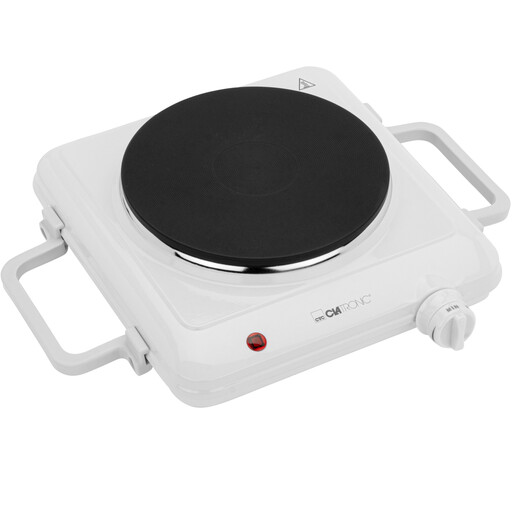
Why this product suits the profile: This portable hotplate requires no installation and offers a straightforward specification for camping, offices or small kitchens, with 1,500 W, a diameter of approximately 180 mm and a continuously adjustable thermostat.
The technical specifications clearly state the hotplate diameter, power rating, thermostat and overheat protection. This makes it easier to check whether it suits your needs before buying.
Continuously adjustable thermostat, indicator light, heat-resistant coating and non-slip base.
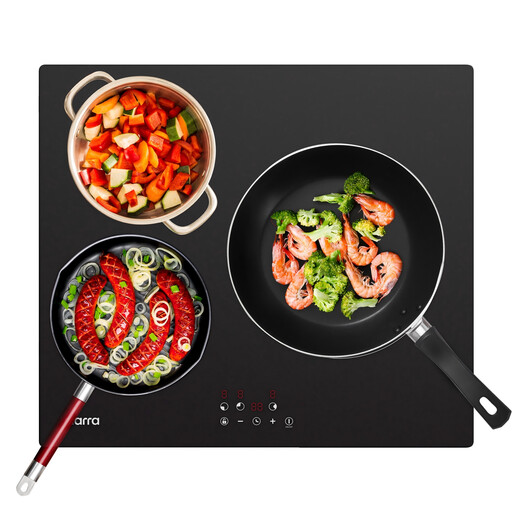
Why this product suits the profile: Three induction zones, nine power levels, touch controls and a timer of up to 99 minutes make this a good choice for households that regularly prepare several dishes at once.
Pan detection prevents a zone from remaining active when suitable induction cookware is not present. Nevertheless, installation and connection dimensions should be checked before ordering.
5,600 W total output, three zones, residual heat indicator, child lock and overheat protection.

Why this product suits the profile: Four zones with nine power levels support preparing several dishes at the same time. This model is designed for permanent installation and requires a 565 × 495 mm cut-out.
The stated zone dimensions and connection data, together with the note that wiring is required without a plug, make the installation requirements clear. This helps avoid an unplanned connection to a standard socket.
Four zones, boost function, timer of up to 99 minutes, pan detection and child lock.

Why this product suits the profile: This compact appliance is designed for worktops, small flats and flexible cooking situations. Ten power levels and six pre-set functions make everyday use easier.
The portable design avoids planning a permanent installation when flexibility is what you need. You still need to use magnetic cookware, keep the ventilation openings clear and clean the appliance with a damp cloth.
2,000 W, ten power levels, touch controls, child lock and a protection programme for dry heating.
We have put together a complete, regularly updated list of products that fully meet these strict selection criteria and the safety regulations applicable in the EU.
If space is limited, consider a portable hotplate, a compact double hotplate or a 29 cm built-in hob. The key factors are the available surface or cut-out area, the socket or permanent connection, and the cookware you already own.
There is no reliable one-size-fits-all answer. Service life depends, among other things, on frequency of use, cleaning, the electrical connection, ventilation and how well the glass surface is protected. Scratches, cracks, liquid on the control panel and blocked ventilation openings can affect operation. Check the relevant manufacturer's information and warranty terms before buying.
Actual consumption depends on the dish being prepared, cooking time, pan size, power level and usage. Induction transfers heat directly to suitable cookware, whereas a ceramic hob first heats the element and the surface. For a fair comparison, you should therefore consider not only the wattage but also the actual operating time and power level.