If you make small, delicate sauces
When stirring cheese into a small amount of sauce, you’ll want to adjust the heat easily and avoid letting it continue to boil. Good Food recommends stirring in the cheese gradually away from the heat.


An induction hob is a good choice for a small portion of cheese sauce if your existing pan has a suitable base and the specific model can detect it. A cast-iron hotplate doesn’t have this induction requirement, but it stays hot after you switch it off. The key is being able to adjust the heat easily while stirring – a high wattage alone doesn’t tell you how the sauce will behave. Good Food recommends stirring in the cheese gradually away from the heat for a smoother sauce, and avoiding a vigorous boil.
When stirring cheese into a small amount of sauce, you’ll want to adjust the heat easily and avoid letting it continue to boil. Good Food recommends stirring in the cheese gradually away from the heat.
With induction, check both that the pan has a suitable magnetic base and that its size is supported by the specific model. The German Consumer Advice Centre and manufacturers’ specifications can help you assess these buying criteria.
Whether you need an extra cooking spot or have limited worktop space, make sure the appliance dimensions, cable routing and controls suit the intended location. You can compare these points using the specifications for each model.
A good fit if: your existing pan has a suitable magnetic base and its base diameter matches the model specifications.
Consider: a pan that’s too small or unsuitable may not work with the appliance; extra temperature functions aren’t necessary for every portion.
A good fit if: you prefer a hob without induction and the heating surface suits the pan you’re using.
Consider: the hotplate continues to give off heat after you switch it off; if needed, move the pan off the hob while stirring.
The main things to consider are how easily you can adjust the heat while stirring, whether your small pan is suitable, how much space you have and whether you might need extra cookware.
| Buying criterion | What to check | Who should consider this? |
|---|---|---|
| Adjustable heat | How easy the power settings are to use; don’t assume the selected temperature is the same as the measured temperature of the sauce. | If I want to adjust the heat while stirring a delicate sauce, I look for settings that are easy to use. Around 36% of consumers put precise heat control for delicate sauces first. |
| A suitable small pan | Check the pan’s base and base diameter against the specifications for the specific induction model. | If I want to keep using my small pan, I check its material and diameter. Around 29% of consumers prioritise compatibility with their existing pan. |
| Space and controls | Check the appliance dimensions, cable length and available space at the intended location. | If worktop space is limited, I want to know whether the hob and pan will fit safely. Around 21% of consumers prioritise a compact design that’s easy to position and use. |
| Overall cost | Consider whether induction means you’ll need to buy an additional suitable pan; don’t treat wattage as the cost per portion. | If I need to factor in possible extra cookware for a single hob, I compare the overall cost. Around 14% of consumers prioritise the purchase price and potential follow-on costs. |
A suitable magnetic base and a base diameter the model can detect are two separate requirements.
Check both against the pan you actually want to use and the specific appliance.
High power or fast water heating doesn’t show how easily you can control the heat for a small amount of sauce. F.A.Z. Kaufkompass reports fast water heating in a test of portable induction hobs; this doesn’t tell you how well the temperature can be controlled when making cheese sauce.
Prioritise how easy the hob is to use at low power and whether your pan is compatible over a boost function.
The cooking surface and pan can continue to give off heat even after the hotplate is switched off; you don’t want the finished sauce to keep boiling vigorously.
If needed, move the pan off the hob while stirring in the cheese, and take care around the hot surface.
The portable induction models Touch 2000 and TC 2400 differ in areas such as the stated pan sizes and temperature control.
The CTS 2000/IN is a portable induction hob with a sensor on the cooking surface and adjustable power settings.
The KP 1091 is a conventional cast-iron single hotplate and an alternative to induction.
The Kult X Mono is a portable induction hob with several power settings and programmes.
The SIKP 2200 B1 is a portable single induction hob included in an independent test of portable hobs.
The Joybuy products below are mostly portable induction hobs; the selection also includes a two-zone ceramic hob. For a small portion of cheese sauce, pay particular attention to pan compatibility and how easy it is to control the heat.
 No image available
For a small amount of sauce, pan compatibility and the available heat settings are important points to consider.
Specifications include 2100W, a 28cm glass surface and nine heat settings. The product description states that it works with magnetic cookware measuring 12–26 cm in diameter.
 No image available
This model could be an option as a portable single hob if five power settings and a rotary control suit the way you like to cook.
Specifications include 1000 W, five power settings and a rotary control. With induction, the pan base must be compatible with the appliance; check whether it detects your pan.
 No image available
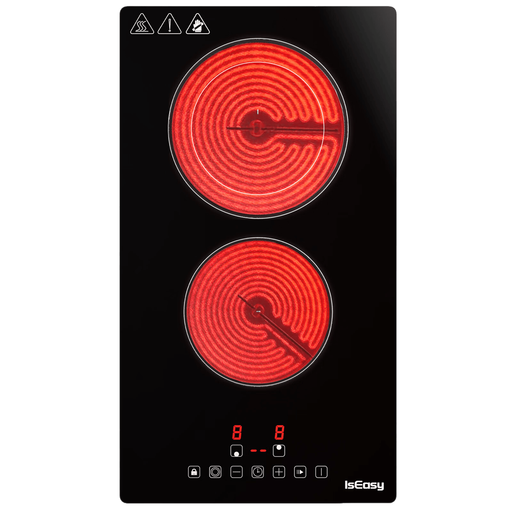
If you’re looking for a two-zone ceramic hob rather than a portable single hob, check that the intended setup suits your available space.
Specifications include two cooking zones, 3200 W, nine power settings and a pause function. The description says it can be used on a worktop or built in.
Its two cooking zones and intended setup differ from those of a portable single hob.
 No image available
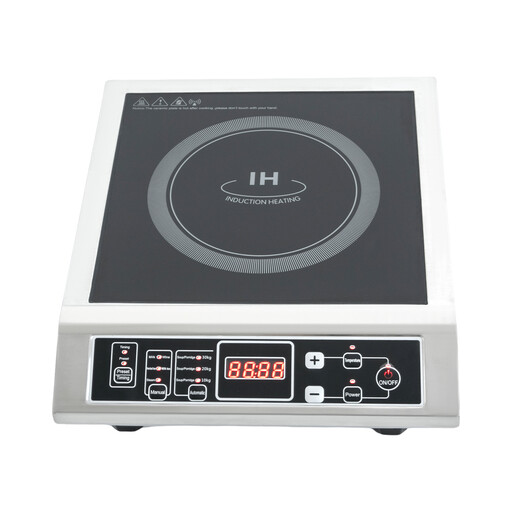
If you’re looking for a portable induction hob with several settings, compare its controls with what you actually need while stirring.
Specifications include 3500W, ten power settings, ten temperature settings, a timer and a preset function. These specifications don’t confirm a particular sauce temperature.
 No image available
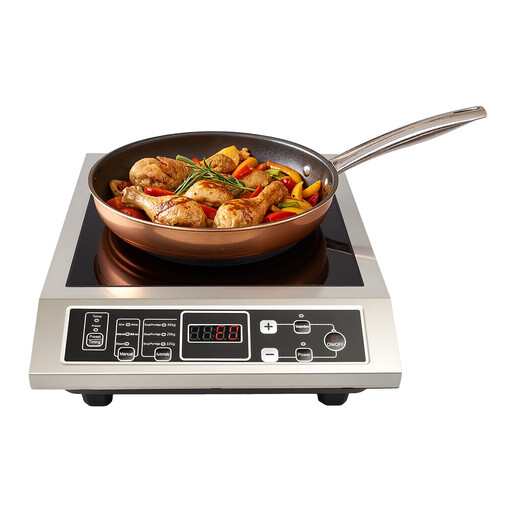
For a small portion, consider whether the commercial design and stated pan requirements suit the way you plan to use it.
Specifications include 3500W, ten power settings and a temperature range of 176–572 °F. The product description states that it works with suitable iron or stainless-steel pans with a base diameter under 9,8 Zoll.
Once the base is heated, stir in the cheese gradually away from the heat and avoid letting the finished sauce boil vigorously. Good Food recommends this method; it isn’t a guaranteed feature of any hob.
Not necessarily: your existing pan must have a suitable magnetic base and fall within the pan size specified for the particular appliance. For example, CASO Design specifies 12–24 cm for the Touch 2000; this range doesn’t automatically apply to other models.
For electrical appliances covered by the 1. ProdSV, including appliances designed for the standard 230-V AC supply, manufacturers are required to provide CE marking and an EU Declaration of Conformity. The GS mark is voluntary and, according to the Federal Institute for Occupational Safety and Health, doesn’t indicate a particular cooking performance or longer lifespan.
No. The German Consumer Advice Centre points out that the EU energy label for ovens doesn’t assess a hob’s efficiency. Wattage figures also don’t represent the measured cost of cooking a portion.
If you have a pacemaker, seek medical advice about your specific implant and appliance before using an induction hob. The German Consumer Advice Centre warns about induction cooking zones for people with pacemakers; this precaution isn’t a general buying requirement for people without an implant.