Cooking two dishes at once
You want to cook fricassee and rice on separate zones at the same time, and need room for both pans.


When cooking chicken fricassee and rice on the hob at the same time, you’ll need at least two independently controlled cooking zones with enough room for both pans side by side. A four-zone built-in hob gives you more options for positioning your pans; a portable double hob may be enough if you only need to use two pans. When choosing between induction and radiant ceramic glass, consider whether your pans are compatible and what type of installation or connection is possible. A timer can help you manage the cooking schedule, but it won’t check whether the chicken is thoroughly cooked or monitor the temperature of food being kept warm.
You want to cook fricassee and rice on separate zones at the same time, and need room for both pans.
Before switching to induction, you want to check whether your current pans will still work, rather than choosing solely on the basis of the heating technology.
You need a portable option for two pans in use at the same time, and need to consider worktop space and the electrical connection.
A good choice if: you often use several pans at once, have induction-compatible cookware and can install a built-in hob.
Things to consider: The pan bases, cut-out dimensions and connection must be suitable for the specific model; a qualified electrician may be needed for the connection.
A good choice if: you want a fixed hob and your existing pans aren’t suitable for induction.
Things to consider: Siemens lists four zones for the ET645HN17E, but no applicable built-in timer; you should also check the installation dimensions and connection.
A good choice if: you don’t need a built-in hob and two cooking zones are enough for fricassee and rice.
Things to consider: The Rommelsbacher CT 3410/IN has two independently controlled zones, requires induction-compatible pans and needs a suitable electrical circuit.
| Buying priority | What to check | Who it matters most to |
|---|---|---|
| Cooking two dishes at the same time | Independently controlled zones; pan size and spacing | If I want to cook fricassee and rice on the hob at the same time, it’s important that both pans fit side by side. Around 40% of consumers with this priority are likely to look first for zones they can use simultaneously. |
| Keeping existing pans | Whether the pan bases are induction-compatible; zone diameters | If I want to keep my existing pans, I mainly want to know whether they’re compatible with the heating technology and the zones. Around 23% of consumers are likely to make this compatibility their main priority. |
| Installation and connection | Cut-out or placement dimensions; connection requirements | If there’s limited space for a built-in hob or portable unit, the solution needs to fit my kitchen and work with the existing power supply. Around 22% of consumers are likely to prioritise installation and connection. |
| Keeping track of cooking times when eating together | Timer function; independent control of the zones | If I need to coordinate several cooking stages, I want to be able to manage everything clearly. This kind of timekeeping is likely to be the main buying priority for around 15% of consumers. |
What matters is whether your fricassee and rice pans will fit on the cooking zones at the same time. Check the manufacturer’s information on the zones and installation dimensions against your own pans and the existing cut-out.
Measure the pan bases and the cut-out, then compare both with the model diagram. Bosch Home Appliances Germany and Siemens Home Appliances Germany list zone and installation dimensions separately for their models.
An unsuitable cut-out may mean changes to your kitchen plans.
The Rommelsbacher CT 3410/IN is rated at 3400 W. Rommelsbacher warns against using powerful double hobs with unsuitable multi-socket extension leads.
Before buying, check the connection and placement instructions for the specific model. Ask a qualified professional to assess the circuit if you’re unsure.
If the electrical supply isn’t suitable, a professional inspection or modification may be needed.
Ceramic glass describes the surface, not necessarily the heating technology. Bosch Home Appliances Germany describes the PIF64RBB5E as an induction hob; Siemens Home Appliances Germany lists the ET645HN17E as an electric hob.
Check the type of hob explicitly and, for induction, make sure your pans are compatible.
If you switch to induction, you may need to replace any existing pans that aren’t compatible.
A timer controls the cooking time, but not the chicken’s core temperature or the temperature of the food. The German Federal Institute for Risk Assessment says poultry is thoroughly cooked when it reaches at least 70 °C for two minutes throughout, including at the centre.
Use the timer to help organise your cooking, but check poultry and any food being kept warm separately.
The examples below relate to the specific model ranges named; their features don’t necessarily apply to every hob from that brand.
The PIF64RBB5E built-in induction hob is an example for households looking to use several pans at the same time.
The radiant ceramic glass ET645HN17E is a built-in option for existing pans that aren’t suitable for induction.
The portable CT 3410/IN double induction hob is an example for kitchens without plans for a built-in hob.
The ID6441XB induction hob is a built-in option for households that occasionally use long pans.
The T56FHS1L0 induction hob is an example of alternative controls and a zone that can be joined to another.
The Joybuy selection below includes hobs with four zones, including induction and ceramic glass models for cooking several dishes at the same time.
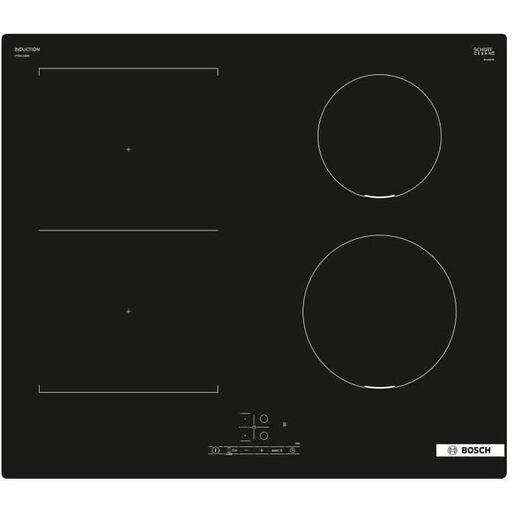 No image available
Four zones and a timer give you options for coordinating the cooking times of fricassee and rice.
60 cm; 6900 W; four cooking zones. According to the product description, connection must be carried out by a qualified electrician.
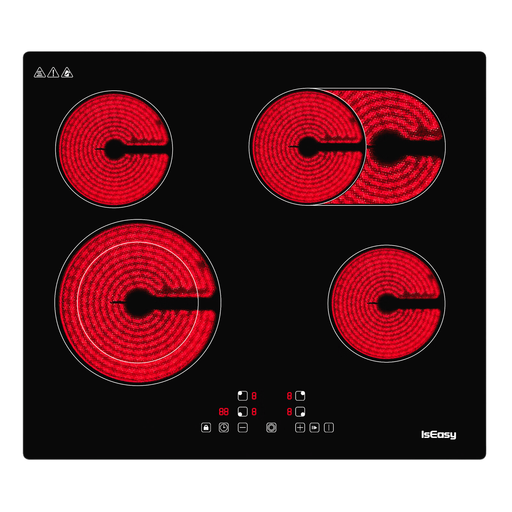 No image available
An option if you want to use cookware made from different materials without relying solely on induction-compatible pans.
6600 W; touch controls; oval and dual-circuit zones; cut-out dimensions 56 × 49 cm; hard-wired connection.
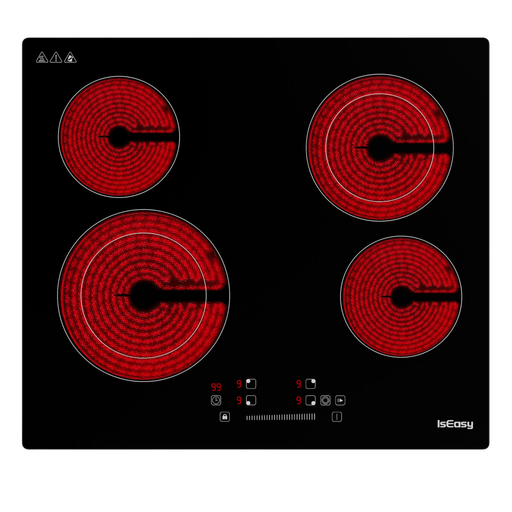 No image available
The timer can help you plan when cooking several dishes at once; it doesn’t measure food temperature.
6600 W; touch controls with 9 settings; dual-circuit zones; timer up to 99 minutes.
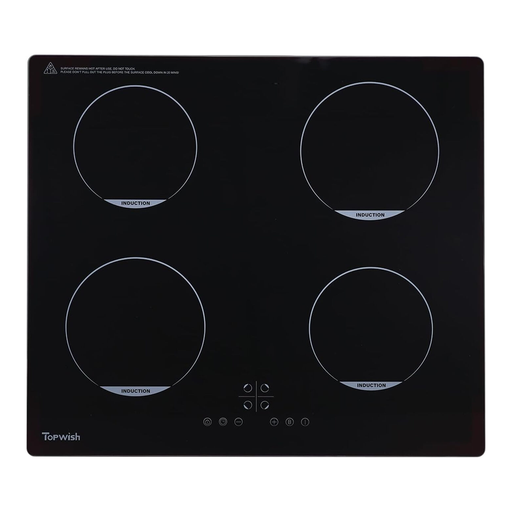 No image available
Four induction zones provide separate spaces for several pans, as long as their sizes and positions are compatible.
9 power settings; Boost function; residual heat indicator; timer up to 99 minutes. Supplied without a plug, with cable connection.
 No image available
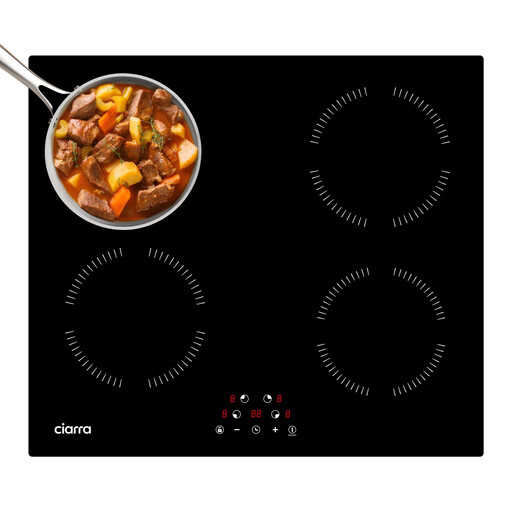
Individual timers for the cooking zones can help you keep track of several cooking times separately.
9 power settings; individual timers up to 99 minutes; cut-out dimensions 560 × 490 mm. Requires magnetic cookware with a flat base.
Two independently controlled zones may be enough if both pans need to be heated at the same time and fit side by side. If you need a third pan at the same time, check that there are enough usable zones and that the spacing works in practice.
The Bosch and Siemens built-in models described here are intended to be connected by a qualified electrician; according to the manufacturers, both are supplied without a plug. Section 13 of the NAV (German Low Voltage Connection Ordinance) governs work on electrical installations. The work required in your home will depend on the existing installation.
An induction hob needs a suitable ferromagnetic pan base. Before choosing a model, check whether your pans are compatible and compare their base diameters with the hob manufacturer’s specifications.
No. A timer controls the cooking time but doesn’t measure the temperature inside the meat. The German Federal Institute for Risk Assessment specifies at least 70 °C for two minutes throughout, including at the centre, as the criterion for thoroughly cooked meat; a suitable food thermometer can help you check.
A keep-warm setting alone can’t tell you whether the food is hot enough. The German Federal Institute for Risk Assessment advises keeping heated food at a minimum of 60 °C throughout until it’s ready to be eaten; check the food itself while keeping it warm.