Caramel makers who want control over the heat
If you make sauce regularly, you’ll want to adjust the heat easily as the sugar browns. Ease of use and a suitable pan matter more than high maximum power alone.


If your pan is suitable for induction and you want to adjust the heat as you caramelise, induction is a good place to start. If your pan is not induction-compatible, consider a radiant ceramic glass hob or a suitable electric hotplate. Whether a portable appliance or a built-in hob is right for you also depends on your pan’s size, how many batches you plan to make, and the space and connections available. Sensors and temperature settings are not proven safeguards against burning sugar.
If you make sauce regularly, you’ll want to adjust the heat easily as the sugar browns. Ease of use and a suitable pan matter more than high maximum power alone.
If you want to use larger pans or make several batches at once, the cooking zones, spacing and, where applicable, the appliance’s available power all need to meet your needs.
If you want to keep using your existing pan, first check whether it’s suitable for induction or whether a radiant-heated cooking surface would be a better fit.
When making caramel sauce in batches, the key things to consider are how you control the heat, which pans you use and whether you want to prepare batches at the same time.
| What you need | What to check before buying | Who it matters to |
|---|---|---|
| Control the heat | Compare the controls and power settings of the specific model. Don’t assume temperature programmes or frying sensors will automatically make caramel unless this is proven. | If I brown sugar regularly, I want to be able to adjust the heat easily rather than relying on high maximum power. Around 36% of consumers prioritise heat control. |
| Pan size and batch capacity | Compare the pan’s base diameter and weight with the number of cooking zones you need, as well as the weight limit and power distribution of portable appliances. | If I use larger pans or make several batches at once, the zones, spacing and appliance power need to suit the job. Around 29% of consumers prioritise batch capacity. |
| Use a pan you already own | Check the manufacturer’s markings on the pan, the condition of its base and the hob’s permitted pan sizes. | If I want to keep using my sauce pan, I’ll first check whether its base is suitable for induction. Around 21% of consumers prioritise pan compatibility. |
| Positioning and connection | For portable appliances, check the space available; for built-in models, check the cut-out dimensions, electrical rating and installation requirements. | If I need an extra cooking surface, I want to know whether a portable hotplate will do or whether I’ll need a built-in model and a suitable connection. Around 14% of consumers prioritise positioning and connection. |
Ceramic glass describes the surface; different heating technologies can sit underneath it. With induction, the pan you plan to use must also be compatible.
Check the model description for the heating technology and your pan’s manufacturer information for induction compatibility.
On a portable double induction hob, the available power may be shared between the two cooking zones.
If you want to cook on both zones at once, check the power specifications for that type of use rather than assuming the total power is available to each pan.
The width of the glass and the required cut-out dimensions are not the same. You’ll also need to consider the electrical rating and type of connection.
Before ordering, check the installation dimensions and existing connection with a qualified electrician. A hardwired connection must be planned and installed correctly.
Radiant-heated surfaces can retain heat. The ceramic glass on an induction hob can also become warm from contact with a hot pan.
Check the residual heat indicator and the appliance’s safety instructions before touching or cleaning the surface.
Bosch offers built-in induction hobs with a range of cooking zone and control layouts.
The portable ProGourmet 3500 double induction hob is designed for two compatible pans.
The portable CT 2203/TC uses radiant-heated ceramic glass and has a single cooking zone.
The LRR6430M is a standalone built-in hob with radiant-heated ceramic glass.
The Kult X Mono is a portable single induction hob.
The EX975LXC1E is a wide built-in induction hob designed for several pans.
The products below include portable single hotplates, as well as portable and built-in induction and ceramic glass hobs. Compare them mainly by pan compatibility, cooking zones, and the requirements for positioning and installation.
 No image available
For one pan, if you’re looking for a single electric cooking zone with stepless temperature control.
The product description lists an 18 cm heating ring, a dial control and 1,500 W. The appliance is not described as a multi-zone solution for preparing batches at the same time.
 No image available
For a portable cooking zone, if you use induction-compatible cookware and want to select the temperature setting on the appliance.
The product description lists eight temperature settings from 80 °C to 270 °C, a timer function and overheat protection. Cast iron and stainless steel are listed as suitable cookware materials.
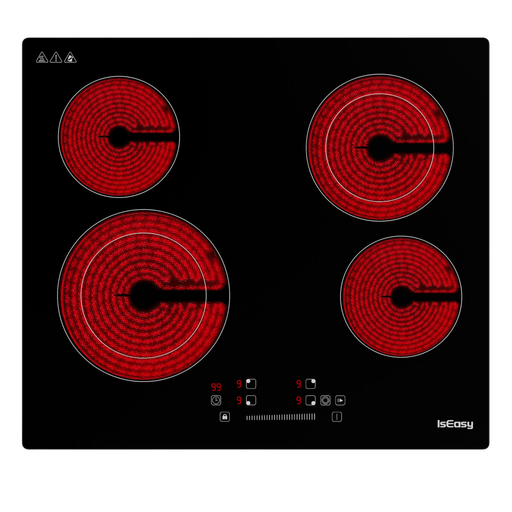 No image available
For several pans, if you’re looking for a built-in ceramic glass hob with four cooking zones.
The product description lists a dual-ring zone, an oval zone, nine power settings and a timer. It requires a 56 × 49 cm cut-out and a hardwired connection.
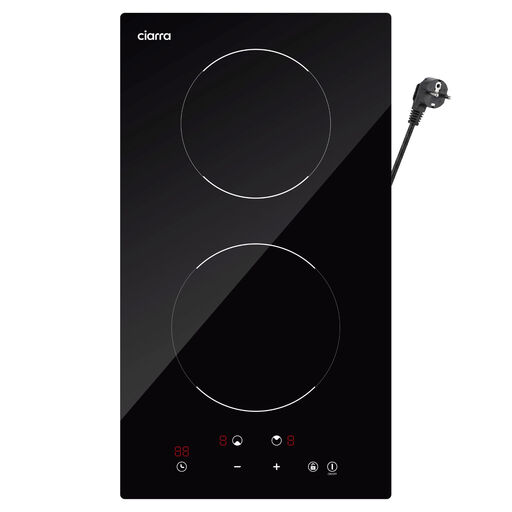 No image available
For two pans, if you’re looking for a built-in induction hob with two cooking zones.
The product description lists nine power settings, separate timers and pan size ranges of 120–260 mm and 120–200 mm. Induction-compatible cookware and a 270 × 490 mm cut-out are required.
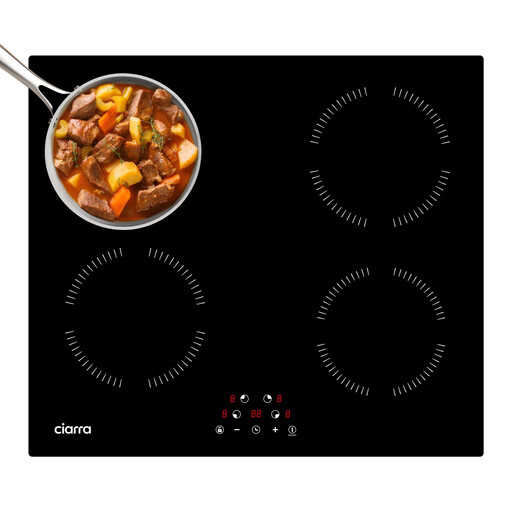 No image available
For several pans or batches, if a four-zone built-in induction hob fits your kitchen.
The product description lists nine power settings, individual timers and pan size ranges of 120–260 mm and 120–200 mm. It requires a 560 × 490 mm cut-out and a 32 A fuse; cookware must be induction-compatible and have a flat base.
No. This has not been proven for the models mentioned or for any particular caramel sauce. Keep an eye on the sugar as it browns and consider how your pan distributes heat. Power settings and frying sensors are not proven to automate caramel making.
Under § 13 NAV, work on the electrical installation may generally only be carried out by the network operator or an installation company listed in an installers’ register. HEA likewise advises that a hardwired electric hob should be connected by a qualified electrician registered in the relevant directory. This is different from a portable appliance that’s ready to plug in.
Follow the appliance manufacturer’s cleaning and safety instructions, and check the residual heat indicator. The ceramic glass on an induction hob can also become warm from contact with a hot pan, so don’t assume a switched-off zone is cool just because of the heating technology.
No. For new electrical equipment within the scope of the low-voltage rules – 50 to 1,000 V AC or 75 to 1,500 V DC – CE marking is a conformity requirement. The Federal Network Agency describes it as a declaration made by the manufacturer; it does not prove that the product has been independently tested or that it is suitable for your pan or sauce.