Pudding makers serving at different times
If you need to separate thickening from serving, plan to treat preparation and subsequent hot-holding or chilling as two distinct steps.


When you need to serve pudding at different times, choose a hob that’s easy to control and lets you adjust the heat to suit the recipe. Dr. Oetker recommends stirring cooking pudding vigorously. A temperature setting or keep-warm programme doesn’t prove that the pudding is at the right temperature throughout: the German Federal Institute for Risk Assessment (BfR) recommends keeping food at a minimum of 60 °C throughout, while storing it for longer requires a separate decision about refrigeration.
If you need to separate thickening from serving, plan to treat preparation and subsequent hot-holding or chilling as two distinct steps.
For egg-based custard, follow the specific recipe; turning up the heat across the board isn’t right for every recipe.
If you want to keep using your existing cookware or need to find room for a portable hob, consider the heating technology, the base of your pan and the space available together.
First decide whether a portable hob or a built-in hob is right for your kitchen. With a portable hob, your existing pan and preferred heating technology are key; plan separately for hot-holding or chilling the pudding afterwards.
| What you need | What to check when buying | Who is this important to? |
|---|---|---|
| Controlled thickening | Check how easy it is to use the lower power settings and how they regulate the heat. Dr. Oetker recommends stirring cooking pudding vigorously; for egg-based custard, the specific recipe is what matters. | When I make pudding, I want to adjust the heat to suit the recipe and have good control while stirring. Around 36% of consumers put controlled thickening first. |
| Serving later | A programme name doesn’t prove that food has reached a particular temperature. The BfR recommends keeping food at a minimum of 60 °C throughout; for longer storage, it recommends cooling it quickly to below 7 °C and keeping it in the fridge. | When not everyone is eating at the same time, I want to keep the portion properly hot until it’s served or chill it promptly. Around 29% of consumers say serving later is their main concern. |
| Using your existing pan | Check that the material and diameter of the pan base meet the hob’s requirements. The Rommelsbacher CT 2010/IN, for example, requires a ferromagnetic pan base. | If I want to keep my pan, I check its base against the heating technology rather than looking only at the diameter of the rim. Around 21% of consumers put pan compatibility first. |
| Available space | For a portable hob, compare its external dimensions with the available space and make sure the surface is suitable. For a built-in hob, installation and connection need to be considered separately. | If my worktop space is limited, an additional hob needs to fit on it in practice. Around 14% of consumers say space is their main concern. |
The BfR recommendation is about the temperature throughout the food, not the setting selected on the hob.
If you’re serving later, plan either to keep the pudding hot and check its temperature, or to portion it promptly and chill it.
A ceramic-glass surface can be used with either induction or radiant heating. Induction hobs require compatible cookware.
Check the stated heating technology and make sure your pan base meets the model’s requirements.
If your existing pan isn’t suitable for induction, you may need to buy a compatible pan if you choose an induction hob.
According to Rommelsbacher Support, the power settings 1 to 6 on the Rommelsbacher CT 2010/IN work by switching the hob on and off at timed intervals. This doesn’t tell you how the temperature changes inside the pudding.
Check how the specific model regulates its heat, and be prepared to keep stirring according to the recipe.
The documented portable induction hobs offer different control options, including temperature selection and an external temperature probe.
The portable Kult X Mono combines an induction zone with a range of controls and programme options.
The CT 2010/IN is a portable induction hob, while the CT 2200/E uses ceramic-glass radiant heating.
The documented single hobs include an induction model and a traditional cast-iron hotplate.
The Joybuy products below include portable induction hobs and ceramic-glass hobs for different kitchen layouts and space requirements.
 No image available
Described as a portable induction hob for an extra cooking zone.
Power range 800–3,500 W; timer function and overheat protection.
A temperature setting doesn’t prove that the pudding reaches at least 60 °C throughout when kept hot.
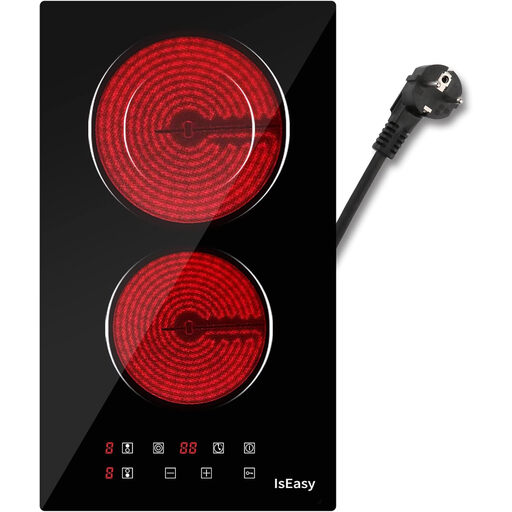 No image available
The two cooking zones could be useful if you want to prepare other dishes alongside the pudding.
3,200 W, nine power settings, touch controls and a timer from 1 to 99 minutes.
The timer doesn’t confirm a particular temperature inside the pudding.
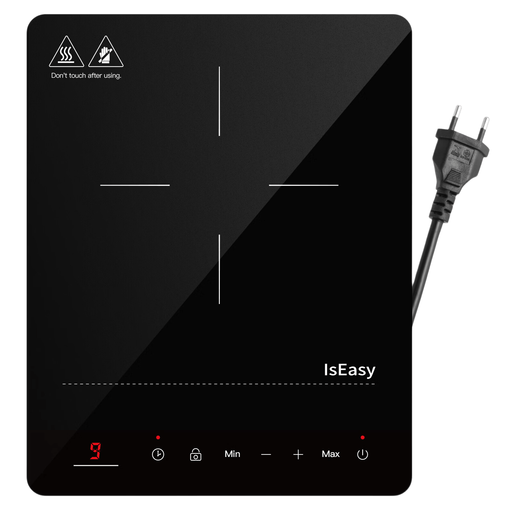 No image available
Described as a portable single hob for an extra induction cooking zone.
Nine heat settings, child lock and an eight-hour timer.
The timer doesn’t prove that the pudding is at the recommended hot-holding temperature throughout.
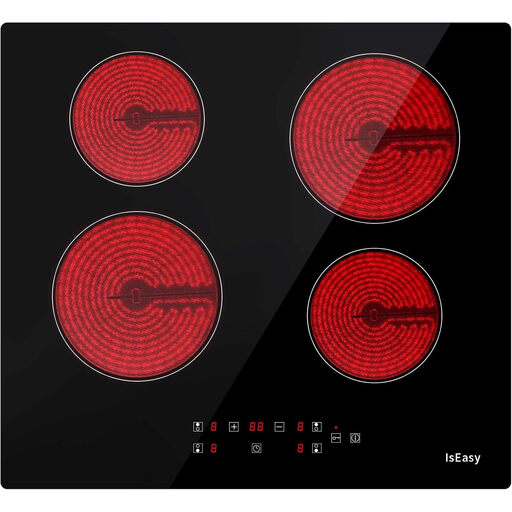 No image available
A built-in hob for a permanent cooking area, not a portable extra cooking zone.
6,000 W, touch controls, child lock and nine heat settings.
For a built-in hob that needs a fixed electrical connection, Bosch recommends having it connected by a qualified professional.
 No image available
A portable single hob for an extra induction cooking zone.
Nine heat settings, touch controls and an eight-hour timer.
The timer doesn’t confirm a particular temperature throughout the pudding.
No, not as the only proof that food is being kept hot safely. The BfR recommends a minimum of 60 °C throughout heated food; a hob setting or programme name doesn’t confirm that temperature. For longer storage, the BfR recommends cooling food quickly to below 7 °C and keeping it in the fridge.
No, it depends on the recipe. Dr. Oetker recommends briefly simmering cooking pudding powder while stirring vigorously; for egg-based custard, the recipe may advise against bringing it back to the boil after adding the egg yolk. Follow the instructions for the specific recipe.
Not necessarily: check the connection requirements for the specific appliance and the socket available. For a built-in hob that needs a fixed connection, Bosch recommends having it connected by a qualified professional; this advice doesn’t automatically apply to portable hobs.
Check that your existing pan is compatible with the heating technology you choose, and whether a built-in hob will need connection work. Your statutory consumer rights and a voluntary manufacturer’s warranty are different; check the specific warranty terms for the appliance you’re buying.
No, electrical waste must be collected separately. The German Environment Agency points to local collection centres, which generally accept old electrical appliances free of charge; the legal requirements for returning them to a retailer vary.