If you’re making one pan of sauce and need an extra hob that you can put away afterwards, a portable single hob is a good choice. If you regularly cook several dishes at once, a built-in hob with enough zones is likely to suit you better. Whether induction is an option depends on the base of your pan. With any model, you’ll also need to check that the pan size and controls are suitable; for built-in hobs, make sure the cut-out and connection are right too. No heat setting or sensor can guarantee that your sauce won’t catch.
Which type of hob is right for you?
Sauce makers with limited space
If you want to reduce a sauce on an extra hob after your food shop and put the hob away afterwards, consider the space available, the size of your pan and how easy the controls are to use. LECKER describes reducing sauce in an uncovered pan, while Rommelsbacher and CASO Design outline the features of their respective appliances.
Cooks with pans they already own
If you want to keep using your existing pans, first check that their bases are suitable for the heating technology. Rommelsbacher and CASO Design specify the requirements for the pan base or pan size for their portable induction models.
Cooks preparing several dishes at once
If you’ll be cooking other dishes on the hob alongside your sauce, the number and layout of the cooking zones, as well as the installation requirements, matter. Siemens and NEFF describe relevant features of their respective built-in hobs.
What should you look for when buying?
First decide whether you need a portable extra hob or cooking zones that are always available. Then check that your pan is compatible with the heating technology and the cooking zone.
| What you need |
What to check before buying |
Who is this important to? |
| Controlling the heat while reducing |
Check the controls and power settings for the specific model. Keep an eye on the sauce as it reduces uncovered, especially towards the end, and adjust the heat as needed. |
If I want to keep adjusting the heat as the sauce reduces, I need controls that make it easy to do so. Around 36% of consumers put heat control first. |
| Using a pan you already own |
Compare the pan material, base and diameter with the model’s specifications. For a full pan, check its weight too. |
If you want to keep using your existing sauce pan, first check that it’s suitable for the heating technology and cooking zone. Around 29% of consumers prioritise pan compatibility. |
| Space and connection |
For portable hobs, check the available surface and that the hob can be set up safely. For built-in models, check the cut-out dimensions and connection type. |
If you want to put the hob away after use or have it permanently built into your kitchen, the space it needs and how it connects are key. Around 21% of consumers look first at storage and connection requirements. |
| Cooking several dishes at once |
Compare the number and usable size of the zones with the pans you’ll be using at the same time. |
If you want to cook a sauce and other dishes at once, you’ll need enough suitable cooking zones. Around 14% of consumers prioritise cooking several dishes at the same time. |
Common misconceptions
-
A glass-ceramic surface doesn’t automatically mean induction
A smooth glass-ceramic surface doesn’t tell you how the hob heats your pan. Induction requires a suitable pan base, while radiant glass-ceramic hobs use a different heating technology.
Check the stated heating technology and pan-base requirements against the specifications for the exact model.
-
A temperature setting won’t stop your sauce from catching
When you reduce a sauce uncovered, liquid evaporates and the sauce can become too thick towards the end. The temperature selected on the hob doesn’t tell you the temperature at every point in the food.
Use the controls to adjust the heat, keep an eye on the sauce and check it particularly carefully towards the end of cooking.
-
A built-in hob won’t fit without checking the measurements and connection
Cut-out and connection requirements vary by model. The built-in models mentioned here need to be connected without a plug by a qualified electrician.
Before ordering, check the installation dimensions and connection requirements for the specific appliance against your kitchen.
Brands to consider
Rommelsbacher
The portable single hobs mentioned here include both induction and radiant glass-ceramic models.
- For the CT 2010/IN, Rommelsbacher lists pan detection and ten power levels. It requires a ferromagnetic pan base.
- The CT 2200/E has a continuously adjustable rotary control and a residual-heat indicator, but it isn’t an induction hob. These features apply to the respective models.
CASO Design
The portable COMFORT C2000 induction model is designed as an extra hob.
- CASO Design lists ten power levels, a keep-warm function and a plug-in connection.
- The COMFORT C2000 is specified for pans with a diameter of 12–22 cm and a maximum load of 6 kg. The keep-warm function doesn’t guarantee that the sauce will reach a particular temperature.
Siemens
The ET645HN17E is a built-in radiant glass-ceramic hob with four zones.
- For this model, Siemens lists one dual-circuit zone, one roasting zone and 17 power levels.
- The ET645HN17E isn’t specified as having a keep-warm setting or a frying sensor. Installation requires a suitable niche and, according to Siemens, connection by a qualified electrician.
NEFF
The T68TTV4L0 is an 80-cm built-in induction hob with several zones.
- For this model, NEFF lists five zones, flexible areas, TwistPad controls and a frying sensor.
- A frying sensor isn’t a specified sauce-reduction mode. Check the niche dimensions and the connection requirements, as the hob doesn’t have a plug.
AEG
The HK834060XB is an 80-cm built-in hob with radiant glass-ceramic heating.
- For this model, AEG lists four cooking zones, expandable zones and a timer.
- The HK834060XB requires a 750 × 490 mm cut-out and doesn’t have a mains plug. These specifications apply to the model mentioned.
Hobs at Joybuy
The Joybuy models below include induction and glass-ceramic hobs with several cooking zones. Heating technology, features and installation requirements vary by model.
 No image available
Induction hob with 2 cooking zones and 5 temperature settings
Two cooking zones could suit you if you need space for another pan alongside your sauce pan.
The product title lists five temperature settings, including simmer and slow cook. Check that the pan size and connection are suitable for your kitchen.
View at Joybuy
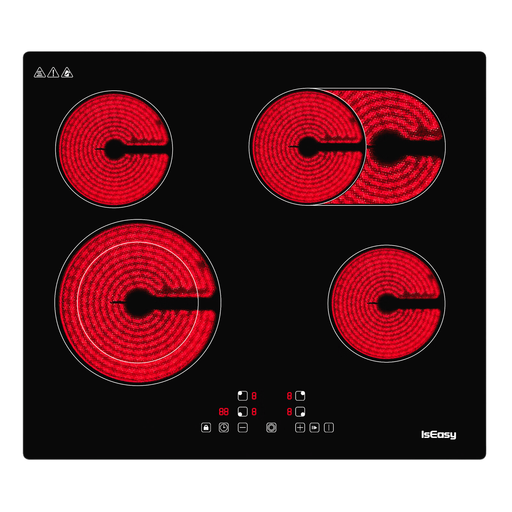 No image available
60-cm glass-ceramic hob with 4 zones
Four zones could suit you if you want to use several pans on the hob at the same time.
Specifications include 6600 W, touch controls, an oval zone and a dual-ring zone; the description lists nine power levels. This model is designed for fixed wiring and requires a 56 × 49 cm cut-out.
View at Joybuy
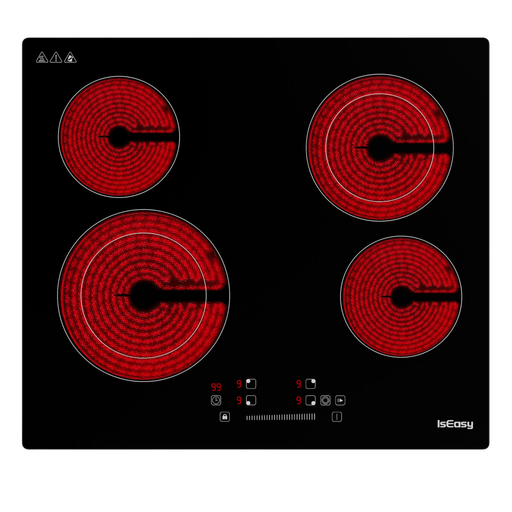 No image available
Glass-ceramic hob with 4 zones and dual-ring zones
This model is worth considering if you want to use several pans on one hob.
The title lists 6600 W and touch controls; the description lists nine power levels. A 99-minute timer and dual-ring zones are also specified.
View at Joybuy
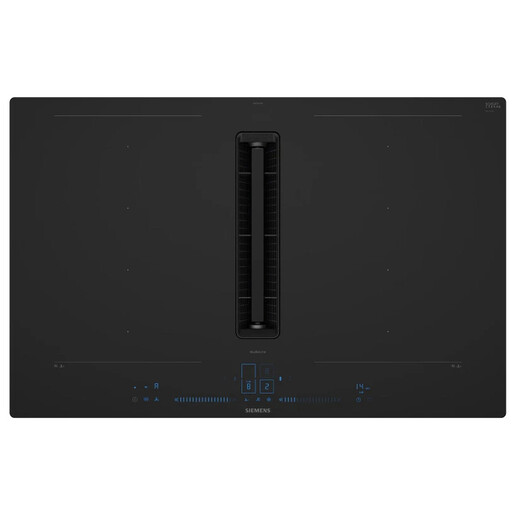 No image available
Siemens EX80BNX68E induction hob with integrated extractor
Four cooking zones could suit you if you want to prepare a sauce alongside other dishes on a built-in hob.
The model is listed as 80 cm wide, with four cooking zones, touch controls and 17 power levels. According to the description, installation requires a qualified professional and a suitable cut-out measuring 227 × 796 × 516 mm.
View at Joybuy
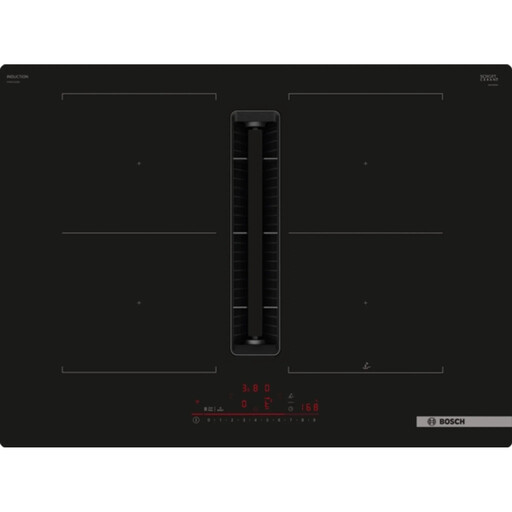 No image available
Bosch PVQ711H26E Series 6 induction hob with integrated extractor
Four cooking zones and a CombiZone are useful if you want to use several pans or larger cookware at the same time.
The description lists a width of 70 cm, 17 power levels and DirectSelect. Installation requires an authorised electrician, according to the description; also check that the cut-out is suitable for your kitchen.
View at Joybuy
Frequently asked questions
Should you keep the lid on the pan while reducing a sauce?
No. When you reduce a sauce, water evaporates from the uncovered pan. Keep a close eye on it, particularly towards the end. A larger surface area of liquid can speed up reduction, but it doesn’t replace suitable heat controls.
Does a glass-ceramic surface automatically mean the hob is induction?
No. The Rommelsbacher CT 2010/IN is an induction hob with a glass-ceramic surface, while the CT 2200/E uses HiLight radiant heating elements, according to Rommelsbacher. Check the stated heating technology, not just the appearance of the surface.
Can I connect the Siemens ET645HN17E to a plug socket myself?
For this specific model, Siemens specifies a connection without a plug by a qualified electrician. For portable hobs and other built-in models, follow the connection requirements for the specific model.
What should I consider if I need to keep the sauce hot for a while before serving?
The German Federal Institute for Risk Assessment recommends keeping heated food at a minimum of 60 °C throughout until it is eaten. The temperature selected on the hob doesn’t prove that the sauce has reached this food temperature everywhere.
Is a manufacturer’s guarantee the same as your statutory rights?
No. Your statutory rights cover faults and apply against the seller; a guarantee is an additional, voluntary promise. The Verbraucherzentrale recommends checking the terms of the specific guarantee.


