Which hobs are right for you?

If you’re making delicate custards

If you want to monitor and adjust the heat as you thicken your custard, check whether a probe can be used effectively with your recipe and pan. It’s only a useful buying consideration if it can actually measure the contents.

If you want to use a pan you already own

If you’d like to keep using your usual custard pan, check its base and diameter first. Induction requires a suitable pan base; radiant hobs don’t have this requirement.

If you’re entertaining to a tight schedule

If you’re cooking another dish while thickening the custard, or serving it later, a second cooking zone and a plan for keeping it warm or cooling it may be important.

What to look for when buying

Buying priority What to look for Who it matters most to
Controlling the heat How easy it is to adjust the power levels; if there’s a probe, check whether it can be positioned effectively in your pan. If I’m heating a delicate custard, I want to keep an eye on the heat as I stir. Around 36 % of consumers put this kind of heat control first.
Using a pan I already own For induction, check that the pan base is suitable and that its diameter falls within the range specified for the model. If I want to keep using my custard pan, I’ll check its base and size before choosing a heating method. Around 29 % of consumers make this their main priority.
Cooking more than one dish Check whether you’ll need to use two pans at once, and whether there’s enough space and both pans are suitable for the hob. If I’m making custard and another dish for guests at the same time, I may need two cooking zones. Around 21 % of consumers put cooking in parallel first.
Serving later If keeping food warm, consider its actual temperature; if storing it for longer, plan to cool it quickly. If the custard won’t be served straight away, I want to plan for the wait and how I’ll store it. Around 14 % of consumers prioritise serving later.

Common misconceptions

  • ‘Ceramic glass’ doesn’t automatically mean induction

    Ceramic glass describes the surface, not necessarily the heating method. The Verbraucherzentrale (German consumer advice centre) points out that the zones beneath a ceramic-glass surface can be heated in different ways. An induction hob needs a suitable pan base.

    Before buying, check the specified heating method, as well as the material and base diameter of your custard pan.

  • A temperature setting doesn’t guarantee evenly thickened custard

    A hob feature or selected temperature doesn’t prove that the contents are all at the same temperature or that a particular recipe will turn out well.

    Choose controls that let you adjust the heat as needed, and keep an eye on the custard as you stir. If there’s a probe, also check that it can be positioned effectively in your pan.

  • A keep-warm setting doesn’t measure the food’s temperature

    A hob setting doesn’t confirm the temperature throughout the custard. The German Federal Institute for Risk Assessment recommends keeping heated food hot at a minimum of 60 °C throughout.

    If you’re keeping the custard hot, check the actual temperature of the food. If you need to store it for longer, the German Federal Institute for Risk Assessment advises cooling hot food quickly to below 7 °C.

Brands at a glance

CASO Design

The portable single induction hobs mentioned here differ in features such as probe mode, settings and keep-warm functions.

  • According to CASO Design, the TC 2400 Thermo Control has a probe mode, while the manufacturer lists stepped settings and a keep-warm function for the COMFORT C2000.
  • Both models require induction-compatible cookware. Pan sizes and features vary by model; these specifications don’t guarantee a particular thickening result.

ROMMELSBACHER

The models described include an induction hob, a radiant ceramic-glass hob and a cast-iron hotplate.

  • According to the manufacturer, the CTS 2000/IN detects pans, the CT 2203/TC TM has two selectable heating-zone sizes, and the AK 1599/E offers continuously adjustable thermostat control.
  • These features apply to the respective models and can’t be assumed to apply to every hob from the brand. They don’t guarantee a particular thickening result.

SEVERIN

The portable DK 1033 is a double induction hob for cooking where you need two zones.

  • SEVERIN lists two cooking zones with pan detection and a timer for the DK 1033.
  • The second zone is only useful if you’re actually cooking in parallel; it doesn’t offer any particular temperature advantage for making custard.

WMF

The Kult X Mono is a portable single induction hob with a range of programmes.

  • WMF lists eight power levels and programmes for tasks including keeping food warm and heating milk.
  • A milk programme doesn’t guarantee that a particular custard will turn out well or can be thickened with precise control.

Joybuy products for this purpose

The Joybuy products below include single hobs for heating and models with two zones for cooking in parallel. For induction, check that your pans are compatible; for built-in hobs, check the required installation dimensions.

Severin KP 1092 single hotplate with an 18 cm heating surface

Severin KP 1092 single hotplate, 18 cm, 1.500 W

Described as an extra cooking zone for sauces, with continuously adjustable temperature control.

The cooking surface gets very hot during use and immediately afterwards.

Joybuy
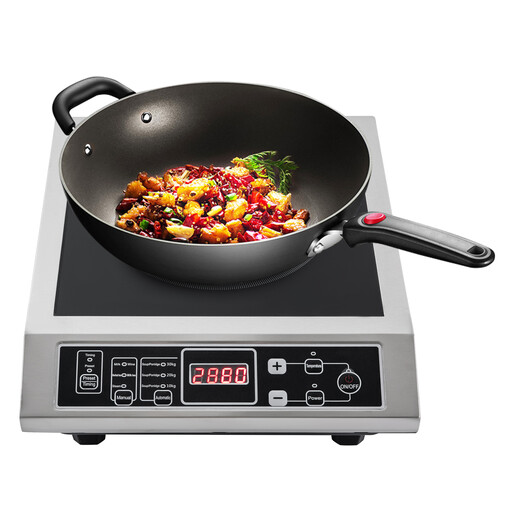
Portable induction hob with 3.500 W and eight temperature settings

Induction hob, 3.500 W, eight temperature settings

A single cooking zone with temperature settings may suit you if you want to adjust the heat yourself.

It’s also described as having a timer, automatic pan detection and compatibility with cast-iron and stainless-steel cookware. Check that your particular pan is suitable.

Joybuy
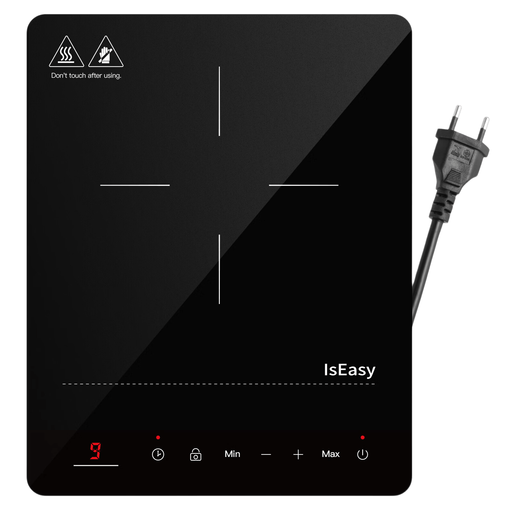
IsEasy single induction hob with 2.100 W and nine heat settings

IsEasy single induction hob, 2.100 W, 28 cm

Described as a portable single cooking zone with nine heat settings and a Max/Min function.

The timer is listed as running for up to 8 hours; a child lock is included in the product name. The pan must be suitable for induction.

Joybuy
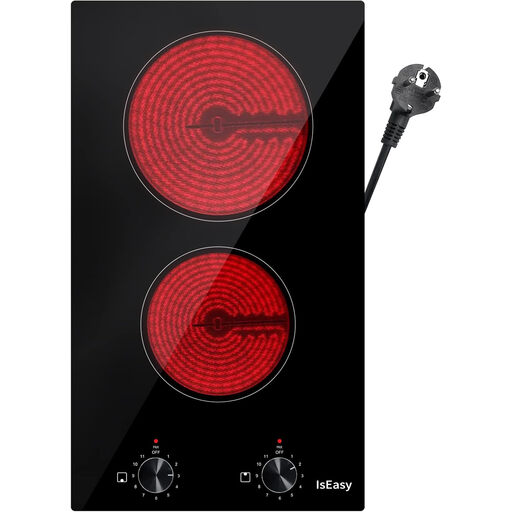
IsEasy Domino ceramic-glass hob with two cooking zones and 3.200 W

IsEasy Domino ceramic-glass hob, 2 cooking zones, 3.200 W

Described as having two independent heating zones for preparing several dishes at once.

The model is listed with 11 power levels and rotary controls. The specified cut-out size for installation is 49 × 27 cm.

Joybuy
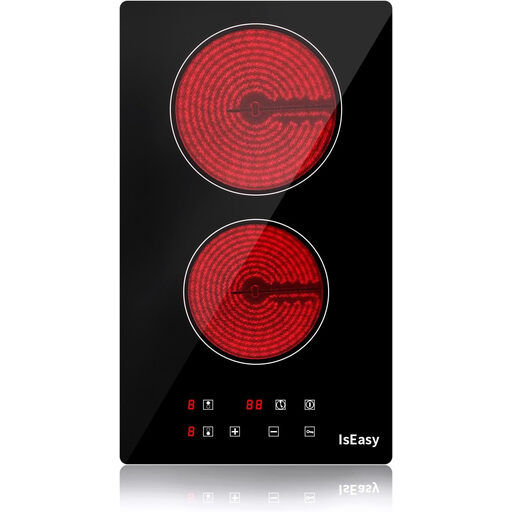
IsEasy double ceramic-glass hob with two cooking zones and 3.000 W

IsEasy double ceramic-glass hob, 2 cooking zones, 3.000 W

Listed as having two independent zones and nine heat settings for preparing several dishes at once.

The timer is listed as running for 1–99 minutes. The hob is designed for built-in installation; check the required dimensions before buying.

Joybuy

Frequently asked questions

Is a smooth ceramic-glass surface always an induction hob?

No. According to the Verbraucherzentrale (German consumer advice centre), zones beneath ceramic glass can be heated in different ways. Check the specified heating method and, for induction, make sure your pan is suitable.

Can I rely on a selected keep-warm temperature as a safe temperature for custard?

No. The German Federal Institute for Risk Assessment recommends keeping heated food hot at a minimum of 60 °C throughout. A hob setting, such as a keep-warm function listed by the manufacturer, doesn’t automatically measure the temperature throughout the contents.

What should I do with custard that won’t be eaten until later?

If you’re not keeping it hot, make sure you can cool it quickly if you need to store it for longer. The German Federal Institute for Risk Assessment advises cooling hot food quickly to below 7 °C for longer-term storage.

What should I check about my pan and hob before buying?

Compare the heating method, your pan’s base diameter and the specifications of the particular model. For induction, the pan base must be suitable; with a built-in hob, the installation dimensions must also fit.

Does a new mains-powered hob in Germany need CE marking or an EU energy label?

New electrical equipment within the relevant voltage range of 50 to 1,000 V AC is subject to applicable EU requirements, including the mandatory CE marking. The European Commission explains that the manufacturer is responsible for the declaration of conformity; CE is not an independent quality mark. Hobs do not require an EU energy label.