What should you look for when buying?
Built-in induction hob
A good fit if: you regularly use two pans at once, have a suitable space for installation and own induction-compatible pans.
Things to consider: the pan bases, installation dimensions and connection requirements must all be compatible with the specific model and your kitchen.
Built-in conventional electric hob
A good fit if: you want a built-in hob with several cooking zones but don’t want to switch to induction.
Things to consider: you’ll still need to check the cut-out and electrical connection. The cooking zones should suit the bases of the pans you actually use.
Portable double induction hob
A good fit if: you want to use two pans at once without a permanent installation and have a suitable clear surface available.
Things to consider: the hob takes up worktop space and requires induction-compatible cookware in suitable sizes.
Portable single induction hob
A good fit if: you already have another cooking zone available for the rice, or you’re cooking the dishes one after the other.
Things to consider: you can only heat one pan at a time on this hob.
The percentages refer to consumers who consider one of these points their top priority when choosing a hob for a shared fricassee dinner.
| Buying priority |
What to check when buying |
Who is it most relevant to? |
| Using two pans at once |
Check the number and layout of the cooking zones against the bases of both pans. |
If I want to cook fricassee and rice at the same time, both pans need to fit side by side. Around 33% of consumers name this as their main priority. |
| Simmering the sauce gently |
Check how easy the specific model is to use and whether it has low power settings. |
If I need to simmer the sauce after bringing it to the boil, an easy-to-use lower setting is important. Around 25% of consumers put this priority first. |
| Installation or worktop space |
For built-in hobs, check the cut-out and connection details; for portable hobs, check the dimensions and placement instructions. |
If I have a small kitchen, a built-in hob needs to fit the cut-out, or a portable one needs to fit on the available worktop space. Around 25% of consumers prioritise space and installation. |
| Using existing pans |
Check that the pans are suitable for induction and that their bases are the right size; for the CASO Touch 2000, also check the maximum weight capacity. |
If I want to keep my set of pans, I’ll first check that they’re suitable for the heating method. Around 17% of consumers say that being able to keep using their pans is their top priority. |
Joybuy products for fricassee and sides
The Joybuy products below include built-in hobs and a portable double induction hob. For models described as glass-ceramic, check the product specifications to confirm the specific heating technology.
 No image available
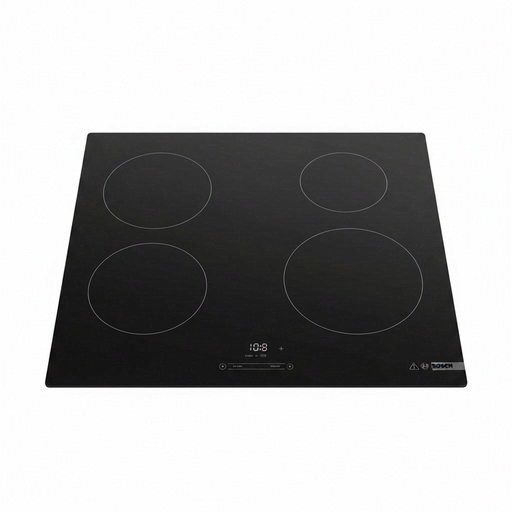
Bosch PIE61RBB5E Series 4 induction hob, 60 cm, 4 zones
An option for a built-in installation if you want to cook fricassee and a side dish on separate zones; induction-compatible cookware is required.
The product specifications list four cooking zones, a 60 cm built-in format, TouchSelect, a timer with automatic switch-off and a child lock. Check the installation instructions and cut-out dimensions before buying.
View at Joybuy
 No image available
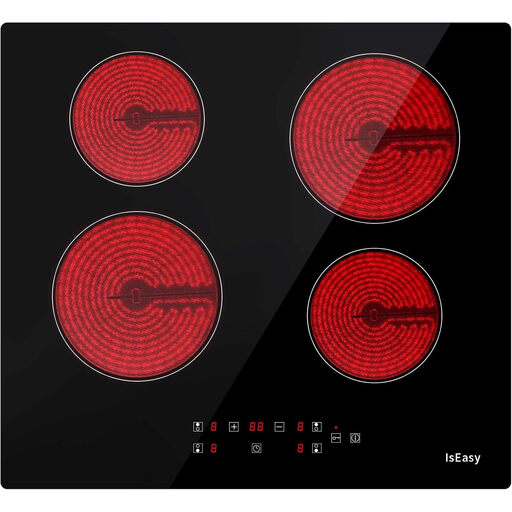
IsEasy glass-ceramic hob, 59 cm, 4 zones
Four zones could work for fricassee and a side dish, provided both pans suit the layout and size of the zones.
The product specifications list a width of 59 cm, 6000 W, touch controls, nine heat settings, a timer, a dual-ring zone and an oval zone. Check the specific heating technology before buying.
View at Joybuy
 No image available
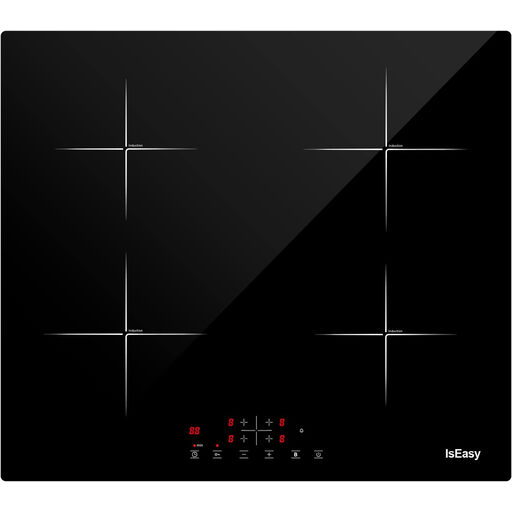
IsEasy built-in induction hob, 60 cm, 4 zones
For a built-in installation and cooking with two pans at once, provided both pan bases are induction-compatible and fit the zones.
The product title lists 6800 W, nine power levels, a timer from 1–99 minutes and a boost function. Check the installation dimensions and connection requirements in advance.
View at Joybuy
 No image available
Double induction hob with two cooking zones
A portable option for cooking with two pans without a built-in installation, provided you have enough suitable space and induction-compatible cookware.
The specifications list two independently controlled cooking zones and five temperature settings. Appliance settings don’t confirm the actual temperature of the food.
View at Joybuy
 No image available
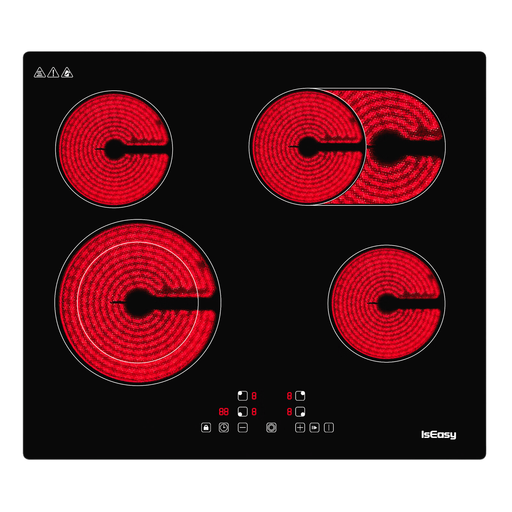
Glass-ceramic hob, 60 cm, 4 zones
Four zones could be useful for two pans and other cookware, provided the dimensions and layout suit your pans.
The product specifications list 6600 W, touch controls, a dual-ring zone, an oval zone and a hard-wired connection. Check the specific heating technology and connection requirements before buying.
View at Joybuy
Frequently asked questions
Is one cooking zone enough for fricassee?
One cooking zone is enough for the fricassee pan. If you want to cook rice at the same time in a second pan, you’ll need another usable cooking zone. Check that both pan bases fit the zones you plan to use.
Can I connect a built-in hob to the electricity supply myself?
Under § 13 para. 2 NAV, work to install, extend or modify an electrical system may only be carried out by the network operator or an installation company listed in its register of approved installers. Check the specific connection and installation work required before buying. This rule doesn’t amount to a blanket installation requirement for a portable hob designed to be operated using a plug.
How can I tell whether my pans are suitable for a portable induction hob?
Check that the pan base is induction-compatible and that its size is suitable for the model. For example, the manufacturer specifies a pan diameter of 12–24 cm and a maximum weight capacity of 6 kg for the CASO Touch 2000.
How can I keep fricassee safely hot until everyone is ready to eat?
The German Federal Institute for Risk Assessment recommends keeping heated food at a minimum of 60 °C throughout until it’s eaten. This is a recommendation about the temperature of the food, not a guarantee provided by a hob setting or keep-warm function; raw poultry must also be cooked through completely.
What should I check when replacing an old hob and disposing of it?
Check in advance whether removal and installation work will be needed, and plan how to dispose of the old appliance. Waste electrical appliances must not go in household rubbish. The Verbraucherzentrale explains that larger old appliances can be returned when you buy a corresponding new appliance, and lists local collection points as another disposal option.


