Families with a large stew pot
If you cook a large quantity in one pot, compare its base with the usable cooking zone on the specific model.


First, check that the base of your large pot fits the usable cooking zone, then decide how many other cooking zones you need for side dishes. Induction is a good choice if your pot is compatible with the hob and you want to adjust the heat quickly while simmering. A radiant hob may be an alternative if your existing cookware is suitable. For a built-in appliance, the cut-out, controls and electrical connection must also be right for the specific model.
If you cook a large quantity in one pot, compare its base with the usable cooking zone on the specific model.
If you prepare other dishes alongside your stew, check whether the pots and pans will actually fit side by side on the cooking zones and can be controlled separately.
If you don't want to install a built-in hob, or need an additional cooking spot, consider the available worktop space and the smaller number of cooking zones on portable models.
A good fit if: Your pot is suitable for induction and its base dimensions match the cooking zone. If you're cooking side dishes too, check how the zones are arranged and which ones can be used at the same time.
Things to consider: Your existing cookware won't necessarily be suitable, and four zones don't automatically mean there's room for a large pot and several other pans.
A good fit if: You're looking for an electric built-in hob with separate zones and can find a suitable cooking zone for your pot, which may be extendable.
Things to consider: Ceramic glass describes the surface, not the heating technology, so check whether the model uses radiant heat or induction.
A good fit if: You don't plan to have a built-in hob, or need an extra cooking spot, and your pot and available surface are suitable for the appliance.
Things to consider: Two cooking zones offer less room for several pots and pans at once than the built-in models covered here, and you'll need induction-compatible cookware.
| What you need | What to check when buying | Who is it important for? |
|---|---|---|
| Large pot and a suitable cooking zone | Compare the pot base with the usable zone size; for long pots, check the shape of the zone too. | If I'm using a large pot for a family stew, its base needs to match the cooking zone. Around 28% of consumers rank having a suitable heating area as their top priority. |
| Controlling the heat while simmering | Check the heat settings, controls for each zone and timer function on the model. | If you want to adjust the heat of the liquid after bringing it to the boil, pay attention to the controls. Around 22% of consumers prioritise heat control while simmering. |
| Cooking stew and side dishes at the same time | Plan for your pot and usual side-dish pans together, taking the layout of the zones and the width of the appliance into account. | If I'm cooking several dishes at once, the pots and pans need to fit side by side on the hob. Around 22% of consumers prioritise being able to use several cooking zones at the same time. |
| Reusing existing pots and kitchen fittings | Check induction compatibility, cut-out dimensions, controls and connection details for the specific model. | If you want to reuse your existing pots or the current installation, check that both are compatible with the model before buying. Around 17% of consumers rank this compatibility as their top priority. |
| Cooking without a built-in hob | Check the number and size of the cooking zones, appliance dimensions, plug details and available space. | If I want to cook without a built-in hob, the appliance needs to fit the space available. Around 11% of consumers prioritise portable use. |
Both induction and radiant hobs can have a ceramic glass surface. The surface alone doesn't tell you which pots and pans are suitable.
Check the appliance specifications for the heating technology and make sure it matches your cookware.
A large pot can limit the use of neighbouring zones. The relationship between the pot base and the zone also affects how heat is distributed. Electrolux notes that if a pot is too large, the outer edge may take longer to heat up.
Plan for your largest pot and the side-dish pans you intend to use, taking the shape, size and layout of the zones into account.
Built-in hobs vary in their cut-out dimensions and connection requirements. This can affect whether a specific model will fit your existing kitchen.
Before ordering, check the model documentation against your kitchen. Work on the electrical installation is subject to the requirements of § 13 NAV; this regulation generally specifies the network operator or a registered installation company, and includes exceptions.
The PIE61RBB5E is a 60-cm induction hob with its own controls and four standard round zones.
The built-in options featured here include the radiant GH646FFX, with an extendable zone and an oval zone, and the TO64IM0FXB induction model with a Bridge function.
The EX975LXC1E is a 90-cm induction hob with five zones and three flexible areas.
The DK 1031 is a portable double induction hob with two cooking zones.
The KIT61440CT is a 60-cm induction hob with its own controls and four individually specified zone diameters.
The selection below includes built-in induction hobs and a freestanding induction cooker. Check that each model is compatible with your kitchen space and cookware.
 No image available
For a family stew with side dishes: this 60-cm model has four standard round zones. Compare the usable zone with the base of your pot.
Induction-compatible cookware is required. Check the cut-out dimensions before installation, and make sure any work on the fixed electrical installation is carried out by a qualified professional.
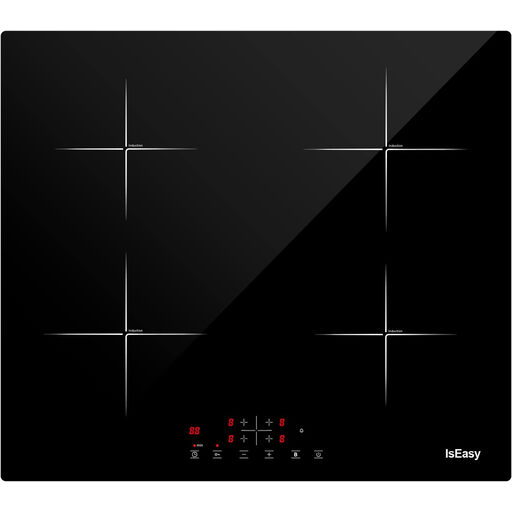 No image available
The four zones give you several cooking spots for stew and other pans; check that the layout suits the dimensions of your cookware.
The product is described as a built-in induction hob with nine power levels and a timer. Induction-compatible cookware is required.
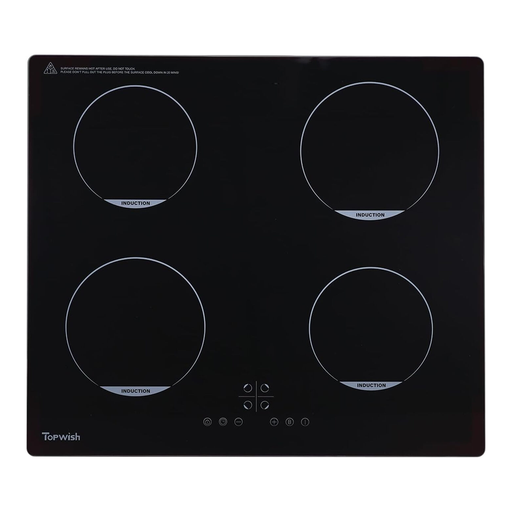 No image available
Four cooking zones are designed for meals using several pans; check that the stated zone layout suits your pot and side dishes.
The model is described as a built-in hob with a hardwired connection and no plug. Check the cut-out and connection before buying, and make sure your pots are suitable for induction.
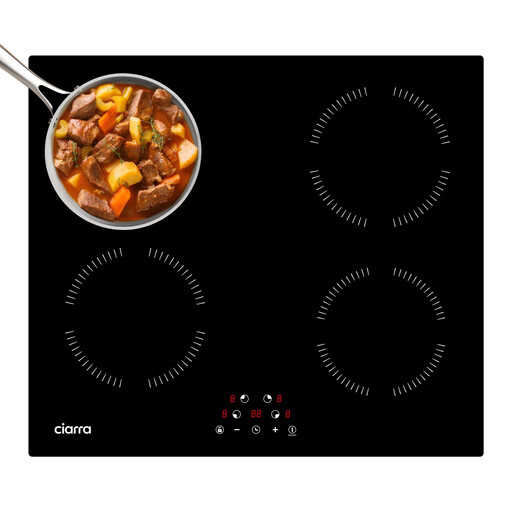 No image available
This four-zone built-in hob is designed for several pots and pans; compare the bases of your pots with the compatible diameters specified for the zones.
The model is described as having nine power levels and individual timers. It requires induction-compatible cookware with a flat, magnetic base; check the cut-out and connection in advance.
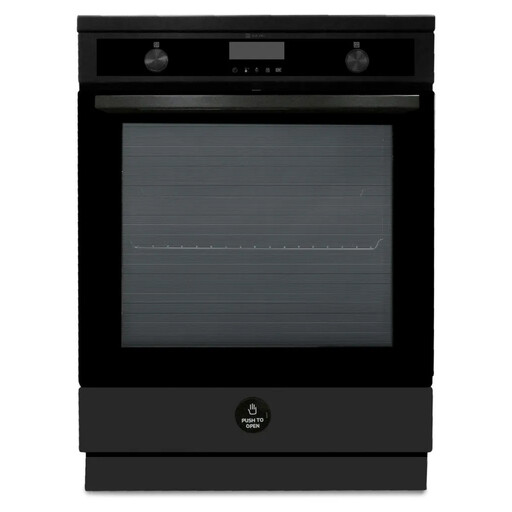 No image available
This freestanding cooker may suit you if you're looking for an oven as well as a hob; it isn't a separate built-in hob.
The product name specifies a 73-litre oven and a four-zone induction hob. The hob requires induction-compatible cookware; check the connection requirements in advance.
Check that the pot is induction-compatible and compare its base diameter with the details for your chosen cooking zone in the appliance manual. Electrolux lists the base material and thickness, diameter and heat setting as factors affecting heat distribution.
For work on the electrical installation, § 13 NAV generally specifies the network operator or an installation company listed in its register of installers; the regulation's exceptions should also be taken into account. Siemens Home Appliances states that its model without a plug must be connected by a qualified electrician. A portable, plug-in hob is different.
No. The Verbraucherzentrale explains that the EU energy label for a cooker relates to the oven; there is no equivalent EU label for hobs.
Check whether your cookware is suitable for induction and whether the cut-out or connection will need adapting for the built-in model. What needs to be done depends on your existing kitchen and the model you choose.
The Federal Office for Radiation Protection notes that electric and magnetic fields can affect electronic implants; a doctor should assess the risk for your individual circumstances. This does not mean that all implants are automatically safe, nor is there a single recommended distance for every type of implant.