Households with staggered mealtimes
If you’re preparing soup for later, decide in advance whether you’ll keep it hot at a controlled temperature or cool it quickly and reheat it later. The BfR provides recommendations for both approaches.


For leek and potato soup when mealtimes vary, a single-zone hob is enough if you’re using just one pan; a double hob is mainly useful if you need two pans at the same time. With induction, the pan base must be ferromagnetic, while a conventional hob may be a better choice if you want to keep using a pan that isn’t suitable for induction. If the soup will be eaten later, it’s not the timer or the ‘keep warm’ setting that matters, but the temperature of the soup: the German Federal Institute for Risk Assessment (BfR) recommends keeping food at a minimum of 60 °C throughout when holding it hot. Alternatively, cool leftovers quickly and reheat them thoroughly later.
If you’re preparing soup for later, decide in advance whether you’ll keep it hot at a controlled temperature or cool it quickly and reheat it later. The BfR provides recommendations for both approaches.
If you want to keep using your existing pan, consider the heating technology, the pan base and the size of the cooking zone together. Bosch Hausgeräte Deutschland notes that cookware for induction needs a ferromagnetic base.
If you want to heat soup and another dish at the same time, check whether you really need two cooking zones and have enough space for them. Manufacturers’ specifications for zones and total power vary by model.
For serving food at different times, the BfR recommends keeping it at a minimum of 60 °C throughout while holding it hot. When reheating, it recommends at least 70 °C throughout for two minutes.
| Consideration | What to check before buying | Who it matters most to |
|---|---|---|
| Serving soup later | Plan to keep it hot or cool it quickly and reheat it later; a timer doesn’t tell you the temperature of the soup. | If I don’t know when everyone will be eating, I want to check the temperature throughout the pan or cool leftovers safely and reheat them later. Around 36% of consumers put safe holding first. |
| Using a pan I already own | For induction, check that the pan has a ferromagnetic base and that its size is within the range specified for the model. | If I want to keep my soup pan, it needs to fit the cooking zone and be suitable for induction. Around 29% of consumers prioritise being able to use their existing pan. |
| Cooking and reheating with control | Compare the power settings and timer for the specific model; don’t assume they indicate a particular temperature inside the pan. | When cooking and reheating later, I want to be able to adjust the power as needed without assuming that a setting or timer guarantees a certain temperature. Around 21% of consumers put this consideration first. |
| Using two pans at once | Consider how many cooking zones you need, the space available and the total power of the specific appliance. | If I want to heat soup and another dish at the same time, I really do need two cooking zones; otherwise, a single hob that takes up less space matters more to me. Around 14% of consumers prioritise having two zones they can use at once. |
A programme or a set hob temperature doesn’t prove that the soup is at least 60 °C throughout. The BfR recommends this temperature for keeping food hot.
Before you buy, think about how you’ll check the temperature, or whether you’d rather cool leftovers quickly and reheat them later.
A pan without a ferromagnetic base won’t work on an induction hob. The pan size also needs to match the model’s specifications.
Check the pan base and the stated size range. If your pan isn’t suitable, compare conventional hobs instead.
If your existing pan isn’t compatible, you may need to buy a soup pan suitable for induction.
A second cooking zone won’t necessarily be useful if you’re only cooking soup in one pan or reheating portions later. Double hobs take up more space and their total power can vary.
Count how many pans you’ll actually have on the appliance at once, then check the available space, power rating and heating technology.
The single and double hobs described here cater for different pan and cooking-zone requirements.
The CT 2010/IN is a single-zone induction hob for use with a suitable pan.
The ProMenu 2100 is a portable single-zone induction hob for pans within the size range specified by the manufacturer.
The Kult X Mono is a single-zone induction hob with a dedicated keep-warm programme.
The DKP 3583 is a conventional double hob with two cooking zones for when you need to heat two pans at once.
The Joybuy selection below includes portable single-zone induction hobs and models with two cooking zones. Induction requires a suitable ferromagnetic pan base. For the specific listing, also check the product identity, CE marking and the accompanying safety information.
 No image available
For a single pan of soup, provided its base is suitable for induction.
The product title states 28 cm; the description lists magnetic cookware from 12–26 cm, nine heat settings and a timer of up to eight hours.
 No image available
For situations where you really do need to heat two pans at the same time.
The product title lists two cooking zones, five temperature settings and a keep-warm function. This function doesn’t prove that the soup reaches a particular temperature.
 No image available
For one pan on a single cooking zone; the pan base must be suitable for induction.
The product title lists 1000 W and five power settings.
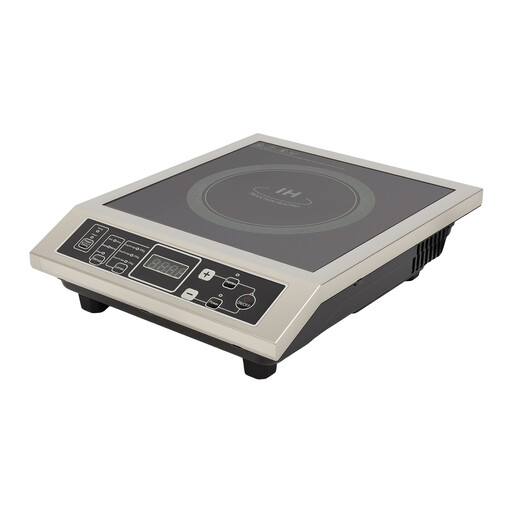 No image available
For a suitable pan if you’re looking for a single tabletop cooking zone with a timer.
The product title lists 3500 W, ten power settings, a timer function and an EU plug.
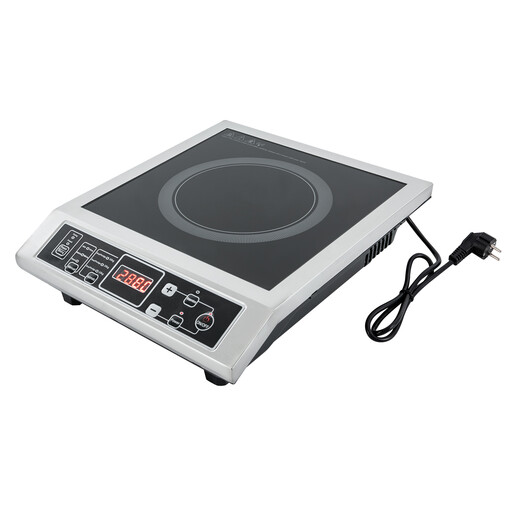 No image available
For a suitable pan if you want to adjust the power and set a time limit for operation.
The product title lists 3500 W, eight power settings, a timer and a reservation function, as well as an EU plug.
Only if the soup actually stays at a minimum of 60 °C throughout. The BfR recommends this temperature for keeping food hot; the name of a programme doesn’t prove that it reaches this temperature. If you can’t ensure this, cool leftovers quickly and reheat them thoroughly later.
The BfR recommends storing leftovers in the fridge, cooling them to below 7 °C within a few hours and eating them within two to three days. You can divide larger quantities between several shallow containers to help them cool. When reheating, the BfR recommends at least 70 °C throughout for two minutes.
A magnet should stick to the base of the pan. Also check the pan size against the specifications for the particular model, and follow its instructions for use and installation.
Electrical equipment covered by Low Voltage Directive 2014/35/EU must meet its requirements; the directive applies to equipment rated between 50 and 1000 V AC. Your Europe explains that the manufacturer declares conformity by affixing the CE marking; it isn’t an independent quality mark. Check the product identity, marking and safety information for the specific listing.
In Germany, the seller is generally responsible for the statutory warranty if a product is faulty. The Verbraucherzentrale states that goods are generally covered for two years from delivery (as at August 2026). A voluntary manufacturer’s guarantee has its own terms and conditions and doesn’t replace these statutory rights.