For cooking sauce and a side dish at the same time
If you’re making onion sauce and other parts of your evening meal at the same time, the number of usable cooking zones is a key factor in choosing a hob.


A portable single hob may be enough for onion sauce if you already have a hob available for the rest of the meal. If you want to cook the sauce and a side dish at the same time, two usable zones are more practical. With induction, your pan needs a suitable base; for a built-in hob, the appliance, cut-out and connection must all suit your kitchen. Manufacturers’ stated power settings don’t independently show how well a particular model can be adjusted for simmering.
If you’re making onion sauce and other parts of your evening meal at the same time, the number of usable cooking zones is a key factor in choosing a hob.
If you already have a main hob, you could look for an extra zone for the sauce that can be adjusted from frying the onions to simmering the sauce.
When replacing a built-in appliance, the heating type and cooking zones need to suit your kitchen, as do the cut-out and connection.
First, consider whether the hob will be used just for the sauce or whether you’ll also need space for another dish.
| Priority | What to check when buying | Who it matters most to |
|---|---|---|
| Controlling the heat while simmering | Controls at a low setting; adjustment options on the specific model | When I fry the onions and then leave the sauce to simmer gently, I want to be able to turn the heat down as needed. Around 33% of consumers put heat control first in this cooking scenario. |
| Cooking several dishes at once | Number of usable zones; available worktop or installation space | If the sauce stays on the hob while I prepare a side dish, I need room for another pan or saucepan. Around 27% of consumers prioritise having several cooking zones they can use at the same time. |
| Continuing to use your existing pans | For induction, check that the pan base is suitable; check the diameter against the cooking zone | If I want to keep using my existing saucepan for the sauce, it needs to suit the heating technology and the zone. Around 20% of consumers put compatibility with their pans first. |
| Finding the right installation or position | Appliance and cut-out dimensions; connection type for the specific model | If I’m replacing a built-in hob or fitting one in my kitchen, its dimensions and connection need to suit the existing setup. Around 20% of consumers prioritise finding the right installation or position. |
Bosch states that induction requires magnetic cookware. For the CT 2010/IN, Rommelsbacher specifies a 120–230 mm cooking zone and ten power settings. Always check the details for the specific pan and appliance.
A glass-ceramic surface alone doesn’t tell you whether the hob uses induction or conventional radiant heating. With induction, the pan needs a suitable base.
Check the technical specifications for the heating type and make sure it’s compatible with your cookware.
While the sauce simmers, a single hob will be occupied. You’ll need another cooking zone or a different cooking plan to make a side dish at the same time.
Before you buy, consider which pans you’ll actually need to use on the hob at the same time.
A built-in appliance may have different cut-out and connection requirements from a portable hob. For example, Siemens lists the EX375FXB1E as supplied without a plug.
Check the specifications for the exact model. Work on fixed electrical installations is subject to the requirements of § 13 NAV, so make sure you arrange for the necessary professional installation.
Portable single-zone induction hobs for extra cooking space; the CT 2010/IN is one specific example.
Portable single and double hobs with different heating technologies; the DK 1014 is an example of a conventional double hob.
Built-in hobs with induction and conventional electric heating; the EX375FXB1E is a slim domino induction hob.
Built-in hobs with induction and conventional radiant heating; Bosch’s buying advice covers the choice of heating type and hob size.
Multi-zone built-in induction hobs; the ID6411XB is one example of a permanently installed hob.
This selection includes induction and glass-ceramic hobs with one or more cooking zones for making sauce and, where needed, cooking other dishes at the same time.
 No image available
An option if you want to switch between several temperature settings while cooking.
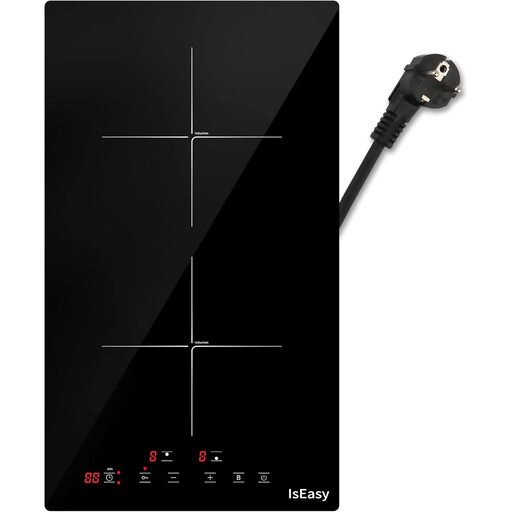 No image available
Two zones give you space to cook the sauce and another dish at the same time.
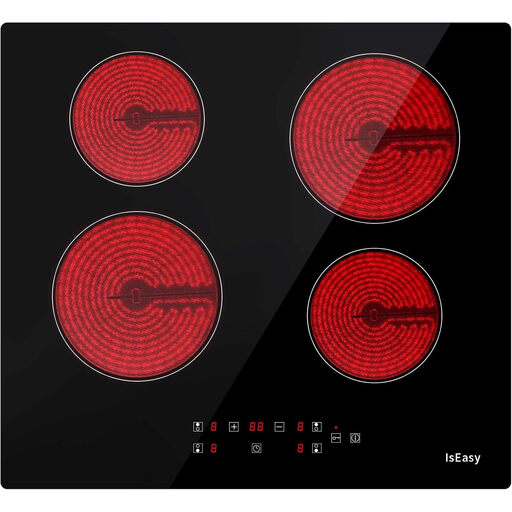 No image available
Four zones are an option if you need to use several pans at once for a family meal.
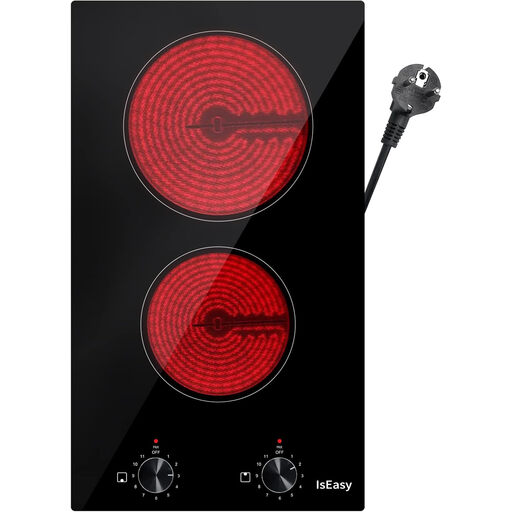 No image available
Two cooking zones are designed for making sauce and a side dish when you want both on the hob at the same time.
 No image available
Two zones let you cook the sauce and another dish on the hob at the same time.
Check the pan’s manufacturer markings, or see whether its base is magnetic and ferromagnetic. Also compare the base diameter with the specifications for the cooking zone on your particular appliance.
Work on fixed electrical installations is subject to the requirements of § 13 NAV; the work should be carried out by the network operator or a registered installation company. Siemens explicitly lists the EX375FXB1E built-in hob as an appliance supplied without a plug, which should be connected by a qualified electrician. This is different from simply plugging in a portable hob such as the Severin DK 1014, as intended.
Pay attention to the residual heat indicator and follow your model’s cleaning instructions. The heating technology alone doesn’t mean the surface is safe to touch straight after cooking.
When buying from a trader, EU consumer rules provide a legal guarantee of at least two years from receipt of the goods; this is separate from any voluntary manufacturer’s warranty. Germany’s Federal Ministry for the Environment states that old electrical appliances must be taken to a designated collection point and not put in household waste.