What should you look for when buying?
The percentages refer to consumers choosing an electric hob for cooking polenta for a meal with guests. Each person is assigned to the one purchase consideration that matters most to them.
| What matters |
What to check before buying |
Who is this especially important to? |
| Controlling the heat for polenta |
Check the controls and low heat settings in the instructions for the specific model. |
When stirring, I want to be able to turn the heat down easily rather than relying on a high maximum power rating. Around 31% of consumers say that controlling the heat for polenta is their top priority. |
| Heating dishes at the same time |
Check the number, dimensions and layout of the cooking zones you can use simultaneously against your cooking plans. |
If I’m heating a sauce or side dishes alongside the polenta, I need suitable extra cooking spots. Around 31% of consumers prioritise having cooking zones they can use at the same time. |
| Using an existing pan |
Check that it’s suitable for induction, its base diameter and the size specifications for the model; if a weight limit is stated, take the weight of the filled pan into account too. |
I want to keep using my current polenta pan, so I’ll choose a hob based on its base and size. Pan compatibility is the main consideration for around 23% of consumers. |
| Positioning and connection |
For a portable hob, check its footprint and allow room for the pan handles; for a built-in appliance, check the cut-out dimensions and connection type. |
If I’m setting up a portable hob or having one built in, it needs to fit the space and connection available. Around 15% of consumers prioritise these positioning and connection requirements. |
For stirring, EDEKA recommends turning down the heat and stirring the polenta continuously at first. A particular power setting or high wattage alone doesn’t mean the polenta will cook successfully without stirring.
With induction, the cookware and cooking zone need to be compatible. Non-induction ceramic glass and cast-iron hobs are alternatives if your existing pan isn’t suitable for induction; even then, the heating area should match the pan base.
Joybuy products for polenta and side dishes
The following Joybuy products include portable single and double induction hobs, as well as built-in induction and ceramic glass hobs. Choose based on pan compatibility, the number of cooking zones you need, and the conditions where you plan to position or install the appliance.
 No image available
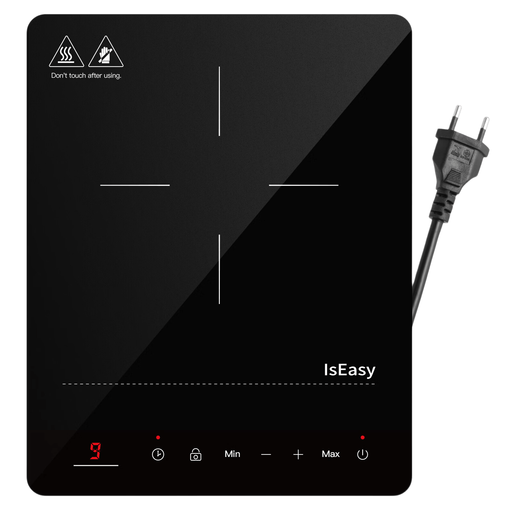
IsEasy single induction hob, 2100 W, 28 cm, 9 heat settings
A portable single hob could work as an extra cooking spot for one pan, provided its base is suitable for induction.
The product name lists a 28-cm cooking surface, nine heat settings, an 8-hour timer, a child lock and a Max/Min function. With just one cooking zone, this hob doesn’t provide a separate spot for heating a side dish at the same time.
View at Joybuy
 No image available
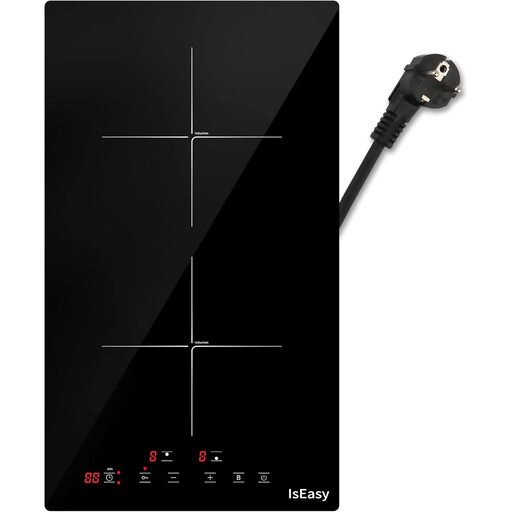
IsEasy Domino induction hob with two zones, 3400 W, 29,5 cm
Two cooking zones may suit your plans if you want to heat polenta and another dish at the same time.
The product name lists 3400 W, 29,5 cm, 220–240 V, nine heat settings, a timer and a booster function. It’s described as both ‘built-in’ and ‘plug-in’, so check which installation and connection type is intended for your kitchen before buying.
View at Joybuy
 No image available
Induction hob with two cooking zones and five temperature settings
A hob with two cooking zones could be useful if you want to heat another pan at the same time as your polenta.
The product name lists five temperature settings and a keep-warm function. Check that both pans you plan to use are suitable for induction and fit the cooking zones.
View at Joybuy
 No image available
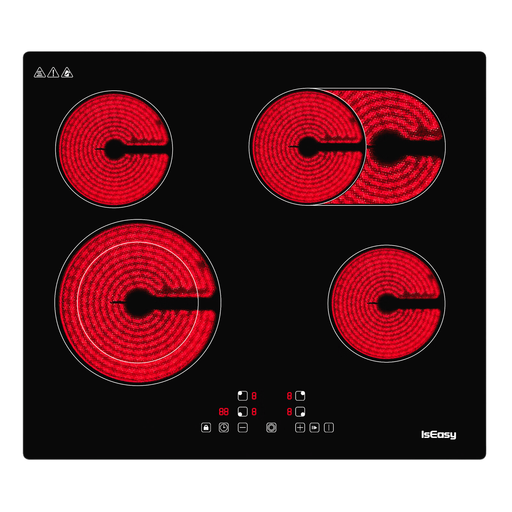
Ceramic glass hob, 60 cm, four zones, 6600 W
A built-in ceramic glass hob could be a good fit if you want several permanent cooking spots and your pan isn’t suitable for induction.
The product name lists four zones, 6600 W, touch controls, an oval zone and a dual-ring zone. The product information says that a hard-wired connection and suitable installation dimensions are required.
View at Joybuy
 No image available
Portable induction hob, 3500 W, 10 temperature settings
A portable single hob could provide an extra cooking spot for polenta if you want to heat the pan on its own.
The product name lists 3500 W and ten temperature settings. According to the product information, it requires an EU socket and must detect cookware suitable for induction.
View at Joybuy
Frequently asked questions
Can I use my existing polenta pan on an induction hob?
Only if its base is suitable for induction and matches the size specifications for the particular hob. The material and thickness of the base also affect how evenly heat is distributed. Check these points before buying.
Does polenta no longer need stirring on an induction hob?
No. In its polenta recipe, EDEKA recommends turning down the heat before stirring in the ingredients, then stirring continuously at first. Also follow the preparation instructions for the polenta you’re using.
How can I keep cooked polenta hot until serving?
For cooked food, the Federal Institute for Risk Assessment recommends keeping it hot at a minimum of 60 °C throughout until it’s eaten. A keep-warm setting on the hob doesn’t automatically show that the inside of the polenta has reached this temperature; check the food’s temperature if necessary. This is a food hygiene recommendation, not a general requirement when buying every hob.
Can I connect a built-in hob to the mains myself?
For work on a fixed electrical installation, Section 13 of the Low Voltage Connection Ordinance generally requires an installation company listed in a network operator’s installer register, or the network operator itself. For the Siemens EX975LXC1E, the manufacturer specifically states that it must be connected by a qualified electrician. A portable hob with a plug is not considered a hard-wired connection simply because it’s plugged in.
Does a hob have the same EU energy label as an oven?
No. The consumer advice centre points out that EU energy labels are available for ovens, but not for hobs.


