For cooks with a pan for breadcrumbs
If you want to toast breadcrumbs in a pan, choose a cooking zone whose heating technology and controls suit both your pan and the way you like to cook.


For toasting breadcrumbs in a single pan, one suitable cooking zone is generally enough. If you’re cooking side dishes at the same time, independently controlled zones matter more than a high wattage alone. You’ll also need to consider your pan, the heating technology and the space available: induction requires a suitable pan base, and a built-in hob must be compatible with your kitchen and electrical connection.
If you want to toast breadcrumbs in a pan, choose a cooking zone whose heating technology and controls suit both your pan and the way you like to cook.
If you want to cook other dishes while toasting breadcrumbs, the number of cooking zones and whether they can be controlled independently are important factors to consider.
If you want to keep using your existing cookware or have limited space, check the pan base, cooking zone size and the appliance’s dimensions for either countertop use or installation.
A good fit if: you need an extra cooking zone for your pan of breadcrumbs.
Things to consider: your pan must be compatible with the heating technology and cooking zone, and the appliance will take up worktop space.
A good fit if: you want to cook breadcrumbs and another dish at the same time in separate pans or pots.
Things to consider: you’ll need room for both pans or pots. With induction, your cookware must be suitable, and the stated total power doesn’t necessarily apply to each zone individually.
A good fit if: you’re fitting out your kitchen for the long term and regularly use several pans or pots at once.
Things to consider: the cut-out and electrical connection must suit the specific model. A built-in hob isn’t necessary just to toast an occasional portion of breadcrumbs.
A good fit if: a portable hob is all you need and your pan isn’t suitable for induction.
Things to consider: a ceramic glass surface can cover a radiant heating element; it doesn’t automatically mean the hob uses induction. Take care around the surface and residual heat.
| What matters | What to check before buying | Who it matters to most |
|---|---|---|
| Control over toasting | Check the controls and heat settings for the specific model; your pan and the cooking zone must be compatible. | When toasting, I want to be able to adjust the heat so the breadcrumbs don’t brown too much. Around 36% of consumers put control over toasting first. |
| Cooking at the same time | Check how many zones you can use, whether they have separate controls and, where relevant, the total power available across them. | If I’m cooking side dishes as well as toasting breadcrumbs, I need another usable cooking zone. Around 29% of consumers prioritise cooking more than one dish at once. |
| Using your existing pan | For induction, check that the pan base is suitable and that its diameter matches the stated cooking zone size. | I want to keep using my existing pan, so I first check whether its base is compatible with the heating technology. Around 21% of consumers put pan compatibility first. |
| Space and connection | Check the appliance dimensions and, if applicable, the cut-out dimensions and connection type against your kitchen. | If space is limited on the worktop or for installation, the hob must fit the area available. Around 14% of consumers prioritise space and connection requirements. |
Ceramic glass describes the surface, not necessarily the heating technology. Radiant heating and induction have different requirements when it comes to cookware.
Check the heating technology using the full model name, then make sure your pan is compatible.
An unsuitable pan could mean an extra purchase or may not work with the hob you’ve chosen.
For the CASO Touch 3500, the manufacturer states that 3,500 W is the total power across the two zones, not the power for each zone.
Check the total power, zone controls and space for both pans or pots in the documentation for the specific model.
For the Bosch PXX675DC1E, the manufacturer specifies cut-out dimensions and says it must be connected by a qualified electrician.
Before choosing a model, check that the cut-out and connection are right for your kitchen and find out what work will be needed.
The cut-out and proper electrical connection require extra planning and work.
The European Commission does not specify EU energy labelling requirements for hobs. An energy label for a combined cooker does not relate to the efficiency of the hob.
Compare the heating technology and information for the specific hob, rather than applying an oven efficiency rating to it.
The CT 2010/IN is a portable single induction hob, while the CT 1800/E is a portable single hob with HiLight radiant heating.
The Touch 3500 is an example of a portable double induction hob.
The KP 1071 is a portable single induction hob, while the DK 1014 is a portable double hob with cast-iron heating rings.
The PXX675DC1E is an example of a built-in multi-zone induction hob.
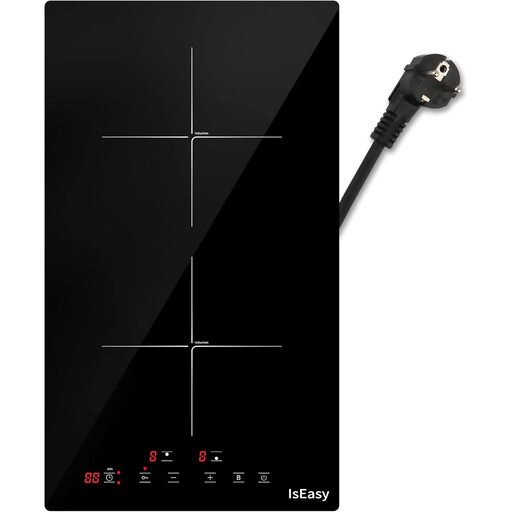
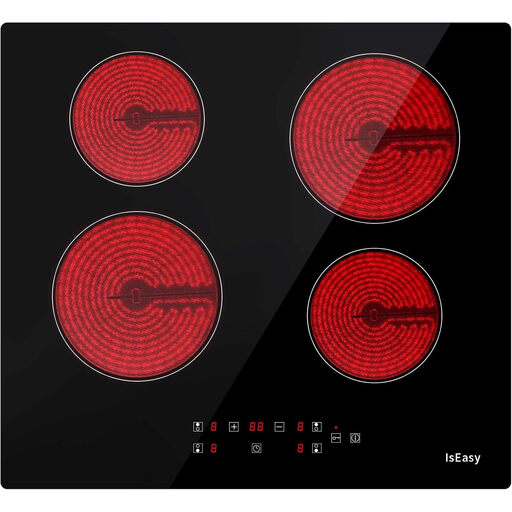
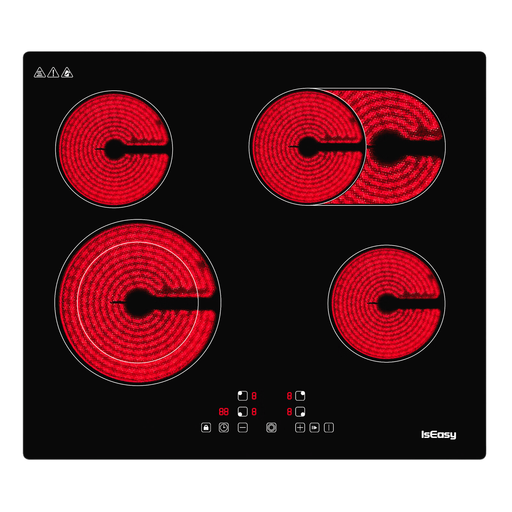
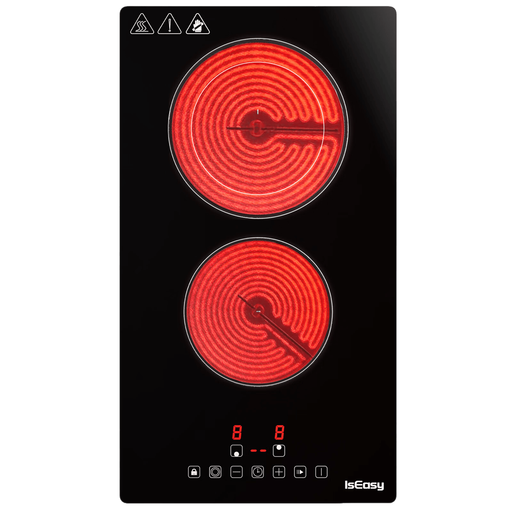
The Joybuy options below include electric hobs with two or four zones, including induction and ceramic glass models, for cooking other dishes at the same time as toasting breadcrumbs.
 No image available
The two zones are designed for cooking breadcrumbs and another dish at the same time.
The product title lists 3400 W, 29.5 cm, nine power settings, a timer and a child lock. The model is described as a built-in hob with a plug; check that this version suits your installation.
 No image available
Four cooking zones could be useful if you need to use several pans or pots at once for a family meal.
The specifications list 59 cm, 6000 W, touch controls, nine heat settings and a child lock. The model is described as a built-in hob; a ceramic glass surface alone doesn’t tell you which heating technology it uses.
 No image available
Two independently controlled zones could suit you if you want to cook another dish while toasting breadcrumbs.
The specifications list five temperature settings. As an induction hob, it requires induction-compatible cookware.
 No image available
Four zones and an oval cooking zone could be useful when cooking with several pans or pots, provided they suit your installation.
The specifications list 6600 W, touch controls, and oval and extendable cooking zones. The product description says installation requires a cut-out and a fixed electrical connection.
 No image available
Two cooking zones could let you cook breadcrumbs and another dish at the same time.
The product information lists 3200 W, nine power settings, a pause function and a child lock. It describes both countertop and built-in installation, as well as connection to a standard socket. Before buying, check which installation method is intended for the specific version.
No, you don’t need a special function. What matters is a cooking zone that suits your pan and lets you adjust the heat while toasting. This doesn’t mean that a particular minimum power or specific toasting result can be guaranteed.
No. The pan base must be suitable for induction and fit the intended cooking zone size. The Federal Office for Radiation Protection recommends using suitable, compatible and flat-bottomed cookware.
A hob without a plug shouldn’t be connected to a socket like a portable hob. For the PXX675DC1E model, Bosch says it must be connected by a qualified electrician. Section 13 of the NAV (Low Voltage Connection Ordinance) governs work on the electrical installation downstream of the main service fuse. Where such work is required, it may generally only be carried out by the network operator or an installation company registered in an installers’ directory. The work needed in each individual case must be assessed on site.
No. According to the European Commission, domestic hobs are covered by ecodesign requirements, but there are no energy labelling requirements for hobs. The energy label on a combined cooker relates to the oven, not the hob.
For an electric hob covered by the relevant EU rules, you should check that it has the required CE marking and German-language operating and safety information that consumers can understand. The German Federal Network Agency also lists product traceability and accurate manufacturer details among the points it checks when monitoring the market. CE marking is not an independent performance test, so check the documentation for the specific product listing.