
Lieferung heute & morgen

Qualitätsgarantie

Willkommens-Angebote freischalten: KOSTENLOSE Lieferung | Bis zu 80 % RABATT | Kostenlose 30-Tage-JoyPlus-Testphase
App herunterladen
A new hob should fit reliably into your existing kitchen and meet your everyday cooking needs. In practice, however, heating power and a low price are not the only factors that lead to the right choice. Important details such as the worktop cut-out, the electrical connection and cookware compatibility are often overlooked.
A 3000 W hob may initially sound powerful. However, what matters is how the power is distributed across the individual cooking zones and whether several zones can be used at the same time. With a 4-zone hob, the total power is often considerably higher. This may require a suitable connection and professional installation.
A built-in hob requires a precisely matching cut-out and sufficient ventilation space. Dimensions of 60 cm usually refer to the appliance width, not the actual cut-out size. The electrical connection is also important: some models have a plug, while others are connected directly without a plug. Fixed appliances should be installed and connected by a qualified electrical contractor.
An induction hob only works with magnetic cookware. Testing the base of a pan with a magnet provides an initial indication. Aluminium, copper or ceramic pans without a magnetic base generally do not work on induction. A ceramic hob, also known as a glass-ceramic hob, is usually less restrictive when it comes to cookware, but takes longer to heat up and cool down.
With induction technology, the base of the pan is heated directly. The cooking surface itself may still be hot after use, as it absorbs heat from the pan. Many induction models include automatic pan detection. An induction hob is particularly suitable for households that want to switch quickly between different power levels and already have compatible cookware.
A ceramic hob uses heating elements beneath a glass-ceramic surface. It can be used with many different pots and pans. Once cooled, the smooth surface can be cleaned with a soft cloth. Burnt-on residue should be removed with a suitable glass scraper, without using harsh abrasive cleaners.
An electric hotplate or portable hotplate is a separate solution for extra cooking capacity, small kitchens, offices, camping or temporary use. It does not require a worktop cut-out, but does take up counter space and should be placed on a stable, heat-resistant surface.
Check the appliance and cut-out dimensions before buying. With a typical 60 cm hob, the installation dimensions may vary depending on the model. The appliance height and the distance to drawers or the oven below the worktop must also be taken into account.
A touch-control hob is operated using touch-sensitive buttons. The sensor area should be kept clean and dry, as grease or water can affect the controls. Useful features include:
Safety features do not replace supervision while cooking. Oil and fat should never be heated unattended, particularly at high temperatures. If the glass-ceramic surface develops cracks, disconnect the appliance from the mains immediately.
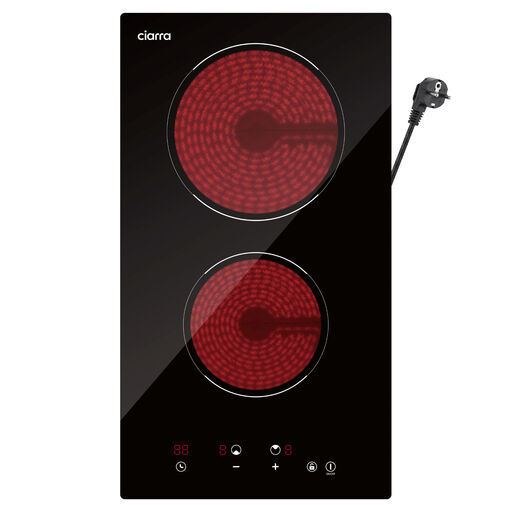
Why this product suits the profile: Two cooking zones and compact dimensions of 290 × 520 × 50 mm make it suitable for small kitchens or lighter cooking needs.
The specifications clearly state the total power, cut-out dimensions of 260 × 490 mm and nine power levels. This makes it easier to check whether it is suitable before installation.
3000 W total power, touch controls, a timer of up to 99 minutes, child lock and residual heat indicator according to the product specifications.
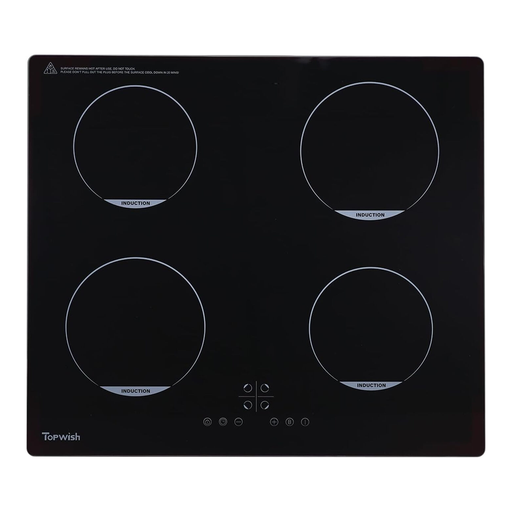
Why this product suits the profile: Four independently usable induction zones and nine power levels are ideal for households preparing several dishes at the same time.
The product data explicitly states 7200 W, a connection without a plug and the need for built-in installation. This means the installation requirements are clearly disclosed.
Four zones, boost function, timer of up to 99 minutes, pan detection, child lock and residual heat indicator according to the product specifications.
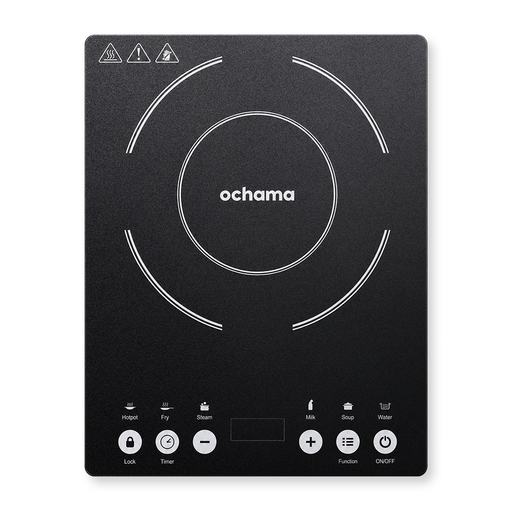
Why this product suits the profile: As a portable hotplate, this compact appliance is suitable for students, tenants needing extra cooking capacity, offices or camping.
The specifications state that a magnetic pan base is required and that the ventilation openings must remain unobstructed. This helps prevent buying cookware that is not compatible.
2000 W, ten power levels, six preset functions, touch control and child lock according to the product description.
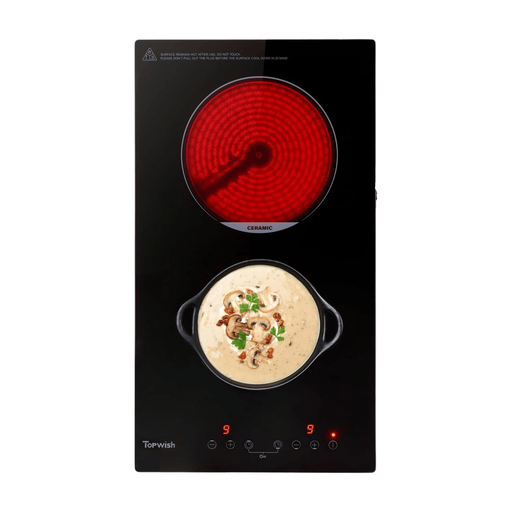
Why this product suits the profile: The 29 cm format provides two cooking zones and is designed for households with limited worktop space and a variety of cookware materials.
The specified cut-out of 260 × 490 mm and compatibility with different cookware materials make it easier to check suitability before buying.
3000 W, nine power levels, timer of up to 90 minutes, child lock and residual heat indicator according to the product data.
We have put together a complete, regularly updated list of products that fully meet these strict selection criteria and the safety regulations applicable in the EU.
Its lifespan depends on usage, cleaning, installation, power supply and care of the materials. A fixed number of years is therefore not a reliable guide. Regular cleaning with suitable products, avoiding hard impacts and following the ventilation requirements can help maintain its performance. If the cable is damaged or the glass-ceramic surface is cracked, the appliance should not be used.
Running costs depend on the power, duration of use and your individual electricity tariff. The rated power, such as 1500 W, 2000 W or 3000 W, describes the maximum electrical input and not necessarily the consumption during every cooking session. As a simple guide, multiply the power in kilowatts by the operating time in hours and your electricity price per kilowatt-hour.
A portable hotplate with a suitable plug can generally be operated from an appropriate socket, unless the operating instructions state otherwise. Different requirements apply to a permanently installed hob. Models without a plug or with a higher connected load should be installed by a qualified electrical contractor. The existing circuit, fuse protection, earthing and required ventilation are all important.