What should you prioritise when buying an air purifier for a hobby room?
First identify the source of the dust, then check whether the air-cleaning performance, noise level and filter maintenance suit the way you’ll actually use the purifier.
| What matters |
What to check |
Who should pay particular attention? |
| Airborne dust and its source |
Check that the unit has a particle filter; for woodworking, plan separately how to capture dust at the source. |
If my main aim is to reduce ordinary airborne household dust while also dealing properly with its source, this is my top priority. Around 33% of consumers are likely to have this as their main concern. |
| Air-cleaning performance in the room |
Compare the room volume, particle CADR in m³/h and the air-change assumption behind the advertised room coverage. |
If I need to know whether the stated air-cleaning performance is right for my hobby room, comparing it with the room volume is essential. Around 27% of consumers are likely to prioritise performance for their room. |
| Noise while you work |
Compare the noise level and, where specified, the CADR for the same fan setting. |
If I spend long periods in the room, I want to be able to use a cleaning setting that won’t distract me from my hobby. Around 20% of consumers are likely to prioritise quiet operation. |
| Filters and running costs |
Check which replacement filters are compatible, when they should be changed and the power consumption of the setting you plan to use. |
If I want to keep ongoing costs predictable, I need details of the right filter and the purifier’s actual running costs. Around 20% of consumers are likely to prioritise these ongoing costs. |
Brands and models to consider
The performance figures and room coverage listed here are based on the relevant manufacturers’ claims for these models, not on independent testing.
Bosch
The Air 4000 combines a pre-filter, activated carbon and a HEPA filter layer with automatic and quiet modes.
- Bosch Home Comfort states that the Air 4000 has a CADR of 300 m³/h and a noise level of 25 dB(A) in quiet mode.
- According to Bosch, the advertised room coverage is based on around two air changes per hour. It is not a universal benchmark for every desired level of cleaning.
Philips
The 1000i AC1715/10 is available with a particle and activated carbon filter, app connectivity and a stated CADR.
- Philips quotes a CADR of 300 m³/h and room coverage of up to 78 m² for the AC1715/10 variant specifically.
- Check the full variant code and the compatible replacement filter. The advertised coverage alone does not determine the air-change rate you want.
Levoit
The Core 300S is a more compact model with an app, automatic mode and a replaceable three-stage filter.
- Levoit quotes a CADR of 258 m³/h for the Core 300S.
- The same product page advertises different coverage areas based on different air-change assumptions. Compare the basis for the figures rather than just choosing the largest coverage claim.
Xiaomi
The Smart Air Purifier 4 has a stated particle CADR, a display and a compatible Xiaomi replacement filter.
- Xiaomi quotes a PM CADR of 400 m³/h for model AC-M16-SC.
- Xiaomi states a noise level of up to 64 dB(A) and advertises an ionisation function. The U.S. Environmental Protection Agency notes that ion generators may produce ozone under certain conditions; the particle CADR does not answer this question. The Xiaomi replacement filter is listed specifically for the Smart Air Purifier 4.
Joybuy products
These are portable particle-filter air purifiers for airborne dust. Room air filtration does not replace cleaning up settled particles or capturing wood dust at the source.
 No image available
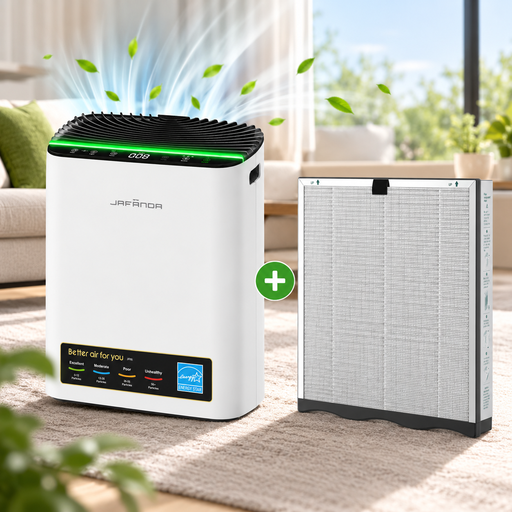
JAFANDA Air Purifier with additional True HEPA 13 replacement filter
May be suitable for airborne particles in a hobby room if the room volume and required fan setting are a good match.
CADR: 268 m³/h; PM2.5 sensor; sleep mode: 20 dB.
Pre-filter, H13 HEPA and activated carbon filters; an additional True HEPA 13 replacement filter is mentioned in the product title.
View at Joybuy
 No image available
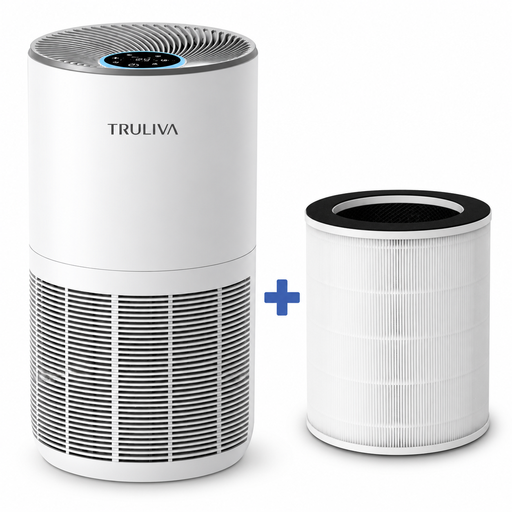
TRULIVA Air Purifier with additional H13 HEPA replacement filter
May be suitable for airborne dust in a hobby room; check that it delivers the air-cleaning performance you need at a setting you’re happy to use.
CADR: 450 m³/h; three-stage filtration with a pre-filter, H13 HEPA and activated carbon; PM2.5 display and sleep mode.
An additional H13 HEPA replacement filter is mentioned in the product title.
View at Joybuy
 No image available
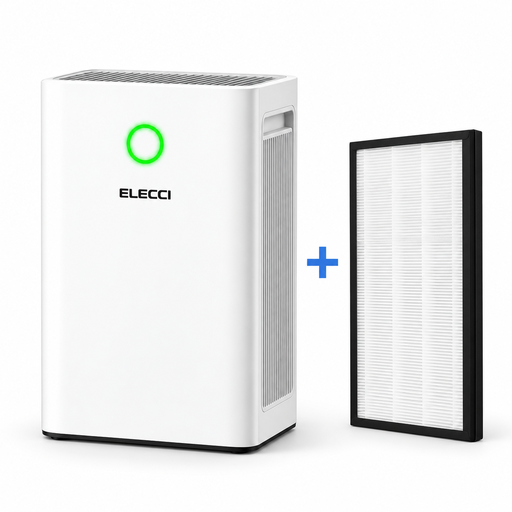
ELECCI Air Purifier with additional HEPA replacement filter
May be suitable for filtering airborne particles if the room size and your preferred operating setting are a good match for the unit.
CADR: 550 m³/h; dual HEPA filtration; washable pre-filter and air quality display.
Sleep mode is rated at 24 dB; an additional HEPA replacement filter is mentioned in the product title.
View at Joybuy
 No image available
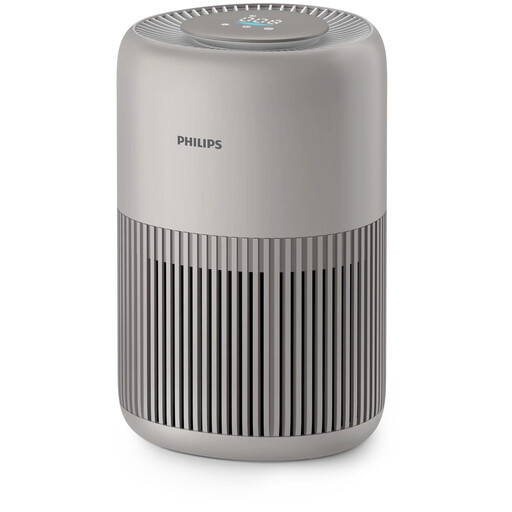
Philips AC0921/14, beige
May be suitable for fine airborne dust; check the air-change assumption behind the advertised room coverage.
CADR: 250 m³/h; HEPA filter and PM2.5 sensor.
Night mode: 20.5 dB; the product information states room coverage of up to 65 m².
View at Joybuy
 No image available
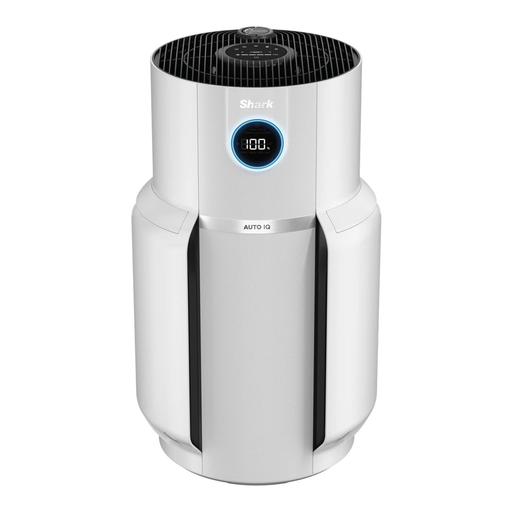
Shark NeverChange Max HP300EU
May be suitable for airborne dust if the room size matches the stated air-change rate.
Four-stage filtration; automatic mode and Wi-Fi control.
Coverage of up to 28 m² is stated for 4.8 air changes per hour. Compare this figure with your own room volume.
View at Joybuy
Frequently asked questions
How can I check whether the stated room size is suitable for my hobby room?
Measure the floor area and ceiling height, then compare the room volume with the particle CADR in m³/h. Also check the air-change assumption behind the advertised room coverage.
Do I still need to dust and ventilate if I have an air purifier?
Yes. Settled particles don’t automatically make their way into the filter, so room air filtration complements cleaning and source control. It also doesn’t bring in fresh air from outside.
What should I do if my hobby creates wood dust?
Plan for suitable dust capture at the source rather than relying on an ordinary room air purifier as a substitute. DGUV Information 209-205 covers woodworking; any other health and safety obligations will also depend on whether the activity is private or work-related.
What should I check before changing the filter and to work out running costs?
Check that the replacement filter is compatible with your exact model and follow the model-specific guidance on when to change it. To calculate your own running costs, you’ll also need to know how long you use the purifier, the power consumption of the setting you use and your electricity tariff.
What does CE marking mean when buying in Germany?
For products covered by the relevant EU rules, the manufacturer uses the CE mark to declare that the product meets the applicable requirements. It is not an independent endorsement of particularly effective dust filtration; check the information for the specific unit and variant.


