If your legs and feet are the main areas that need warming while you sit at your usual spot, an under-desk heater designed specifically for table mounting can provide targeted warmth, but it is not a substitute for a room heater. A fan heater is an option for a quick boost of warmth in the room; for longer periods of sitting, an oil-filled radiator or wall-mounted convector may be suitable if the space, the clearances specified for the appliance, the noise and its actual electricity consumption are right for your hobby room.
Who are the different options suitable for?
Warmth where you sit at your hobby table
If you mainly work at one table and want to warm your legs in particular, an under-desk heater could provide targeted warmth. VASNER describes the iTab as a solution for the seating and leg area, rather than for the whole room.
Occasional use of your hobby room
If you only use the room now and then and want extra warmth in the air, a portable appliance may be suitable, provided you have a safe, clear space for it. TROTEC also lists the TFH 20 E for hobby rooms.
Longer, quieter work sessions
For longer periods working at a table, weigh up blown air and noise against the space an appliance takes up and how it distributes heat. De’Longhi says the Radia S TRRS0920 continues to give off heat after it is switched off; Rowenta quotes a minimum noise level of 50 dB(A) for the SO9266F0.
What should you consider when choosing?
First decide whether you mainly want to warm your seating area or the air in the room. Then check the space available, noise levels and controls for the specific appliance.
| What you need |
What to look for when buying |
Who is it most relevant to? |
| Warmth where you sit |
Check the intended mounting method and the manufacturer’s guidance for the tabletop; allow enough room for your legs and materials. |
If I spend most of my time at a fixed hobby table, I mainly need warmth around my legs, not necessarily throughout the room. Around 31% of consumers put warmth where they sit first. |
| Extra warmth in the room |
Check the heat settings and thermostat; for a fan heater, allow for clear air intake and outlet and choose a suitable position. |
If I only use my hobby room occasionally, I want extra warmth in the air while I’m there. Around 25% of consumers prioritise warming the room quickly. |
| A safe place to position it |
Check the clearances in the instructions for the specific appliance; make sure air can flow freely and that it has a stable position. |
If there’s little room around the table, cables and hobby materials, I need to check first whether the appliance can be positioned safely. Around 25% of consumers pay particular attention to having a safe place for their appliance. |
| Quiet operation |
Check whether the appliance has a fan and the conditions under which noise figures apply; factor in its size and weight. |
During long, focused sessions, I want as little blown air and noise as possible. Around 19% of consumers prioritise quiet operation. |
Which mistakes should you avoid?
-
Confusing targeted warmth with room heating
An under-desk heater is designed to provide warmth in a specific area. The Verbraucherzentrale warns that small plug-in fan heaters are not a suitable alternative for heating whole rooms, as they do not provide enough heat and consume electricity when used for long periods.
Before choosing, decide whether you mainly want to warm your seating area or the air in the room.
-
Relying on safety features instead of keeping safe clearances
The required clearance from combustible items depends on the appliance, according to the Institut für Schadenverhütung und Schadenforschung. An automatic safety cut-off does not replace these clearances.
Choose a position based on the specific instructions, and keep airways and the areas around the appliance clear.
-
Assuming the design or an Eco label means it will save electricity
Claims about ceramic elements, controls or residual heat do not, in themselves, prove a general electricity-saving advantage over other electric heaters. The Verbraucherzentrale also warns against savings claims made for small plug-in fan heaters.
Compare power, actual usage time and controls on a like-for-like basis.
-
Assuming different versions of a model are identical
Features and suitability can vary between models, even within the same product range.
Before applying noise or safety information to a particular appliance, check its full model name, connection details and instructions.
Which brands are worth considering?
VASNER
VASNER describes the iTab as an under-desk heater that provides targeted warmth where you sit.
- The manufacturer says it is designed for flat, adhesive mounting and adjustable warmth around the legs.
- The model is not designed to heat the whole room. Before installing it, check that your tabletop is suitable and read the mounting instructions.
TROTEC
TROTEC lists the portable TFH 20 E fan heater for hobby rooms and occasional extra warmth.
- For this model, the manufacturer lists two heat settings, a thermostat, and tip-over and overheat protection.
- As a fan heater, it needs a clear, safe space. Safety features do not replace the required clearances.
Rowenta
The Mini Excel Safe SO9266F0 is a compact ceramic fan heater.
- Rowenta lists two heat settings and a washable filter.
- The minimum noise level quoted by the manufacturer for this model is 50 dB(A). This figure does not automatically apply to other models.
De’Longhi
The Radia S TRRS0920 is a portable oil-filled radiator rather than a fan heater.
- The manufacturer says the model continues to give off heat for a while after being switched off and offers three power settings.
- At around 11.6 kg, the radiator’s weight and size mean you’ll need to consider the space available and how far you’ll need to move it.
STIEBEL ELTRON
The CK 20 Trend LCD is a wall-mounted appliance for adding warmth to a room, not for fitting beneath a desk.
- For this model, the manufacturer lists features including a weekly timer and a connected load of 2,000 W.
- Check the instructions and the intended position to assess installation requirements and noise.
Joybuy products for extra warmth
The following Joybuy products are portable heaters for adding warmth near your hobby table or in your hobby room.
 No image available
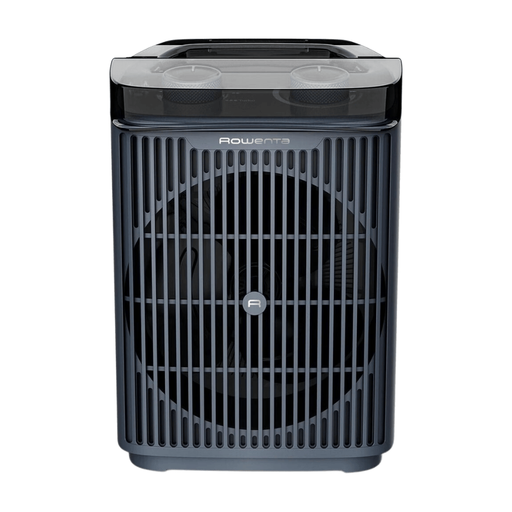
Rowenta Intense Comfort Aqua fan heater, 2.400 W, 40 m²
A portable fan heater for adding warmth near your hobby table; follow the positioning instructions in the listing.
The product name specifies 2.400 W and 40 m². According to the product description, place it on a stable, level, heat-resistant surface and keep it at least 1 m away from combustible materials; connect it only to a properly earthed socket.
View at Joybuy
 No image available
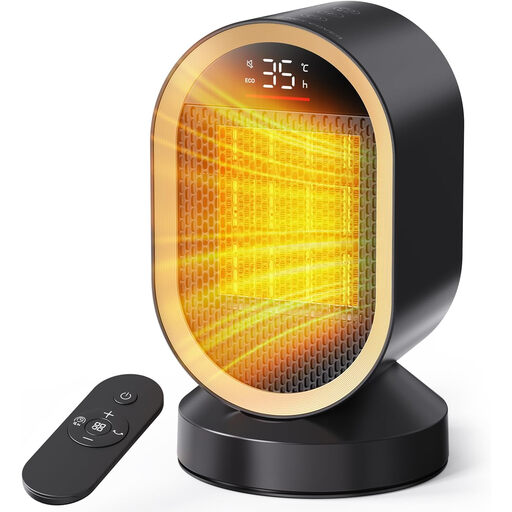
1500 W PTC ceramic fan heater
A portable fan heater for adding warmth to your hobby room.
The product name specifies 1500 W and a PTC ceramic heating element.
View at Joybuy
 No image available
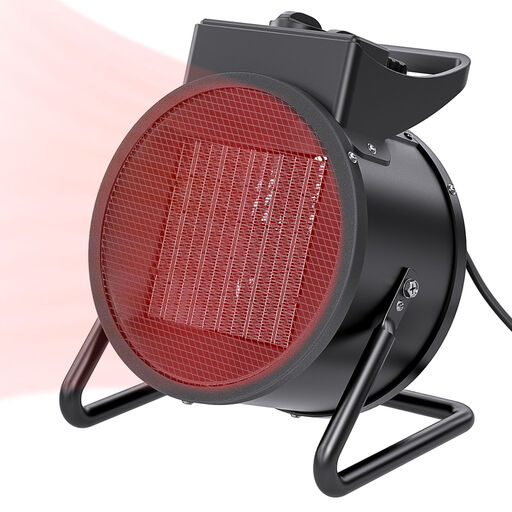
Electric ceramic fan heater with thermostat, 2 kW
A portable fan heater option for adding warmth near your desk.
The product name specifies a PTC heating element, three settings and a heat output of 2 kW.
View at Joybuy
 No image available
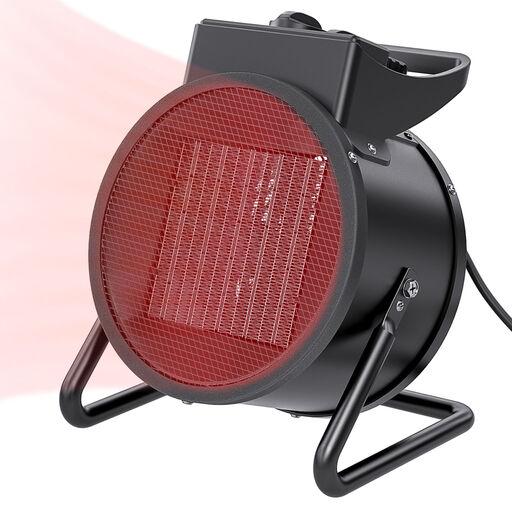
Electric ceramic fan heater with thermostat, 3 kW
A portable fan heater for adding warmth to your hobby room.
The product name specifies a PTC heating element, three settings and a heat output of 3 kW.
View at Joybuy
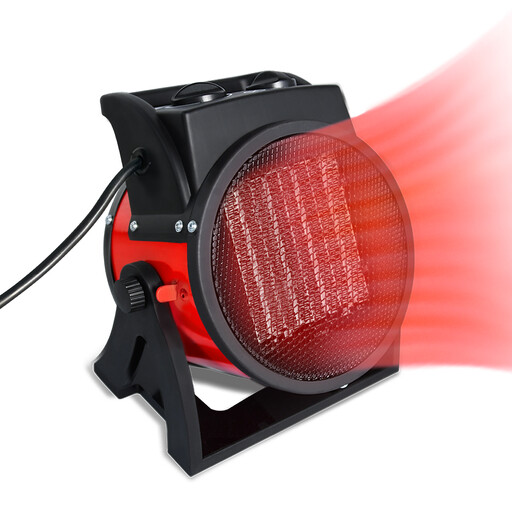 No image available
Ceramic heater for workshops and homes, 2 kW
A portable heater for adding warmth to your hobby room or workshop.
The product name specifies a heat output of 2 kW. According to the product description, use only in well-ventilated areas, keep at least 1 m away from combustible items and do not cover the appliance.
View at Joybuy
Frequently asked questions
Is a small plug-in fan heater suitable for heating an entire hobby room?
No. According to the Verbraucherzentrale, small plug-in fan heaters are not suitable as an alternative for heating whole rooms: they do not provide enough heat, while prolonged use consumes electricity. Consider the warmth you need at your seat separately from what the room needs.
How do I work out how much electricity a heat setting uses?
Multiply the power in kilowatts by the actual number of hours the appliance is running to calculate consumption in kilowatt hours. A 1,000-W setting running continuously uses 1 kWh per hour; a 2,000-W setting uses 2 kWh. Thermostat cycling affects actual consumption.
How do I position a fan heater safely by my hobby table?
Follow the clearances in the instructions for the specific appliance, keep the airflow unobstructed and do not cover it. The Institut für Schadenverhütung und Schadenforschung notes that the required clearance from combustible items depends on the appliance. Check the model instructions before using or cleaning it, too.
Does an electric heater for a single room need an EU energy label?
According to the European Commission, electric heaters for individual rooms are exempt from the energy labelling rules for this product group. Separate ecodesign requirements should be considered separately; according to the Commission’s guidance, the revised rules adopted in 2024 have applied since 1 July 2025. The rules alone do not confirm that a particular listing is compliant.
What is the difference between statutory rights and a guarantee if something goes wrong?
In Germany, your statutory rights are claims against the seller; a manufacturer’s guarantee is an additional voluntary offer with its own terms. If you make a claim, distinguish between the seller, proof of purchase and the specific guarantee terms.


